
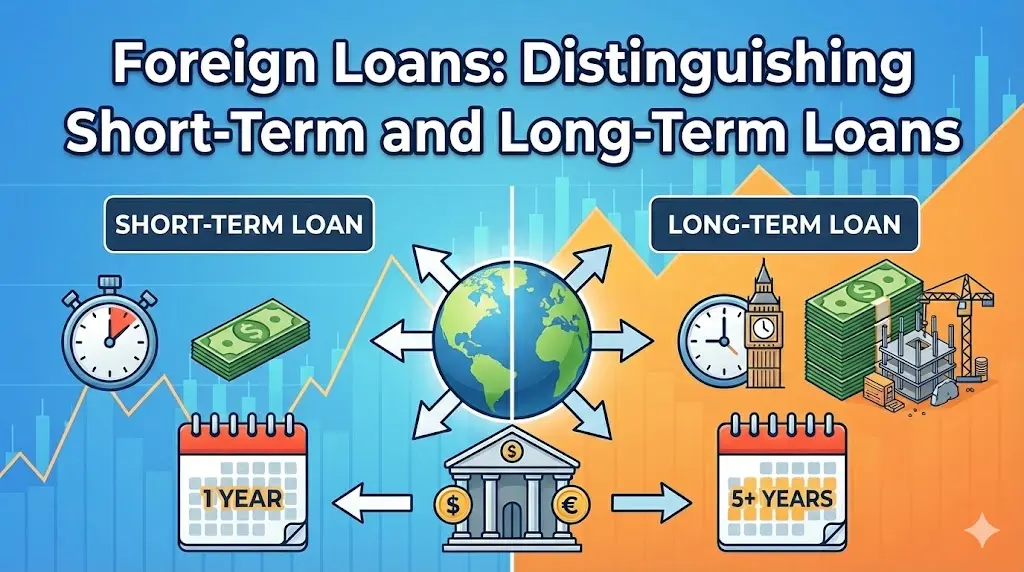
Foreign borrowing enables businesses and individuals to access capital from international financial institutions, supporting growth and investment. However, when seeking overseas funding, companies must choose between short-term and long-term loans, each with distinct characteristics, conditions, and regulatory requirements. This guide clarifies key differences and practical applications.
1. Understanding Foreign Loans
Definition
A foreign loan is financing from international financial institutions, including foreign banks, credit organizations, or overseas investors. This approach enables domestic businesses to access large capital sources beyond domestic credit markets.
Primary Uses
Common reasons for foreign borrowing include expanding production capacity, investing in large-scale projects, or supplementing working capital. Overseas borrowing also diversifies funding sources, reduces pressure on domestic credit, and creates opportunities for international partnerships.
Types of Foreign Loans
Foreign loans generally include:
- Commercial loans: Typically short-term, obtained from banks for working capital needs;
- Investment loans: Usually long-term, designated for large-scale projects such as infrastructure development or industrial expansion;
- Joint venture loans: Structured for entities with international ownership.
Regulatory Framework
Foreign loans must comply with Vietnamese regulations on credit and investment. Businesses must register loans with the State Bank of Vietnam (SBV) and submit periodic financial and project status reports. Compliance minimizes risks and protects the borrower’s legal rights.
2. Comparing Short-Term and Long-Term Loans

Short-Term Loans
A short-term loan has a duration under one year. These are commonly used for temporary financial needs, such as supplementing working capital, paying bills, or addressing short-term cash flow gaps. While short-term loans may carry higher interest rates, quick repayment allows businesses to resolve financial issues rapidly.
Related: Short-Term Foreign Loan Registration
Long-Term Loans
A long-term loan has a repayment period of one year or longer and is typically used for sustained projects such as infrastructure construction, equipment purchasing, or product development. Longer loan terms provide greater repayment flexibility and cost allocation options. However, long-term loans often require collateral and complex legal procedures.
Related: Long-Term Foreign Loan Registration
Short-Term Loan Advantages
Short-term loans offer important benefits for businesses requiring quick access to funds. Companies gain greater working capital flexibility and maintain operational continuity. Additionally, short-term loans are typically simpler and faster to process, saving valuable time.
Long-Term Loan Advantages
Long-term loans enable businesses to recover investments from major projects such as factory construction or production expansion. Lower interest rates reduce financial costs over time. This option suits businesses committed to long-term projects requiring stable financing.
3. Similarities and Distinctions
Similarities
- Capital Purpose: Both short-term and long-term loans provide capital for business operations, supplementing working capital or funding investment projects;
- Legal Compliance: All loans must comply with credit, foreign exchange, and investment regulations, with required government agency registration;
- Financial Risk: Both carry repayment and fee-related risks if not properly managed.
Key Differences
- Loan Duration: Short-term loans have repayment periods under 1 year; long-term loans extend 1 year or longer;
- Interest Rates: Short-term loans carry higher rates due to shorter terms and elevated risk. Long-term loans offer lower rates but require collateral and complex procedures;
- Fund Application: Short-term loans address temporary needs; long-term loans support large, sustained projects requiring stable financing;
- Loan Conditions: Long-term loans typically require stricter conditions, including collateral and detailed financial planning, compared to short-term loans.
4. Foreign Loan Frequently Asked Questions
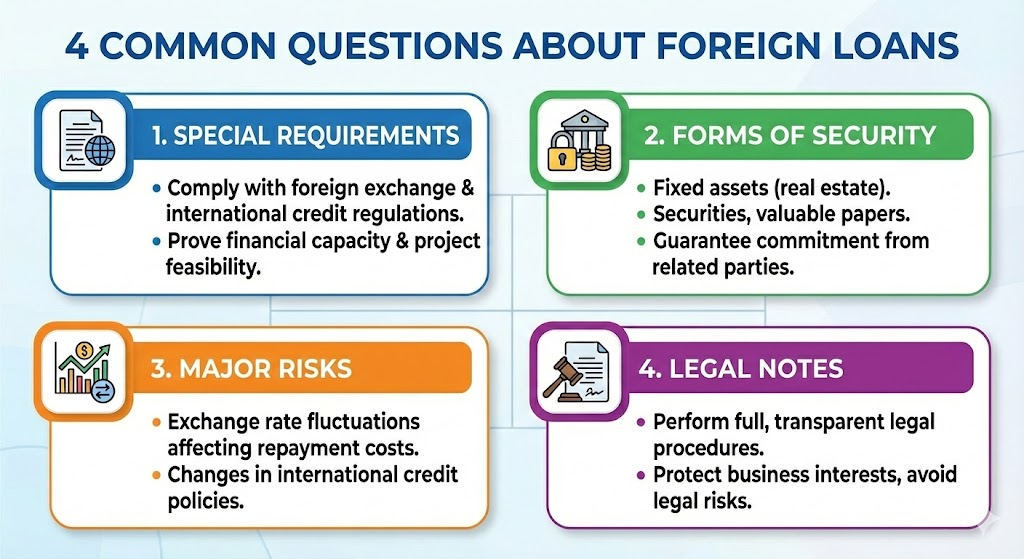
Are special requirements imposed on foreign loans?
Businesses must comply with foreign exchange and credit regulations of Vietnam and the lending country. Specific requirements include demonstrating financial capacity and providing detailed loan project information.
What collateral types are required for foreign loans?
Common collateral includes fixed assets, securities, or commitments from related parties. Collateral requirements vary depending on loan type and lender policies.
What are the primary foreign loan risks?
Major risks include exchange rate fluctuations and changes in international credit policies, which affect borrowing costs and the company’s repayment ability.
What legal safeguards apply to foreign borrowing?
Businesses must follow all legal procedures transparently and completely to avoid future legal risks while protecting their interests during international borrowing.
Conclusion
Foreign loans, whether short-term or long-term, offer significant value to businesses. The optimal choice depends on financial needs and development plans. Understanding similarities and differences between loan types enables accurate financial decisions and interest protection. To ensure legal compliance and minimize risks, consulting financial and legal experts before committing to international borrowing is highly advisable.
For guidance on foreign borrowing and loan strategy, contact Wacontre Accounting Services via telephone (028) 3820 1213 or email [email protected]. Our experienced team specializes in Vietnam tax, accounting, and company formation. Japanese-speaking clients may call (050) 5534 5505.