
A robust employee grievance redressal process is vital for HR. Professional grievance handling ensures amicable labor relations and minimizes risks, showcasing the essential HR grievance handling skills in the Vietnam market.
What is an Employee Grievance Redressal Process?
An employee grievance redressal process is a formal system established by an organization to receive, review, and resolve complaints or dissatisfaction raised by employees. These grievances typically arise from practical workplace issues such as:
- Disputes regarding salary, bonuses, and benefit packages.
- Inadequate working conditions concerning safety or hygiene.
- Perceived unfairness in performance appraisals and career progression.
- Harassment, bullying, or discriminatory behavior in the workplace.
Establishing a clear procedure is not merely an administrative requirement but a fundamental pillar for building organizational trust. In the context of the Vietnamese labor market, which increasingly emphasizes workers’ rights, a standard process allows businesses to maintain proactive control. Rather than letting frustrations simmer and lead to strikes, transparent dialogue enables all parties to find common ground swiftly.
A robust grievance system acts as a “pressure relief valve,” diffusing internal tensions before they escalate into severe PR crises or legal battles. When employees know they have a legitimate channel to voice concerns, they feel more secure and are less likely to seek negative external intervention.
The Importance of Professional Grievance Resolution in Business
1. Maintaining Workforce Stability and Engagement
When an employee files a grievance, their primary desire is to be heard and respected. A prompt and professional response from the company validates the employee’s worth. Satisfaction with a fair process is often more significant to the employee than the actual outcome of the case.
Team stability is an organization’s most valuable asset, particularly for FDI enterprises operating in Vietnam. Resolving conflicts amicably helps:
- Reduce Turnover: Employees feel protected and treated fairly.
- Boost Productivity: Eliminates psychological distractions in the workplace.
- Improve Team Morale: Prevents the spread of negativity within the collective.
2. Mitigating Legal Risks and Protracted Labor Disputes
The Vietnamese legal system, specifically the current Labor Code, strictly regulates grievance rights. Without an effective internal process, employees are inclined to seek intervention from the Labor Inspectorate or the Courts, leading to significant financial costs and reputational damage.
Resolving grievances internally allows the business to retain the initiative in negotiations. Protracted lawsuits rarely have a true winner, as the company loses precious time and resources. A professional process ensures:
- Conflict resolution at the embryonic stage.
- Avoidance of administrative fines from authorities.
- Savings on legal fees and court costs for avoidable disputes.
3. Building a Transparent and Fair Corporate Culture
A company that dares to confront its flaws and grievances possesses a strong cultural foundation. When the resolution process is made transparent, employees understand the ethical standards and operating principles of the firm. This creates a self-regulating mechanism for everyone’s behavior.
Transparency eliminates suspicions of favoritism or “interest groups.” When decisions are based on evidence and specific regulations, the credibility of the HR department and Leadership is reinforced. This is the key to building a powerful Employer Brand that attracts high-quality candidates seeking an ethical work environment.
Steps in a Modern Employee Grievance Redressal Process
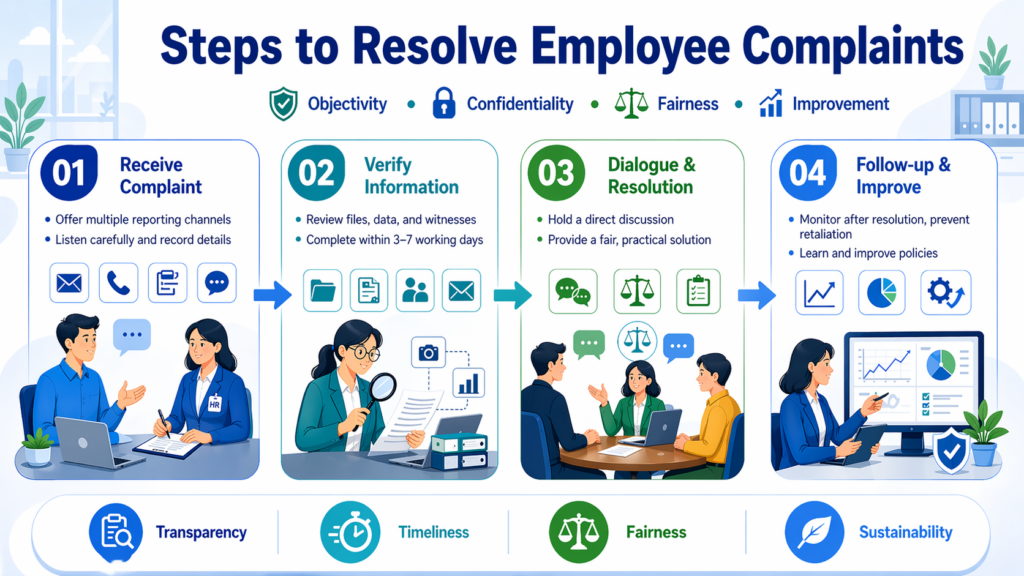
1. Objective Reception and Recording of Grievances
The first step is to create diverse and accessible channels for information. Businesses should vary their methods so employees feel comfortable sharing:
- Suggestion boxes placed directly in departments.
- Dedicated email addresses for the Compliance or HR department.
- Periodic “Town Hall” meetings for direct dialogue.
When an employee presents their case, the receiver must maintain a listening, non-judgmental attitude and record all key details. Written confirmation of the grievance is essential to build trust. The record should clearly state the time, content of the grievance, and the employee’s specific expectations for future reference.
2. Information Verification and Evidence Collection
Upon receipt, HR must conduct an independent investigation to verify the claims. This process requires meticulous attention to detail and absolute integrity. Evidence to be collected includes:
- Relevant documents, contracts, payroll records, or procedures.
- Data from software systems, surveillance cameras, or work emails.
- Statements from involved parties and direct witnesses.
Verification should be completed within a predefined timeframe (e.g., 3-7 working days) to ensure timeliness. HR must also prioritize data confidentiality during this stage to prevent unnecessary internal rumors that could damage the reputation of the accused before a final conclusion is reached.
3. Organizing Direct Dialogue and Proposing Solutions
Dialogue is the most critical step. A private meeting between company representatives, the HR department, and the aggrieved employee should be organized to present views professionally. HR acts as a moderator, presenting verified evidence and proposing solutions based on company internal labor rules.
The proposed solution must ensure:
- Fairness: If the company is at fault, a sincere apology and appropriate compensation are required.
- Persuasiveness: If the grievance is unfounded, an explanation must be provided based on specific regulations.
- Executability: Solutions must be implemented immediately to alleviate frustration.
4. Post-Resolution Monitoring and Management System Improvement
The process does not end when the final decision is issued. The HR department needs to monitor the employee’s situation afterward to ensure no retaliation or discrimination occurs. Post-resolution care helps the employee feel truly valued and eases their reintegration into the workflow.
Furthermore, every grievance is a lesson for the business to review its management system. HR should aggregate data to analyze:
- What was the root cause of the grievance?
- Are there loopholes in current policies that need closing?
- Do line managers require additional training in communication skills?
Essential HR Skills for Amicable Grievance Handling
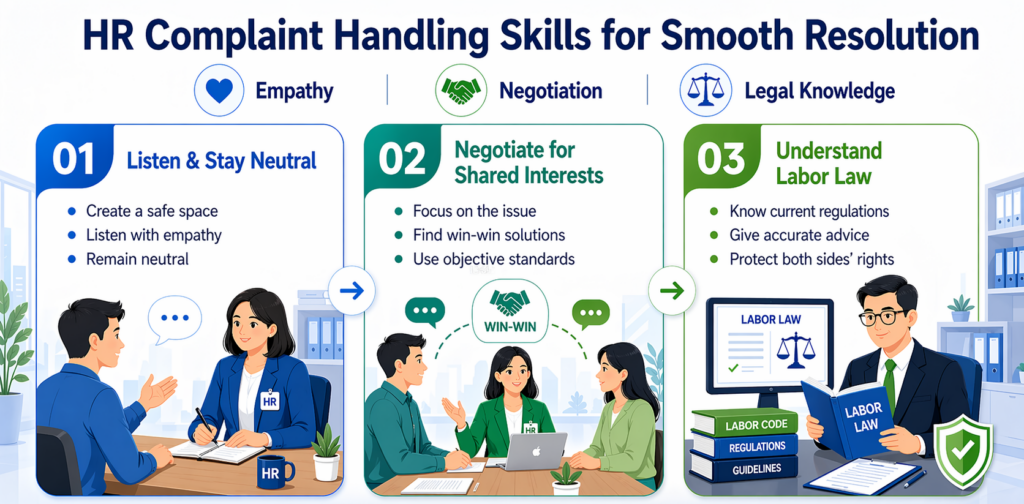
1. Empathetic Listening and Maintaining Neutrality
Empathetic listening is the ability to hear what is “left unsaid.” A skilled HR professional creates a safe space for employees to release psychological burdens. When employees feel empathized with, their defensiveness lowers, facilitating a more harmonious dialogue.
However, empathy must go hand-in-hand with neutrality. HR practitioners must not allow personal emotions or private relationships to influence the judgment. Balancing a “cool head” for data analysis and a “warm heart” to understand employee pain is the true measure of a professional HR expert.
2. Negotiation and Persuasion Based on Mutual Interests
Grievance handling is essentially a negotiation to find the balance between individual and organizational interests. HR should be equipped with modern negotiation techniques, such as:
- Focusing on the issue, not the individual.
- Seeking “Win-Win” solutions rather than win-lose confrontations.
- Using objective standards (Labor Law, Internal Rules) as the focal point.
The ability to navigate a conversation from conflict to cooperation requires flexibility and patience. A tactful handler knows how to de-escalate anger by offering reasonable alternatives, ensuring the employee feels fairly treated even if they do not achieve 100% of their initial demands.
3. Deep Understanding of Current Vietnamese Labor Law
Every resolution decision must be grounded in a solid legal foundation. Employees today are very legally savvy; therefore, HR cannot afford errors in regulations regarding:
- Labor discipline and dismissal.
- Wages, overtime, and various allowances.
- Social insurance, maternity rights, and leave entitlements.
Mastering the law makes HR more confident and protects the business from litigation risks. Simultaneously, it allows HR to provide accurate counsel to Leadership, avoiding impulsive decisions that lead to severe legal consequences. Legal expertise is the sharpest “weapon” to protect the legitimate rights of both sides.
Special Considerations for Grievance Resolution in the Vietnam Market
1. Respecting the Psychological and Cultural Context of Workers
Vietnamese workers often prioritize “sentiments” (ình cảm) and value personal honor (face). Therefore, resolution should not be overly rigid or purely “black and white”; it requires finesse in communication. Sometimes, a sincere explanation from top management holds more value than financial compensation.
Businesses should apply the philosophy of being “both logical and sentimental” (vừa có lý, vừa có tình). Avoid public judgment that causes an employee to “lose face” before the collective, as this easily leads to extreme reactions or wildcat strikes. Understanding Vietnamese etiquette helps HR resolve conflicts smoothly while preserving the dignity of all parties.
2. The Role of the Executive Board of the Trade Union in Mediation
The grassroots Trade Union is a vital bridge between workers and management in Vietnam. In the grievance process, the participation of a Trade Union representative helps:
- Increase objectivity during the investigation and dialogue.
- Help employees better understand company policies through the representative’s perspective.
- Ensure the process complies with regulations on workplace democracy.
Businesses should view the Trade Union as a strategic partner rather than an adversary. For complex grievances, involve the Trade Union from the start. Their presence reassures workers, facilitates smoother negotiations, and minimizes the risk of collective disputes.
3. Confidentiality to Prevent Internal Conflict
Information security is a vital principle. If grievance details leak, they can create false rumors and cause internal divisions. Confidentiality helps:
- Protect the complainant from stigma or isolation from colleagues.
- Protect the reputation of management before a final conclusion is reached.
- Maintain a focused work environment undisturbed by “office drama.”
Grievance files must be managed under strict security protocols. HR must emphasize this commitment to all parties involved in meetings. Keeping information private is not about hiding the truth, but about handling issues in a civilized manner, preventing personal conflicts from turning into unnecessary large-scale confrontations.
The employee grievance redressal process is not merely an administrative procedure; it is the art of management based on respect. Implementing professional grievance resolution is the best way for a business to protect itself and build a cohesive team. In Vietnam, the combination of legal compliance and tactful cultural conduct is the key to amicable labor relations. View every grievance as an opportunity for the business to refine itself and move further ahead.
To empower your business in overcoming HR management challenges and staying fully committed to your strategic goals, we provide specialized solutions:
- [RPO Services]: A comprehensive recruitment process outsourcing solution.
- [BPO Services]: Strategic outsourcing to streamline business processes and optimize operational costs.
For any inquiries, contact Wacontre Accounting Services via Hotline: (028) 3820 1213 or email [email protected] for prompt assistance. With a team of experienced professionals, Wacontre is committed to providing dedicated and efficient service. (For Japanese clients, please contact Hotline: (050) 5534 5505).