Business households must understand key regulations and prepare documentation before eliminating lump-sum tax to ensure compliance and minimize tax risks in Vietnam. Abolishing lump-sum tax for business households is a significant step requiring proper planning and documentation to avoid violations.
Understanding Lump-Sum Tax Abolition and Its Purpose

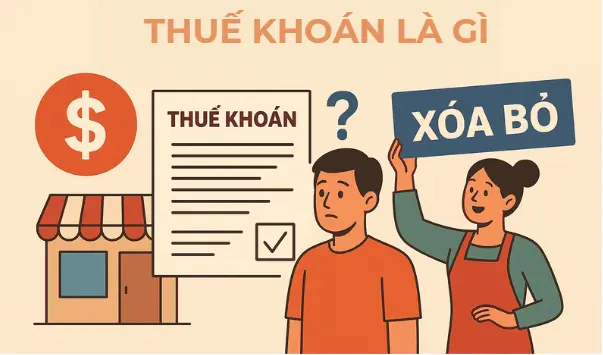
Lump-sum tax is a simplified tax collection method for small-scale business households with uncomplicated operations. This fixed tax is determined annually based on business type, estimated revenue, and other factors. Lump-sum tax eliminates the burden of detailed revenue, expense, and financial activity records, simplifying tax declaration and reducing audit complexity. However, this simplified approach does not support long-term business development in today’s modern economic environment.
Effective January 1, 2026, Vietnam business households must transition from lump-sum tax to self-declaration and self-payment based on actual results, per Decision 3389/QD-BTC and the Ministry of Finance Reform Project. This elimination represents an important state decision to modernize the tax system, promoting transparency and fairness. The goal is to advance technology adoption in tax management, enabling business households to easily meet tax obligations and contribute fairly to the state budget. This transition also allows business households to access official tax system support and preferential state policies.
However, tax regulation changes significantly impact how business households manage and comply with tax obligations. Therefore, households must understand critical requirements and prepare thoroughly to avoid costly mistakes.
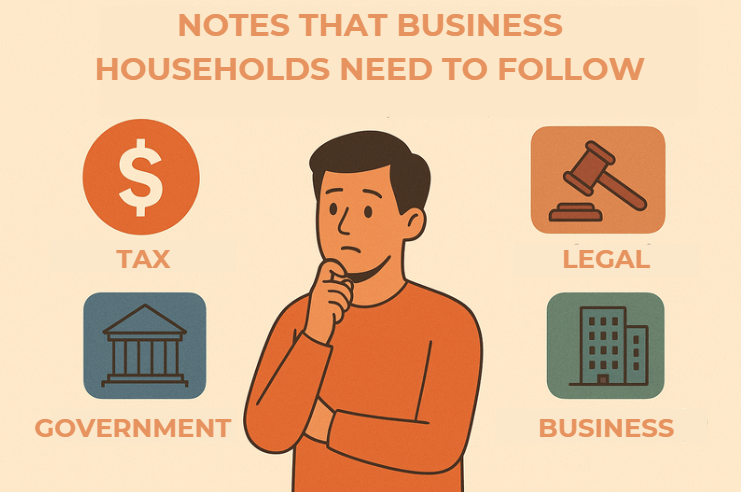
Critical Steps for Business Households
1. Determine Actual Revenue
Business households must quickly compile actual revenue from the past 1-2 years, including:
- Daily recorded revenue from business records, if available.
- Cash revenue calculated by multiplying goods sold quantity by selling price.
- External revenue through bank transfers, e-wallets, or sales software.
Create a monthly revenue table from this compiled data to determine classification:
- Up to 200 million VND annually: Tax-exempt.
- 200 million to less than 3 billion VND annually: Declare tax as percentage of revenue.
- 3 billion VND annually or more: Declare using deduction method.
This foundation determines all subsequent steps, the basis for selecting the appropriate tax calculation method, and prevents incorrect declarations.
2. Register Tax Declaration Method
Contact the local tax authority to confirm industry code, business location, and operational scale, then submit the Tax Calculation Method registration form for 2026. Choose one of two methods:
- Declare tax as percentage of revenue: Simple administration, suitable for small and medium businesses with lower revenue.
- Declare using deduction method: Suitable for larger businesses with higher revenue and numerous valid expenses and input invoices.
This mandatory conversion procedure ensures tax optimization and keeps tax authorities informed of specific circumstances for each business case.
3. Establish Records, Documents, and Accounting Systems
Tax authorities verify revenue and expenses based on supporting documents. Business households must prepare:
- Import/export register tracking goods and services (order details, date, type, quantity, value, inventory levels).
- Expense register tracking costs (rent, utilities, labor, transportation, and other expenses).
- Valid input invoices from suppliers when purchasing goods.
Proper record-keeping ensures clear revenue and expense data while minimizing audit risks, especially important since many households previously operated without formal records or invoice documentation.
4. Register for Electronic Invoices and Required Technology
Business households with annual revenue exceeding 1 billion VND, or providing goods and services directly to consumers, must register electronic invoices with codes from tax authorities and use data-connected cash registers. This enables tax authorities to record revenue in real time, replacing fixed tax mechanisms.
Required equipment includes cash registers or POS systems, sales management software, accounting software, and invoice printers. Train employees on software operation or hire accounting professionals.
5. Open a Dedicated Business Bank Account
Many business owners mix personal and business transactions in single accounts, preventing tax authorities from distinguishing between revenue and personal spending, and risking inflated revenue assessments.
A separate business account ensures transparent cash flow, enables profit and loss tracking, and prevents tax authorities from classifying personal account funds as business revenue. Bank transfers also document legitimate expenses (particularly required for transfers exceeding 20 million VND).
Evaluating Company Formation
1. Expanding Revenue Scale and Business Operations
Business households face inherent limitations: workforce restrictions (to avoid triggering formal company requirements), facility expansion constraints, and mandatory transparent declaration and reporting now that lump-sum tax is eliminated.
As these constraints become apparent, converting to a formal company structure (LLC, Private Enterprise, etc.) warrants serious consideration.
2. Building Team Capacity and Professional Structure
Business households lack formal management structures and cannot employ director-chief accountant organizational models, making it difficult to attract quality personnel.
For businesses planning expansion, franchising, or investment attraction, formal company structure is essential due to its professional operations and ability to build partner and supplier confidence.
Additionally, business households are limited in hiring regular employees. Operations with 10 or more staff, production line systems, or multiple departments should convert to company status to ensure regulatory compliance and effective management.
3. Accessing Financing and Credit Resources
Banks require specific documentation when evaluating loans:
- Clear financial statements or accounting records.
- Bank account statements.
- Valid invoices and supporting documents.
- Transparent tax records.
Business households often face challenges including:
- Lack of financial statements meeting accounting standards.
- Mixed personal and business cash flow in accounts.
- Incomplete or non-standard business format invoices and documents.
- Tax records not clearly demonstrating actual profits.
Formal companies benefit from standardized accounting systems and records that better satisfy credit assessment requirements.
The abolition of lump-sum tax for Vietnam business households represents an important transition to a formal and transparent tax system. However, households must carefully prepare documentation and records while following prescribed procedures to ensure a smooth transition. Full tax obligation compliance and timely declarations protect household rights while supporting long-term business growth.
For inquiries, contact Wacontre Accounting Services at Hotline: (028) 3820 1213 or email [email protected] for prompt assistance. Wacontre’s team of experienced professionals provides dedicated and efficient service. (Japanese clients, contact Hotline: (050) 5534 5505).
Register now to access the form.