
Employee onboarding is far more than paperwork processing—it’s a strategic initiative. A well-designed onboarding process accelerates new hire integration, ensures effective onboarding, and strengthens long-term engagement. By prioritizing this phase, organizations unlock productivity from day one.
A structured employee onboarding process is not an expense but a high-return investment. It bridges potential to performance, transforms strangers into teammates, and converts staff into organizational assets. An effective onboarding strategy combining preparation, clear training, and human connection creates competitive advantage in talent retention.
For guidance on HR strategy and employee development, contact Wacontre Accounting Services at Hotline: (028) 3820 1213 or email [email protected]. Our experienced team helps Vietnam company formation and HR operations succeed. (Japanese clients: Hotline (050) 5534 5505.)
- Conclusion
- Conclusion
- Conclusion
- Conclusion
- Conclusion
- Conclusion
- Conclusion
- Conclusion
- Common Onboarding Pitfalls
- Conclusion
- Common Onboarding Pitfalls
- Conclusion
- Common Onboarding Pitfalls
- Conclusion
- Common Onboarding Pitfalls
- Conclusion
- Common Onboarding Pitfalls
- Conclusion
- Common Onboarding Pitfalls
- Conclusion
- Essential Onboarding Checklist for HR
- Common Onboarding Pitfalls
- Conclusion
- Essential Onboarding Checklist for HR
- Common Onboarding Pitfalls
- Conclusion
- Essential Onboarding Checklist for HR
- Common Onboarding Pitfalls
- Conclusion
- Essential Onboarding Checklist for HR
- Common Onboarding Pitfalls
- Conclusion
- Essential Onboarding Checklist for HR
- Common Onboarding Pitfalls
- Conclusion
- Essential Onboarding Checklist for HR
- Common Onboarding Pitfalls
- Conclusion
- Essential Onboarding Checklist for HR
- Common Onboarding Pitfalls
- Conclusion
- Essential Onboarding Checklist for HR
- Common Onboarding Pitfalls
- Conclusion
- Essential Onboarding Checklist for HR
- Common Onboarding Pitfalls
- Conclusion
- Essential Onboarding Checklist for HR
- Common Onboarding Pitfalls
- Conclusion
- Essential Onboarding Checklist for HR
- Common Onboarding Pitfalls
- Conclusion
- Four Key Stages of Effective Onboarding
- Essential Onboarding Checklist for HR
- Common Onboarding Pitfalls
- Conclusion
- Four Key Stages of Effective Onboarding
- Essential Onboarding Checklist for HR
- Common Onboarding Pitfalls
- Conclusion
- Four Key Stages of Effective Onboarding
- Essential Onboarding Checklist for HR
- Common Onboarding Pitfalls
- Conclusion
- Four Key Stages of Effective Onboarding
- Essential Onboarding Checklist for HR
- Common Onboarding Pitfalls
- Conclusion
- Four Key Stages of Effective Onboarding
- Essential Onboarding Checklist for HR
- Common Onboarding Pitfalls
- Conclusion
- Four Key Stages of Effective Onboarding
- Essential Onboarding Checklist for HR
- Common Onboarding Pitfalls
- Conclusion
- Four Key Stages of Effective Onboarding
- Essential Onboarding Checklist for HR
- Common Onboarding Pitfalls
- Conclusion
- Four Key Stages of Effective Onboarding
- Essential Onboarding Checklist for HR
- Common Onboarding Pitfalls
- Conclusion
- Four Key Stages of Effective Onboarding
- Essential Onboarding Checklist for HR
- Common Onboarding Pitfalls
- Conclusion
- Four Key Stages of Effective Onboarding
- Essential Onboarding Checklist for HR
- Common Onboarding Pitfalls
- Conclusion
- Four Key Stages of Effective Onboarding
- Essential Onboarding Checklist for HR
- Common Onboarding Pitfalls
- Conclusion
- Why a Structured Onboarding Strategy Matters
- Four Key Stages of Effective Onboarding
- Essential Onboarding Checklist for HR
- Common Onboarding Pitfalls
- Conclusion
- Why a Structured Onboarding Strategy Matters
- Four Key Stages of Effective Onboarding
- Essential Onboarding Checklist for HR
- Common Onboarding Pitfalls
- Conclusion
- Why a Structured Onboarding Strategy Matters
- Four Key Stages of Effective Onboarding
- Essential Onboarding Checklist for HR
- Common Onboarding Pitfalls
- Conclusion
- What is Employee Onboarding?
- Why a Structured Onboarding Strategy Matters
- Four Key Stages of Effective Onboarding
- Essential Onboarding Checklist for HR
- Common Onboarding Pitfalls
- Conclusion
- What is Employee Onboarding?
- Why a Structured Onboarding Strategy Matters
- Four Key Stages of Effective Onboarding
- Essential Onboarding Checklist for HR
- Common Onboarding Pitfalls
- Conclusion
Conclusion
A structured employee onboarding process is not an expense but a high-return investment. It bridges potential to performance, transforms strangers into teammates, and converts staff into organizational assets. An effective onboarding strategy combining preparation, clear training, and human connection creates competitive advantage in talent retention.
For guidance on HR strategy and employee development, contact Wacontre Accounting Services at Hotline: (028) 3820 1213 or email [email protected]. Our experienced team helps Vietnam company formation and HR operations succeed. (Japanese clients: Hotline (050) 5534 5505.)
Ongoing support is essential. Maintain touchpoints throughout the first months so employees don’t feel abandoned when facing real work challenges.
Conclusion
A structured employee onboarding process is not an expense but a high-return investment. It bridges potential to performance, transforms strangers into teammates, and converts staff into organizational assets. An effective onboarding strategy combining preparation, clear training, and human connection creates competitive advantage in talent retention.
For guidance on HR strategy and employee development, contact Wacontre Accounting Services at Hotline: (028) 3820 1213 or email [email protected]. Our experienced team helps Vietnam company formation and HR operations succeed. (Japanese clients: Hotline (050) 5534 5505.)
3. Abandoning Support After Week 1
Ongoing support is essential. Maintain touchpoints throughout the first months so employees don’t feel abandoned when facing real work challenges.
Conclusion
A structured employee onboarding process is not an expense but a high-return investment. It bridges potential to performance, transforms strangers into teammates, and converts staff into organizational assets. An effective onboarding strategy combining preparation, clear training, and human connection creates competitive advantage in talent retention.
For guidance on HR strategy and employee development, contact Wacontre Accounting Services at Hotline: (028) 3820 1213 or email [email protected]. Our experienced team helps Vietnam company formation and HR operations succeed. (Japanese clients: Hotline (050) 5534 5505.)
Improvised onboarding appears unprofessional. Script the process with clear agendas and assigned responsibilities to ensure consistency.
3. Abandoning Support After Week 1
Ongoing support is essential. Maintain touchpoints throughout the first months so employees don’t feel abandoned when facing real work challenges.
Conclusion
A structured employee onboarding process is not an expense but a high-return investment. It bridges potential to performance, transforms strangers into teammates, and converts staff into organizational assets. An effective onboarding strategy combining preparation, clear training, and human connection creates competitive advantage in talent retention.
For guidance on HR strategy and employee development, contact Wacontre Accounting Services at Hotline: (028) 3820 1213 or email [email protected]. Our experienced team helps Vietnam company formation and HR operations succeed. (Japanese clients: Hotline (050) 5534 5505.)
2. Lack of Clear Process
Improvised onboarding appears unprofessional. Script the process with clear agendas and assigned responsibilities to ensure consistency.
3. Abandoning Support After Week 1
Ongoing support is essential. Maintain touchpoints throughout the first months so employees don’t feel abandoned when facing real work challenges.
Conclusion
A structured employee onboarding process is not an expense but a high-return investment. It bridges potential to performance, transforms strangers into teammates, and converts staff into organizational assets. An effective onboarding strategy combining preparation, clear training, and human connection creates competitive advantage in talent retention.
For guidance on HR strategy and employee development, contact Wacontre Accounting Services at Hotline: (028) 3820 1213 or email [email protected]. Our experienced team helps Vietnam company formation and HR operations succeed. (Japanese clients: Hotline (050) 5534 5505.)
Cramming excessive information into the first day causes cognitive overload. Use “Micro-learning”—distribute training over time and prioritize critical information.
2. Lack of Clear Process
Improvised onboarding appears unprofessional. Script the process with clear agendas and assigned responsibilities to ensure consistency.
3. Abandoning Support After Week 1
Ongoing support is essential. Maintain touchpoints throughout the first months so employees don’t feel abandoned when facing real work challenges.
Conclusion
A structured employee onboarding process is not an expense but a high-return investment. It bridges potential to performance, transforms strangers into teammates, and converts staff into organizational assets. An effective onboarding strategy combining preparation, clear training, and human connection creates competitive advantage in talent retention.
For guidance on HR strategy and employee development, contact Wacontre Accounting Services at Hotline: (028) 3820 1213 or email [email protected]. Our experienced team helps Vietnam company formation and HR operations succeed. (Japanese clients: Hotline (050) 5534 5505.)
1. Information Overload
Cramming excessive information into the first day causes cognitive overload. Use “Micro-learning”—distribute training over time and prioritize critical information.
2. Lack of Clear Process
Improvised onboarding appears unprofessional. Script the process with clear agendas and assigned responsibilities to ensure consistency.
3. Abandoning Support After Week 1
Ongoing support is essential. Maintain touchpoints throughout the first months so employees don’t feel abandoned when facing real work challenges.
Conclusion
A structured employee onboarding process is not an expense but a high-return investment. It bridges potential to performance, transforms strangers into teammates, and converts staff into organizational assets. An effective onboarding strategy combining preparation, clear training, and human connection creates competitive advantage in talent retention.
For guidance on HR strategy and employee development, contact Wacontre Accounting Services at Hotline: (028) 3820 1213 or email [email protected]. Our experienced team helps Vietnam company formation and HR operations succeed. (Japanese clients: Hotline (050) 5534 5505.)
1. Information Overload
Cramming excessive information into the first day causes cognitive overload. Use “Micro-learning”—distribute training over time and prioritize critical information.
2. Lack of Clear Process
Improvised onboarding appears unprofessional. Script the process with clear agendas and assigned responsibilities to ensure consistency.
3. Abandoning Support After Week 1
Ongoing support is essential. Maintain touchpoints throughout the first months so employees don’t feel abandoned when facing real work challenges.
Conclusion
A structured employee onboarding process is not an expense but a high-return investment. It bridges potential to performance, transforms strangers into teammates, and converts staff into organizational assets. An effective onboarding strategy combining preparation, clear training, and human connection creates competitive advantage in talent retention.
For guidance on HR strategy and employee development, contact Wacontre Accounting Services at Hotline: (028) 3820 1213 or email [email protected]. Our experienced team helps Vietnam company formation and HR operations succeed. (Japanese clients: Hotline (050) 5534 5505.)
The Buddy system is highly effective. Choose a peer who understands your culture and can provide informal support. They facilitate social integration, join lunch activities, and explain unwritten cultural rules. Brief your Buddy on their role in advance.
Common Onboarding Pitfalls
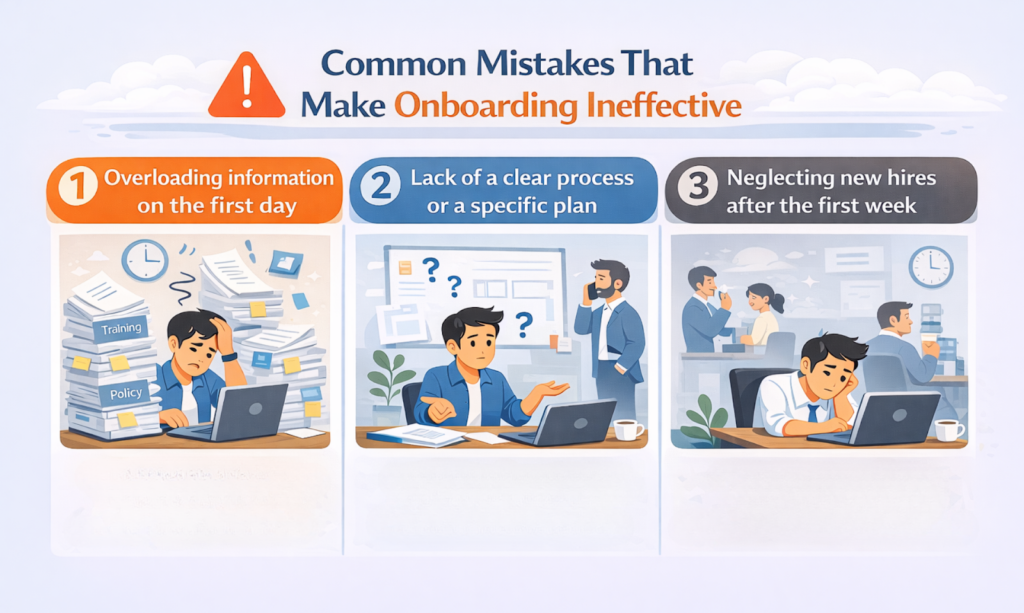
1. Information Overload
Cramming excessive information into the first day causes cognitive overload. Use “Micro-learning”—distribute training over time and prioritize critical information.
2. Lack of Clear Process
Improvised onboarding appears unprofessional. Script the process with clear agendas and assigned responsibilities to ensure consistency.
3. Abandoning Support After Week 1
Ongoing support is essential. Maintain touchpoints throughout the first months so employees don’t feel abandoned when facing real work challenges.
Conclusion
A structured employee onboarding process is not an expense but a high-return investment. It bridges potential to performance, transforms strangers into teammates, and converts staff into organizational assets. An effective onboarding strategy combining preparation, clear training, and human connection creates competitive advantage in talent retention.
For guidance on HR strategy and employee development, contact Wacontre Accounting Services at Hotline: (028) 3820 1213 or email [email protected]. Our experienced team helps Vietnam company formation and HR operations succeed. (Japanese clients: Hotline (050) 5534 5505.)
3. Assign a Mentor or Buddy
The Buddy system is highly effective. Choose a peer who understands your culture and can provide informal support. They facilitate social integration, join lunch activities, and explain unwritten cultural rules. Brief your Buddy on their role in advance.
Common Onboarding Pitfalls
1. Information Overload
Cramming excessive information into the first day causes cognitive overload. Use “Micro-learning”—distribute training over time and prioritize critical information.
2. Lack of Clear Process
Improvised onboarding appears unprofessional. Script the process with clear agendas and assigned responsibilities to ensure consistency.
3. Abandoning Support After Week 1
Ongoing support is essential. Maintain touchpoints throughout the first months so employees don’t feel abandoned when facing real work challenges.
Conclusion
A structured employee onboarding process is not an expense but a high-return investment. It bridges potential to performance, transforms strangers into teammates, and converts staff into organizational assets. An effective onboarding strategy combining preparation, clear training, and human connection creates competitive advantage in talent retention.
For guidance on HR strategy and employee development, contact Wacontre Accounting Services at Hotline: (028) 3820 1213 or email [email protected]. Our experienced team helps Vietnam company formation and HR operations succeed. (Japanese clients: Hotline (050) 5534 5505.)
Coordinate with IT and Administration 1-2 days in advance. Ensure computers are ready with necessary software. Create email, chat, and CRM accounts beforehand. Provide stationery, access cards, and parking permits. An equipped workspace enables immediate productivity.
3. Assign a Mentor or Buddy
The Buddy system is highly effective. Choose a peer who understands your culture and can provide informal support. They facilitate social integration, join lunch activities, and explain unwritten cultural rules. Brief your Buddy on their role in advance.
Common Onboarding Pitfalls
1. Information Overload
Cramming excessive information into the first day causes cognitive overload. Use “Micro-learning”—distribute training over time and prioritize critical information.
2. Lack of Clear Process
Improvised onboarding appears unprofessional. Script the process with clear agendas and assigned responsibilities to ensure consistency.
3. Abandoning Support After Week 1
Ongoing support is essential. Maintain touchpoints throughout the first months so employees don’t feel abandoned when facing real work challenges.
Conclusion
A structured employee onboarding process is not an expense but a high-return investment. It bridges potential to performance, transforms strangers into teammates, and converts staff into organizational assets. An effective onboarding strategy combining preparation, clear training, and human connection creates competitive advantage in talent retention.
For guidance on HR strategy and employee development, contact Wacontre Accounting Services at Hotline: (028) 3820 1213 or email [email protected]. Our experienced team helps Vietnam company formation and HR operations succeed. (Japanese clients: Hotline (050) 5534 5505.)
2. Prepare Equipment and System Access
Coordinate with IT and Administration 1-2 days in advance. Ensure computers are ready with necessary software. Create email, chat, and CRM accounts beforehand. Provide stationery, access cards, and parking permits. An equipped workspace enables immediate productivity.
3. Assign a Mentor or Buddy
The Buddy system is highly effective. Choose a peer who understands your culture and can provide informal support. They facilitate social integration, join lunch activities, and explain unwritten cultural rules. Brief your Buddy on their role in advance.
Common Onboarding Pitfalls
1. Information Overload
Cramming excessive information into the first day causes cognitive overload. Use “Micro-learning”—distribute training over time and prioritize critical information.
2. Lack of Clear Process
Improvised onboarding appears unprofessional. Script the process with clear agendas and assigned responsibilities to ensure consistency.
3. Abandoning Support After Week 1
Ongoing support is essential. Maintain touchpoints throughout the first months so employees don’t feel abandoned when facing real work challenges.
Conclusion
A structured employee onboarding process is not an expense but a high-return investment. It bridges potential to performance, transforms strangers into teammates, and converts staff into organizational assets. An effective onboarding strategy combining preparation, clear training, and human connection creates competitive advantage in talent retention.
For guidance on HR strategy and employee development, contact Wacontre Accounting Services at Hotline: (028) 3820 1213 or email [email protected]. Our experienced team helps Vietnam company formation and HR operations succeed. (Japanese clients: Hotline (050) 5534 5505.)
Collect required documents (CV, ID, health certificate, diplomas, tax ID, social insurance documentation). Prepare contracts and NDAs for efficient signing. Clearly explain payroll policies and banking procedures to prevent disputes.
2. Prepare Equipment and System Access
Coordinate with IT and Administration 1-2 days in advance. Ensure computers are ready with necessary software. Create email, chat, and CRM accounts beforehand. Provide stationery, access cards, and parking permits. An equipped workspace enables immediate productivity.
3. Assign a Mentor or Buddy
The Buddy system is highly effective. Choose a peer who understands your culture and can provide informal support. They facilitate social integration, join lunch activities, and explain unwritten cultural rules. Brief your Buddy on their role in advance.
Common Onboarding Pitfalls
1. Information Overload
Cramming excessive information into the first day causes cognitive overload. Use “Micro-learning”—distribute training over time and prioritize critical information.
2. Lack of Clear Process
Improvised onboarding appears unprofessional. Script the process with clear agendas and assigned responsibilities to ensure consistency.
3. Abandoning Support After Week 1
Ongoing support is essential. Maintain touchpoints throughout the first months so employees don’t feel abandoned when facing real work challenges.
Conclusion
A structured employee onboarding process is not an expense but a high-return investment. It bridges potential to performance, transforms strangers into teammates, and converts staff into organizational assets. An effective onboarding strategy combining preparation, clear training, and human connection creates competitive advantage in talent retention.
For guidance on HR strategy and employee development, contact Wacontre Accounting Services at Hotline: (028) 3820 1213 or email [email protected]. Our experienced team helps Vietnam company formation and HR operations succeed. (Japanese clients: Hotline (050) 5534 5505.)
1. Complete Legal and Administrative Setup
Collect required documents (CV, ID, health certificate, diplomas, tax ID, social insurance documentation). Prepare contracts and NDAs for efficient signing. Clearly explain payroll policies and banking procedures to prevent disputes.
2. Prepare Equipment and System Access
Coordinate with IT and Administration 1-2 days in advance. Ensure computers are ready with necessary software. Create email, chat, and CRM accounts beforehand. Provide stationery, access cards, and parking permits. An equipped workspace enables immediate productivity.
3. Assign a Mentor or Buddy
The Buddy system is highly effective. Choose a peer who understands your culture and can provide informal support. They facilitate social integration, join lunch activities, and explain unwritten cultural rules. Brief your Buddy on their role in advance.
Common Onboarding Pitfalls
1. Information Overload
Cramming excessive information into the first day causes cognitive overload. Use “Micro-learning”—distribute training over time and prioritize critical information.
2. Lack of Clear Process
Improvised onboarding appears unprofessional. Script the process with clear agendas and assigned responsibilities to ensure consistency.
3. Abandoning Support After Week 1
Ongoing support is essential. Maintain touchpoints throughout the first months so employees don’t feel abandoned when facing real work challenges.
Conclusion
A structured employee onboarding process is not an expense but a high-return investment. It bridges potential to performance, transforms strangers into teammates, and converts staff into organizational assets. An effective onboarding strategy combining preparation, clear training, and human connection creates competitive advantage in talent retention.
For guidance on HR strategy and employee development, contact Wacontre Accounting Services at Hotline: (028) 3820 1213 or email [email protected]. Our experienced team helps Vietnam company formation and HR operations succeed. (Japanese clients: Hotline (050) 5534 5505.)
Essential Onboarding Checklist for HR
1. Complete Legal and Administrative Setup
Collect required documents (CV, ID, health certificate, diplomas, tax ID, social insurance documentation). Prepare contracts and NDAs for efficient signing. Clearly explain payroll policies and banking procedures to prevent disputes.
2. Prepare Equipment and System Access
Coordinate with IT and Administration 1-2 days in advance. Ensure computers are ready with necessary software. Create email, chat, and CRM accounts beforehand. Provide stationery, access cards, and parking permits. An equipped workspace enables immediate productivity.
3. Assign a Mentor or Buddy
The Buddy system is highly effective. Choose a peer who understands your culture and can provide informal support. They facilitate social integration, join lunch activities, and explain unwritten cultural rules. Brief your Buddy on their role in advance.
Common Onboarding Pitfalls
1. Information Overload
Cramming excessive information into the first day causes cognitive overload. Use “Micro-learning”—distribute training over time and prioritize critical information.
2. Lack of Clear Process
Improvised onboarding appears unprofessional. Script the process with clear agendas and assigned responsibilities to ensure consistency.
3. Abandoning Support After Week 1
Ongoing support is essential. Maintain touchpoints throughout the first months so employees don’t feel abandoned when facing real work challenges.
Conclusion
A structured employee onboarding process is not an expense but a high-return investment. It bridges potential to performance, transforms strangers into teammates, and converts staff into organizational assets. An effective onboarding strategy combining preparation, clear training, and human connection creates competitive advantage in talent retention.
For guidance on HR strategy and employee development, contact Wacontre Accounting Services at Hotline: (028) 3820 1213 or email [email protected]. Our experienced team helps Vietnam company formation and HR operations succeed. (Japanese clients: Hotline (050) 5534 5505.)
Onboarding continues through probation as employees transition from “learning” to “doing.” Maintain support while setting clear performance targets. Regular 1-on-1 meetings check progress, address challenges, and provide feedback. This phase evaluates culture fit. A successful probation review completes the recruitment cycle.
Essential Onboarding Checklist for HR
1. Complete Legal and Administrative Setup
Collect required documents (CV, ID, health certificate, diplomas, tax ID, social insurance documentation). Prepare contracts and NDAs for efficient signing. Clearly explain payroll policies and banking procedures to prevent disputes.
2. Prepare Equipment and System Access
Coordinate with IT and Administration 1-2 days in advance. Ensure computers are ready with necessary software. Create email, chat, and CRM accounts beforehand. Provide stationery, access cards, and parking permits. An equipped workspace enables immediate productivity.
3. Assign a Mentor or Buddy
The Buddy system is highly effective. Choose a peer who understands your culture and can provide informal support. They facilitate social integration, join lunch activities, and explain unwritten cultural rules. Brief your Buddy on their role in advance.
Common Onboarding Pitfalls
1. Information Overload
Cramming excessive information into the first day causes cognitive overload. Use “Micro-learning”—distribute training over time and prioritize critical information.
2. Lack of Clear Process
Improvised onboarding appears unprofessional. Script the process with clear agendas and assigned responsibilities to ensure consistency.
3. Abandoning Support After Week 1
Ongoing support is essential. Maintain touchpoints throughout the first months so employees don’t feel abandoned when facing real work challenges.
Conclusion
A structured employee onboarding process is not an expense but a high-return investment. It bridges potential to performance, transforms strangers into teammates, and converts staff into organizational assets. An effective onboarding strategy combining preparation, clear training, and human connection creates competitive advantage in talent retention.
For guidance on HR strategy and employee development, contact Wacontre Accounting Services at Hotline: (028) 3820 1213 or email [email protected]. Our experienced team helps Vietnam company formation and HR operations succeed. (Japanese clients: Hotline (050) 5534 5505.)
4. Post-onboarding: Monitoring Throughout Probation (1-2 Months)
Onboarding continues through probation as employees transition from “learning” to “doing.” Maintain support while setting clear performance targets. Regular 1-on-1 meetings check progress, address challenges, and provide feedback. This phase evaluates culture fit. A successful probation review completes the recruitment cycle.
Essential Onboarding Checklist for HR
1. Complete Legal and Administrative Setup
Collect required documents (CV, ID, health certificate, diplomas, tax ID, social insurance documentation). Prepare contracts and NDAs for efficient signing. Clearly explain payroll policies and banking procedures to prevent disputes.
2. Prepare Equipment and System Access
Coordinate with IT and Administration 1-2 days in advance. Ensure computers are ready with necessary software. Create email, chat, and CRM accounts beforehand. Provide stationery, access cards, and parking permits. An equipped workspace enables immediate productivity.
3. Assign a Mentor or Buddy
The Buddy system is highly effective. Choose a peer who understands your culture and can provide informal support. They facilitate social integration, join lunch activities, and explain unwritten cultural rules. Brief your Buddy on their role in advance.
Common Onboarding Pitfalls
1. Information Overload
Cramming excessive information into the first day causes cognitive overload. Use “Micro-learning”—distribute training over time and prioritize critical information.
2. Lack of Clear Process
Improvised onboarding appears unprofessional. Script the process with clear agendas and assigned responsibilities to ensure consistency.
3. Abandoning Support After Week 1
Ongoing support is essential. Maintain touchpoints throughout the first months so employees don’t feel abandoned when facing real work challenges.
Conclusion
A structured employee onboarding process is not an expense but a high-return investment. It bridges potential to performance, transforms strangers into teammates, and converts staff into organizational assets. An effective onboarding strategy combining preparation, clear training, and human connection creates competitive advantage in talent retention.
For guidance on HR strategy and employee development, contact Wacontre Accounting Services at Hotline: (028) 3820 1213 or email [email protected]. Our experienced team helps Vietnam company formation and HR operations succeed. (Japanese clients: Hotline (050) 5534 5505.)
This core phase covers product knowledge, organizational structure, workflows, and tools. Balance learning with practice and social activities to prevent information overload. A Mentor or Buddy provides “hand-holding” and answers practical questions. Managers should assign small “quick win” tasks to build confidence. End-of-week review summarizes the week’s progress.
4. Post-onboarding: Monitoring Throughout Probation (1-2 Months)
Onboarding continues through probation as employees transition from “learning” to “doing.” Maintain support while setting clear performance targets. Regular 1-on-1 meetings check progress, address challenges, and provide feedback. This phase evaluates culture fit. A successful probation review completes the recruitment cycle.
Essential Onboarding Checklist for HR
1. Complete Legal and Administrative Setup
Collect required documents (CV, ID, health certificate, diplomas, tax ID, social insurance documentation). Prepare contracts and NDAs for efficient signing. Clearly explain payroll policies and banking procedures to prevent disputes.
2. Prepare Equipment and System Access
Coordinate with IT and Administration 1-2 days in advance. Ensure computers are ready with necessary software. Create email, chat, and CRM accounts beforehand. Provide stationery, access cards, and parking permits. An equipped workspace enables immediate productivity.
3. Assign a Mentor or Buddy
The Buddy system is highly effective. Choose a peer who understands your culture and can provide informal support. They facilitate social integration, join lunch activities, and explain unwritten cultural rules. Brief your Buddy on their role in advance.
Common Onboarding Pitfalls
1. Information Overload
Cramming excessive information into the first day causes cognitive overload. Use “Micro-learning”—distribute training over time and prioritize critical information.
2. Lack of Clear Process
Improvised onboarding appears unprofessional. Script the process with clear agendas and assigned responsibilities to ensure consistency.
3. Abandoning Support After Week 1
Ongoing support is essential. Maintain touchpoints throughout the first months so employees don’t feel abandoned when facing real work challenges.
Conclusion
A structured employee onboarding process is not an expense but a high-return investment. It bridges potential to performance, transforms strangers into teammates, and converts staff into organizational assets. An effective onboarding strategy combining preparation, clear training, and human connection creates competitive advantage in talent retention.
For guidance on HR strategy and employee development, contact Wacontre Accounting Services at Hotline: (028) 3820 1213 or email [email protected]. Our experienced team helps Vietnam company formation and HR operations succeed. (Japanese clients: Hotline (050) 5534 5505.)
3. First Week: Integration Training and Familiarization
This core phase covers product knowledge, organizational structure, workflows, and tools. Balance learning with practice and social activities to prevent information overload. A Mentor or Buddy provides “hand-holding” and answers practical questions. Managers should assign small “quick win” tasks to build confidence. End-of-week review summarizes the week’s progress.
4. Post-onboarding: Monitoring Throughout Probation (1-2 Months)
Onboarding continues through probation as employees transition from “learning” to “doing.” Maintain support while setting clear performance targets. Regular 1-on-1 meetings check progress, address challenges, and provide feedback. This phase evaluates culture fit. A successful probation review completes the recruitment cycle.
Essential Onboarding Checklist for HR
1. Complete Legal and Administrative Setup
Collect required documents (CV, ID, health certificate, diplomas, tax ID, social insurance documentation). Prepare contracts and NDAs for efficient signing. Clearly explain payroll policies and banking procedures to prevent disputes.
2. Prepare Equipment and System Access
Coordinate with IT and Administration 1-2 days in advance. Ensure computers are ready with necessary software. Create email, chat, and CRM accounts beforehand. Provide stationery, access cards, and parking permits. An equipped workspace enables immediate productivity.
3. Assign a Mentor or Buddy
The Buddy system is highly effective. Choose a peer who understands your culture and can provide informal support. They facilitate social integration, join lunch activities, and explain unwritten cultural rules. Brief your Buddy on their role in advance.
Common Onboarding Pitfalls
1. Information Overload
Cramming excessive information into the first day causes cognitive overload. Use “Micro-learning”—distribute training over time and prioritize critical information.
2. Lack of Clear Process
Improvised onboarding appears unprofessional. Script the process with clear agendas and assigned responsibilities to ensure consistency.
3. Abandoning Support After Week 1
Ongoing support is essential. Maintain touchpoints throughout the first months so employees don’t feel abandoned when facing real work challenges.
Conclusion
A structured employee onboarding process is not an expense but a high-return investment. It bridges potential to performance, transforms strangers into teammates, and converts staff into organizational assets. An effective onboarding strategy combining preparation, clear training, and human connection creates competitive advantage in talent retention.
For guidance on HR strategy and employee development, contact Wacontre Accounting Services at Hotline: (028) 3820 1213 or email [email protected]. Our experienced team helps Vietnam company formation and HR operations succeed. (Japanese clients: Hotline (050) 5534 5505.)
Day 1’s goal is eliminating awkwardness and building belonging. Ensure someone greets the new hire at arrival. Include brief meetings, team introductions, and office tours. Focus on connection and orientation, not heavy professional content. A team meal breaks the ice. Guide them through paperwork and policies clearly. A brief end-of-day check-in with management ensures a smooth start.
3. First Week: Integration Training and Familiarization
This core phase covers product knowledge, organizational structure, workflows, and tools. Balance learning with practice and social activities to prevent information overload. A Mentor or Buddy provides “hand-holding” and answers practical questions. Managers should assign small “quick win” tasks to build confidence. End-of-week review summarizes the week’s progress.
4. Post-onboarding: Monitoring Throughout Probation (1-2 Months)
Onboarding continues through probation as employees transition from “learning” to “doing.” Maintain support while setting clear performance targets. Regular 1-on-1 meetings check progress, address challenges, and provide feedback. This phase evaluates culture fit. A successful probation review completes the recruitment cycle.
Essential Onboarding Checklist for HR
1. Complete Legal and Administrative Setup
Collect required documents (CV, ID, health certificate, diplomas, tax ID, social insurance documentation). Prepare contracts and NDAs for efficient signing. Clearly explain payroll policies and banking procedures to prevent disputes.
2. Prepare Equipment and System Access
Coordinate with IT and Administration 1-2 days in advance. Ensure computers are ready with necessary software. Create email, chat, and CRM accounts beforehand. Provide stationery, access cards, and parking permits. An equipped workspace enables immediate productivity.
3. Assign a Mentor or Buddy
The Buddy system is highly effective. Choose a peer who understands your culture and can provide informal support. They facilitate social integration, join lunch activities, and explain unwritten cultural rules. Brief your Buddy on their role in advance.
Common Onboarding Pitfalls
1. Information Overload
Cramming excessive information into the first day causes cognitive overload. Use “Micro-learning”—distribute training over time and prioritize critical information.
2. Lack of Clear Process
Improvised onboarding appears unprofessional. Script the process with clear agendas and assigned responsibilities to ensure consistency.
3. Abandoning Support After Week 1
Ongoing support is essential. Maintain touchpoints throughout the first months so employees don’t feel abandoned when facing real work challenges.
Conclusion
A structured employee onboarding process is not an expense but a high-return investment. It bridges potential to performance, transforms strangers into teammates, and converts staff into organizational assets. An effective onboarding strategy combining preparation, clear training, and human connection creates competitive advantage in talent retention.
For guidance on HR strategy and employee development, contact Wacontre Accounting Services at Hotline: (028) 3820 1213 or email [email protected]. Our experienced team helps Vietnam company formation and HR operations succeed. (Japanese clients: Hotline (050) 5534 5505.)
2. First Day: Create a Professional Welcome
Day 1’s goal is eliminating awkwardness and building belonging. Ensure someone greets the new hire at arrival. Include brief meetings, team introductions, and office tours. Focus on connection and orientation, not heavy professional content. A team meal breaks the ice. Guide them through paperwork and policies clearly. A brief end-of-day check-in with management ensures a smooth start.
3. First Week: Integration Training and Familiarization
This core phase covers product knowledge, organizational structure, workflows, and tools. Balance learning with practice and social activities to prevent information overload. A Mentor or Buddy provides “hand-holding” and answers practical questions. Managers should assign small “quick win” tasks to build confidence. End-of-week review summarizes the week’s progress.
4. Post-onboarding: Monitoring Throughout Probation (1-2 Months)
Onboarding continues through probation as employees transition from “learning” to “doing.” Maintain support while setting clear performance targets. Regular 1-on-1 meetings check progress, address challenges, and provide feedback. This phase evaluates culture fit. A successful probation review completes the recruitment cycle.
Essential Onboarding Checklist for HR
1. Complete Legal and Administrative Setup
Collect required documents (CV, ID, health certificate, diplomas, tax ID, social insurance documentation). Prepare contracts and NDAs for efficient signing. Clearly explain payroll policies and banking procedures to prevent disputes.
2. Prepare Equipment and System Access
Coordinate with IT and Administration 1-2 days in advance. Ensure computers are ready with necessary software. Create email, chat, and CRM accounts beforehand. Provide stationery, access cards, and parking permits. An equipped workspace enables immediate productivity.
3. Assign a Mentor or Buddy
The Buddy system is highly effective. Choose a peer who understands your culture and can provide informal support. They facilitate social integration, join lunch activities, and explain unwritten cultural rules. Brief your Buddy on their role in advance.
Common Onboarding Pitfalls
1. Information Overload
Cramming excessive information into the first day causes cognitive overload. Use “Micro-learning”—distribute training over time and prioritize critical information.
2. Lack of Clear Process
Improvised onboarding appears unprofessional. Script the process with clear agendas and assigned responsibilities to ensure consistency.
3. Abandoning Support After Week 1
Ongoing support is essential. Maintain touchpoints throughout the first months so employees don’t feel abandoned when facing real work challenges.
Conclusion
A structured employee onboarding process is not an expense but a high-return investment. It bridges potential to performance, transforms strangers into teammates, and converts staff into organizational assets. An effective onboarding strategy combining preparation, clear training, and human connection creates competitive advantage in talent retention.
For guidance on HR strategy and employee development, contact Wacontre Accounting Services at Hotline: (028) 3820 1213 or email [email protected]. Our experienced team helps Vietnam company formation and HR operations succeed. (Japanese clients: Hotline (050) 5534 5505.)
The period from offer to start date is critical. Candidates may receive competing offers or feel anxious if the company remains silent. HR should maintain contact through warm welcome emails, essential information (time, location, dress code), and cultural materials. Prepare their workspace, computer, and accounts in advance. Small gestures like a welcome card make powerful first impressions.
2. First Day: Create a Professional Welcome
Day 1’s goal is eliminating awkwardness and building belonging. Ensure someone greets the new hire at arrival. Include brief meetings, team introductions, and office tours. Focus on connection and orientation, not heavy professional content. A team meal breaks the ice. Guide them through paperwork and policies clearly. A brief end-of-day check-in with management ensures a smooth start.
3. First Week: Integration Training and Familiarization
This core phase covers product knowledge, organizational structure, workflows, and tools. Balance learning with practice and social activities to prevent information overload. A Mentor or Buddy provides “hand-holding” and answers practical questions. Managers should assign small “quick win” tasks to build confidence. End-of-week review summarizes the week’s progress.
4. Post-onboarding: Monitoring Throughout Probation (1-2 Months)
Onboarding continues through probation as employees transition from “learning” to “doing.” Maintain support while setting clear performance targets. Regular 1-on-1 meetings check progress, address challenges, and provide feedback. This phase evaluates culture fit. A successful probation review completes the recruitment cycle.
Essential Onboarding Checklist for HR
1. Complete Legal and Administrative Setup
Collect required documents (CV, ID, health certificate, diplomas, tax ID, social insurance documentation). Prepare contracts and NDAs for efficient signing. Clearly explain payroll policies and banking procedures to prevent disputes.
2. Prepare Equipment and System Access
Coordinate with IT and Administration 1-2 days in advance. Ensure computers are ready with necessary software. Create email, chat, and CRM accounts beforehand. Provide stationery, access cards, and parking permits. An equipped workspace enables immediate productivity.
3. Assign a Mentor or Buddy
The Buddy system is highly effective. Choose a peer who understands your culture and can provide informal support. They facilitate social integration, join lunch activities, and explain unwritten cultural rules. Brief your Buddy on their role in advance.
Common Onboarding Pitfalls
1. Information Overload
Cramming excessive information into the first day causes cognitive overload. Use “Micro-learning”—distribute training over time and prioritize critical information.
2. Lack of Clear Process
Improvised onboarding appears unprofessional. Script the process with clear agendas and assigned responsibilities to ensure consistency.
3. Abandoning Support After Week 1
Ongoing support is essential. Maintain touchpoints throughout the first months so employees don’t feel abandoned when facing real work challenges.
Conclusion
A structured employee onboarding process is not an expense but a high-return investment. It bridges potential to performance, transforms strangers into teammates, and converts staff into organizational assets. An effective onboarding strategy combining preparation, clear training, and human connection creates competitive advantage in talent retention.
For guidance on HR strategy and employee development, contact Wacontre Accounting Services at Hotline: (028) 3820 1213 or email [email protected]. Our experienced team helps Vietnam company formation and HR operations succeed. (Japanese clients: Hotline (050) 5534 5505.)
1. Pre-onboarding: Preparation Before Day One
The period from offer to start date is critical. Candidates may receive competing offers or feel anxious if the company remains silent. HR should maintain contact through warm welcome emails, essential information (time, location, dress code), and cultural materials. Prepare their workspace, computer, and accounts in advance. Small gestures like a welcome card make powerful first impressions.
2. First Day: Create a Professional Welcome
Day 1’s goal is eliminating awkwardness and building belonging. Ensure someone greets the new hire at arrival. Include brief meetings, team introductions, and office tours. Focus on connection and orientation, not heavy professional content. A team meal breaks the ice. Guide them through paperwork and policies clearly. A brief end-of-day check-in with management ensures a smooth start.
3. First Week: Integration Training and Familiarization
This core phase covers product knowledge, organizational structure, workflows, and tools. Balance learning with practice and social activities to prevent information overload. A Mentor or Buddy provides “hand-holding” and answers practical questions. Managers should assign small “quick win” tasks to build confidence. End-of-week review summarizes the week’s progress.
4. Post-onboarding: Monitoring Throughout Probation (1-2 Months)
Onboarding continues through probation as employees transition from “learning” to “doing.” Maintain support while setting clear performance targets. Regular 1-on-1 meetings check progress, address challenges, and provide feedback. This phase evaluates culture fit. A successful probation review completes the recruitment cycle.
Essential Onboarding Checklist for HR
1. Complete Legal and Administrative Setup
Collect required documents (CV, ID, health certificate, diplomas, tax ID, social insurance documentation). Prepare contracts and NDAs for efficient signing. Clearly explain payroll policies and banking procedures to prevent disputes.
2. Prepare Equipment and System Access
Coordinate with IT and Administration 1-2 days in advance. Ensure computers are ready with necessary software. Create email, chat, and CRM accounts beforehand. Provide stationery, access cards, and parking permits. An equipped workspace enables immediate productivity.
3. Assign a Mentor or Buddy
The Buddy system is highly effective. Choose a peer who understands your culture and can provide informal support. They facilitate social integration, join lunch activities, and explain unwritten cultural rules. Brief your Buddy on their role in advance.
Common Onboarding Pitfalls
1. Information Overload
Cramming excessive information into the first day causes cognitive overload. Use “Micro-learning”—distribute training over time and prioritize critical information.
2. Lack of Clear Process
Improvised onboarding appears unprofessional. Script the process with clear agendas and assigned responsibilities to ensure consistency.
3. Abandoning Support After Week 1
Ongoing support is essential. Maintain touchpoints throughout the first months so employees don’t feel abandoned when facing real work challenges.
Conclusion
A structured employee onboarding process is not an expense but a high-return investment. It bridges potential to performance, transforms strangers into teammates, and converts staff into organizational assets. An effective onboarding strategy combining preparation, clear training, and human connection creates competitive advantage in talent retention.
For guidance on HR strategy and employee development, contact Wacontre Accounting Services at Hotline: (028) 3820 1213 or email [email protected]. Our experienced team helps Vietnam company formation and HR operations succeed. (Japanese clients: Hotline (050) 5534 5505.)
Effective onboarding requires structured stages with clear objectives. A standard framework includes 4 phases from offer acceptance through full employment status.
1. Pre-onboarding: Preparation Before Day One
The period from offer to start date is critical. Candidates may receive competing offers or feel anxious if the company remains silent. HR should maintain contact through warm welcome emails, essential information (time, location, dress code), and cultural materials. Prepare their workspace, computer, and accounts in advance. Small gestures like a welcome card make powerful first impressions.
2. First Day: Create a Professional Welcome
Day 1’s goal is eliminating awkwardness and building belonging. Ensure someone greets the new hire at arrival. Include brief meetings, team introductions, and office tours. Focus on connection and orientation, not heavy professional content. A team meal breaks the ice. Guide them through paperwork and policies clearly. A brief end-of-day check-in with management ensures a smooth start.
3. First Week: Integration Training and Familiarization
This core phase covers product knowledge, organizational structure, workflows, and tools. Balance learning with practice and social activities to prevent information overload. A Mentor or Buddy provides “hand-holding” and answers practical questions. Managers should assign small “quick win” tasks to build confidence. End-of-week review summarizes the week’s progress.
4. Post-onboarding: Monitoring Throughout Probation (1-2 Months)
Onboarding continues through probation as employees transition from “learning” to “doing.” Maintain support while setting clear performance targets. Regular 1-on-1 meetings check progress, address challenges, and provide feedback. This phase evaluates culture fit. A successful probation review completes the recruitment cycle.
Essential Onboarding Checklist for HR
1. Complete Legal and Administrative Setup
Collect required documents (CV, ID, health certificate, diplomas, tax ID, social insurance documentation). Prepare contracts and NDAs for efficient signing. Clearly explain payroll policies and banking procedures to prevent disputes.
2. Prepare Equipment and System Access
Coordinate with IT and Administration 1-2 days in advance. Ensure computers are ready with necessary software. Create email, chat, and CRM accounts beforehand. Provide stationery, access cards, and parking permits. An equipped workspace enables immediate productivity.
3. Assign a Mentor or Buddy
The Buddy system is highly effective. Choose a peer who understands your culture and can provide informal support. They facilitate social integration, join lunch activities, and explain unwritten cultural rules. Brief your Buddy on their role in advance.
Common Onboarding Pitfalls
1. Information Overload
Cramming excessive information into the first day causes cognitive overload. Use “Micro-learning”—distribute training over time and prioritize critical information.
2. Lack of Clear Process
Improvised onboarding appears unprofessional. Script the process with clear agendas and assigned responsibilities to ensure consistency.
3. Abandoning Support After Week 1
Ongoing support is essential. Maintain touchpoints throughout the first months so employees don’t feel abandoned when facing real work challenges.
Conclusion
A structured employee onboarding process is not an expense but a high-return investment. It bridges potential to performance, transforms strangers into teammates, and converts staff into organizational assets. An effective onboarding strategy combining preparation, clear training, and human connection creates competitive advantage in talent retention.
For guidance on HR strategy and employee development, contact Wacontre Accounting Services at Hotline: (028) 3820 1213 or email [email protected]. Our experienced team helps Vietnam company formation and HR operations succeed. (Japanese clients: Hotline (050) 5534 5505.)

Effective onboarding requires structured stages with clear objectives. A standard framework includes 4 phases from offer acceptance through full employment status.
1. Pre-onboarding: Preparation Before Day One
The period from offer to start date is critical. Candidates may receive competing offers or feel anxious if the company remains silent. HR should maintain contact through warm welcome emails, essential information (time, location, dress code), and cultural materials. Prepare their workspace, computer, and accounts in advance. Small gestures like a welcome card make powerful first impressions.
2. First Day: Create a Professional Welcome
Day 1’s goal is eliminating awkwardness and building belonging. Ensure someone greets the new hire at arrival. Include brief meetings, team introductions, and office tours. Focus on connection and orientation, not heavy professional content. A team meal breaks the ice. Guide them through paperwork and policies clearly. A brief end-of-day check-in with management ensures a smooth start.
3. First Week: Integration Training and Familiarization
This core phase covers product knowledge, organizational structure, workflows, and tools. Balance learning with practice and social activities to prevent information overload. A Mentor or Buddy provides “hand-holding” and answers practical questions. Managers should assign small “quick win” tasks to build confidence. End-of-week review summarizes the week’s progress.
4. Post-onboarding: Monitoring Throughout Probation (1-2 Months)
Onboarding continues through probation as employees transition from “learning” to “doing.” Maintain support while setting clear performance targets. Regular 1-on-1 meetings check progress, address challenges, and provide feedback. This phase evaluates culture fit. A successful probation review completes the recruitment cycle.
Essential Onboarding Checklist for HR
1. Complete Legal and Administrative Setup
Collect required documents (CV, ID, health certificate, diplomas, tax ID, social insurance documentation). Prepare contracts and NDAs for efficient signing. Clearly explain payroll policies and banking procedures to prevent disputes.
2. Prepare Equipment and System Access
Coordinate with IT and Administration 1-2 days in advance. Ensure computers are ready with necessary software. Create email, chat, and CRM accounts beforehand. Provide stationery, access cards, and parking permits. An equipped workspace enables immediate productivity.
3. Assign a Mentor or Buddy
The Buddy system is highly effective. Choose a peer who understands your culture and can provide informal support. They facilitate social integration, join lunch activities, and explain unwritten cultural rules. Brief your Buddy on their role in advance.
Common Onboarding Pitfalls
1. Information Overload
Cramming excessive information into the first day causes cognitive overload. Use “Micro-learning”—distribute training over time and prioritize critical information.
2. Lack of Clear Process
Improvised onboarding appears unprofessional. Script the process with clear agendas and assigned responsibilities to ensure consistency.
3. Abandoning Support After Week 1
Ongoing support is essential. Maintain touchpoints throughout the first months so employees don’t feel abandoned when facing real work challenges.
Conclusion
A structured employee onboarding process is not an expense but a high-return investment. It bridges potential to performance, transforms strangers into teammates, and converts staff into organizational assets. An effective onboarding strategy combining preparation, clear training, and human connection creates competitive advantage in talent retention.
For guidance on HR strategy and employee development, contact Wacontre Accounting Services at Hotline: (028) 3820 1213 or email [email protected]. Our experienced team helps Vietnam company formation and HR operations succeed. (Japanese clients: Hotline (050) 5534 5505.)
Four Key Stages of Effective Onboarding
Effective onboarding requires structured stages with clear objectives. A standard framework includes 4 phases from offer acceptance through full employment status.
1. Pre-onboarding: Preparation Before Day One
The period from offer to start date is critical. Candidates may receive competing offers or feel anxious if the company remains silent. HR should maintain contact through warm welcome emails, essential information (time, location, dress code), and cultural materials. Prepare their workspace, computer, and accounts in advance. Small gestures like a welcome card make powerful first impressions.
2. First Day: Create a Professional Welcome
Day 1’s goal is eliminating awkwardness and building belonging. Ensure someone greets the new hire at arrival. Include brief meetings, team introductions, and office tours. Focus on connection and orientation, not heavy professional content. A team meal breaks the ice. Guide them through paperwork and policies clearly. A brief end-of-day check-in with management ensures a smooth start.
3. First Week: Integration Training and Familiarization
This core phase covers product knowledge, organizational structure, workflows, and tools. Balance learning with practice and social activities to prevent information overload. A Mentor or Buddy provides “hand-holding” and answers practical questions. Managers should assign small “quick win” tasks to build confidence. End-of-week review summarizes the week’s progress.
4. Post-onboarding: Monitoring Throughout Probation (1-2 Months)
Onboarding continues through probation as employees transition from “learning” to “doing.” Maintain support while setting clear performance targets. Regular 1-on-1 meetings check progress, address challenges, and provide feedback. This phase evaluates culture fit. A successful probation review completes the recruitment cycle.
Essential Onboarding Checklist for HR
1. Complete Legal and Administrative Setup
Collect required documents (CV, ID, health certificate, diplomas, tax ID, social insurance documentation). Prepare contracts and NDAs for efficient signing. Clearly explain payroll policies and banking procedures to prevent disputes.
2. Prepare Equipment and System Access
Coordinate with IT and Administration 1-2 days in advance. Ensure computers are ready with necessary software. Create email, chat, and CRM accounts beforehand. Provide stationery, access cards, and parking permits. An equipped workspace enables immediate productivity.
3. Assign a Mentor or Buddy
The Buddy system is highly effective. Choose a peer who understands your culture and can provide informal support. They facilitate social integration, join lunch activities, and explain unwritten cultural rules. Brief your Buddy on their role in advance.
Common Onboarding Pitfalls
1. Information Overload
Cramming excessive information into the first day causes cognitive overload. Use “Micro-learning”—distribute training over time and prioritize critical information.
2. Lack of Clear Process
Improvised onboarding appears unprofessional. Script the process with clear agendas and assigned responsibilities to ensure consistency.
3. Abandoning Support After Week 1
Ongoing support is essential. Maintain touchpoints throughout the first months so employees don’t feel abandoned when facing real work challenges.
Conclusion
A structured employee onboarding process is not an expense but a high-return investment. It bridges potential to performance, transforms strangers into teammates, and converts staff into organizational assets. An effective onboarding strategy combining preparation, clear training, and human connection creates competitive advantage in talent retention.
For guidance on HR strategy and employee development, contact Wacontre Accounting Services at Hotline: (028) 3820 1213 or email [email protected]. Our experienced team helps Vietnam company formation and HR operations succeed. (Japanese clients: Hotline (050) 5534 5505.)
When onboarding skillfully communicates core values, company history, and success stories, new hires feel connected to something larger. They understand their work’s meaning and contribution. Social activities break down barriers and build peer relationships—the glue of united teams. This cohesion helps overcome challenges and creates positive environments.
Four Key Stages of Effective Onboarding
Effective onboarding requires structured stages with clear objectives. A standard framework includes 4 phases from offer acceptance through full employment status.
1. Pre-onboarding: Preparation Before Day One
The period from offer to start date is critical. Candidates may receive competing offers or feel anxious if the company remains silent. HR should maintain contact through warm welcome emails, essential information (time, location, dress code), and cultural materials. Prepare their workspace, computer, and accounts in advance. Small gestures like a welcome card make powerful first impressions.
2. First Day: Create a Professional Welcome
Day 1’s goal is eliminating awkwardness and building belonging. Ensure someone greets the new hire at arrival. Include brief meetings, team introductions, and office tours. Focus on connection and orientation, not heavy professional content. A team meal breaks the ice. Guide them through paperwork and policies clearly. A brief end-of-day check-in with management ensures a smooth start.
3. First Week: Integration Training and Familiarization
This core phase covers product knowledge, organizational structure, workflows, and tools. Balance learning with practice and social activities to prevent information overload. A Mentor or Buddy provides “hand-holding” and answers practical questions. Managers should assign small “quick win” tasks to build confidence. End-of-week review summarizes the week’s progress.
4. Post-onboarding: Monitoring Throughout Probation (1-2 Months)
Onboarding continues through probation as employees transition from “learning” to “doing.” Maintain support while setting clear performance targets. Regular 1-on-1 meetings check progress, address challenges, and provide feedback. This phase evaluates culture fit. A successful probation review completes the recruitment cycle.
Essential Onboarding Checklist for HR
1. Complete Legal and Administrative Setup
Collect required documents (CV, ID, health certificate, diplomas, tax ID, social insurance documentation). Prepare contracts and NDAs for efficient signing. Clearly explain payroll policies and banking procedures to prevent disputes.
2. Prepare Equipment and System Access
Coordinate with IT and Administration 1-2 days in advance. Ensure computers are ready with necessary software. Create email, chat, and CRM accounts beforehand. Provide stationery, access cards, and parking permits. An equipped workspace enables immediate productivity.
3. Assign a Mentor or Buddy
The Buddy system is highly effective. Choose a peer who understands your culture and can provide informal support. They facilitate social integration, join lunch activities, and explain unwritten cultural rules. Brief your Buddy on their role in advance.
Common Onboarding Pitfalls
1. Information Overload
Cramming excessive information into the first day causes cognitive overload. Use “Micro-learning”—distribute training over time and prioritize critical information.
2. Lack of Clear Process
Improvised onboarding appears unprofessional. Script the process with clear agendas and assigned responsibilities to ensure consistency.
3. Abandoning Support After Week 1
Ongoing support is essential. Maintain touchpoints throughout the first months so employees don’t feel abandoned when facing real work challenges.
Conclusion
A structured employee onboarding process is not an expense but a high-return investment. It bridges potential to performance, transforms strangers into teammates, and converts staff into organizational assets. An effective onboarding strategy combining preparation, clear training, and human connection creates competitive advantage in talent retention.
For guidance on HR strategy and employee development, contact Wacontre Accounting Services at Hotline: (028) 3820 1213 or email [email protected]. Our experienced team helps Vietnam company formation and HR operations succeed. (Japanese clients: Hotline (050) 5534 5505.)
Corporate culture is intangible yet powerful. However, culture isn’t transmitted through websites or handbooks—it’s lived through each touchpoint in the onboarding process. New employees are receptive to your values and vision; this phase shapes their future behavior and mindset.
When onboarding skillfully communicates core values, company history, and success stories, new hires feel connected to something larger. They understand their work’s meaning and contribution. Social activities break down barriers and build peer relationships—the glue of united teams. This cohesion helps overcome challenges and creates positive environments.
Four Key Stages of Effective Onboarding
Effective onboarding requires structured stages with clear objectives. A standard framework includes 4 phases from offer acceptance through full employment status.
1. Pre-onboarding: Preparation Before Day One
The period from offer to start date is critical. Candidates may receive competing offers or feel anxious if the company remains silent. HR should maintain contact through warm welcome emails, essential information (time, location, dress code), and cultural materials. Prepare their workspace, computer, and accounts in advance. Small gestures like a welcome card make powerful first impressions.
2. First Day: Create a Professional Welcome
Day 1’s goal is eliminating awkwardness and building belonging. Ensure someone greets the new hire at arrival. Include brief meetings, team introductions, and office tours. Focus on connection and orientation, not heavy professional content. A team meal breaks the ice. Guide them through paperwork and policies clearly. A brief end-of-day check-in with management ensures a smooth start.
3. First Week: Integration Training and Familiarization
This core phase covers product knowledge, organizational structure, workflows, and tools. Balance learning with practice and social activities to prevent information overload. A Mentor or Buddy provides “hand-holding” and answers practical questions. Managers should assign small “quick win” tasks to build confidence. End-of-week review summarizes the week’s progress.
4. Post-onboarding: Monitoring Throughout Probation (1-2 Months)
Onboarding continues through probation as employees transition from “learning” to “doing.” Maintain support while setting clear performance targets. Regular 1-on-1 meetings check progress, address challenges, and provide feedback. This phase evaluates culture fit. A successful probation review completes the recruitment cycle.
Essential Onboarding Checklist for HR
1. Complete Legal and Administrative Setup
Collect required documents (CV, ID, health certificate, diplomas, tax ID, social insurance documentation). Prepare contracts and NDAs for efficient signing. Clearly explain payroll policies and banking procedures to prevent disputes.
2. Prepare Equipment and System Access
Coordinate with IT and Administration 1-2 days in advance. Ensure computers are ready with necessary software. Create email, chat, and CRM accounts beforehand. Provide stationery, access cards, and parking permits. An equipped workspace enables immediate productivity.
3. Assign a Mentor or Buddy
The Buddy system is highly effective. Choose a peer who understands your culture and can provide informal support. They facilitate social integration, join lunch activities, and explain unwritten cultural rules. Brief your Buddy on their role in advance.
Common Onboarding Pitfalls
1. Information Overload
Cramming excessive information into the first day causes cognitive overload. Use “Micro-learning”—distribute training over time and prioritize critical information.
2. Lack of Clear Process
Improvised onboarding appears unprofessional. Script the process with clear agendas and assigned responsibilities to ensure consistency.
3. Abandoning Support After Week 1
Ongoing support is essential. Maintain touchpoints throughout the first months so employees don’t feel abandoned when facing real work challenges.
Conclusion
A structured employee onboarding process is not an expense but a high-return investment. It bridges potential to performance, transforms strangers into teammates, and converts staff into organizational assets. An effective onboarding strategy combining preparation, clear training, and human connection creates competitive advantage in talent retention.
For guidance on HR strategy and employee development, contact Wacontre Accounting Services at Hotline: (028) 3820 1213 or email [email protected]. Our experienced team helps Vietnam company formation and HR operations succeed. (Japanese clients: Hotline (050) 5534 5505.)
3. Strengthen Culture and Team Cohesion
Corporate culture is intangible yet powerful. However, culture isn’t transmitted through websites or handbooks—it’s lived through each touchpoint in the onboarding process. New employees are receptive to your values and vision; this phase shapes their future behavior and mindset.
When onboarding skillfully communicates core values, company history, and success stories, new hires feel connected to something larger. They understand their work’s meaning and contribution. Social activities break down barriers and build peer relationships—the glue of united teams. This cohesion helps overcome challenges and creates positive environments.
Four Key Stages of Effective Onboarding
Effective onboarding requires structured stages with clear objectives. A standard framework includes 4 phases from offer acceptance through full employment status.
1. Pre-onboarding: Preparation Before Day One
The period from offer to start date is critical. Candidates may receive competing offers or feel anxious if the company remains silent. HR should maintain contact through warm welcome emails, essential information (time, location, dress code), and cultural materials. Prepare their workspace, computer, and accounts in advance. Small gestures like a welcome card make powerful first impressions.
2. First Day: Create a Professional Welcome
Day 1’s goal is eliminating awkwardness and building belonging. Ensure someone greets the new hire at arrival. Include brief meetings, team introductions, and office tours. Focus on connection and orientation, not heavy professional content. A team meal breaks the ice. Guide them through paperwork and policies clearly. A brief end-of-day check-in with management ensures a smooth start.
3. First Week: Integration Training and Familiarization
This core phase covers product knowledge, organizational structure, workflows, and tools. Balance learning with practice and social activities to prevent information overload. A Mentor or Buddy provides “hand-holding” and answers practical questions. Managers should assign small “quick win” tasks to build confidence. End-of-week review summarizes the week’s progress.
4. Post-onboarding: Monitoring Throughout Probation (1-2 Months)
Onboarding continues through probation as employees transition from “learning” to “doing.” Maintain support while setting clear performance targets. Regular 1-on-1 meetings check progress, address challenges, and provide feedback. This phase evaluates culture fit. A successful probation review completes the recruitment cycle.
Essential Onboarding Checklist for HR
1. Complete Legal and Administrative Setup
Collect required documents (CV, ID, health certificate, diplomas, tax ID, social insurance documentation). Prepare contracts and NDAs for efficient signing. Clearly explain payroll policies and banking procedures to prevent disputes.
2. Prepare Equipment and System Access
Coordinate with IT and Administration 1-2 days in advance. Ensure computers are ready with necessary software. Create email, chat, and CRM accounts beforehand. Provide stationery, access cards, and parking permits. An equipped workspace enables immediate productivity.
3. Assign a Mentor or Buddy
The Buddy system is highly effective. Choose a peer who understands your culture and can provide informal support. They facilitate social integration, join lunch activities, and explain unwritten cultural rules. Brief your Buddy on their role in advance.
Common Onboarding Pitfalls
1. Information Overload
Cramming excessive information into the first day causes cognitive overload. Use “Micro-learning”—distribute training over time and prioritize critical information.
2. Lack of Clear Process
Improvised onboarding appears unprofessional. Script the process with clear agendas and assigned responsibilities to ensure consistency.
3. Abandoning Support After Week 1
Ongoing support is essential. Maintain touchpoints throughout the first months so employees don’t feel abandoned when facing real work challenges.
Conclusion
A structured employee onboarding process is not an expense but a high-return investment. It bridges potential to performance, transforms strangers into teammates, and converts staff into organizational assets. An effective onboarding strategy combining preparation, clear training, and human connection creates competitive advantage in talent retention.
For guidance on HR strategy and employee development, contact Wacontre Accounting Services at Hotline: (028) 3820 1213 or email [email protected]. Our experienced team helps Vietnam company formation and HR operations succeed. (Japanese clients: Hotline (050) 5534 5505.)
Clear guidelines, professional training, and mentorship enable rapid competency development. Well-onboarded employees contribute real value within weeks instead of months. This momentum builds confidence and sets expectations for sustained performance.
3. Strengthen Culture and Team Cohesion
Corporate culture is intangible yet powerful. However, culture isn’t transmitted through websites or handbooks—it’s lived through each touchpoint in the onboarding process. New employees are receptive to your values and vision; this phase shapes their future behavior and mindset.
When onboarding skillfully communicates core values, company history, and success stories, new hires feel connected to something larger. They understand their work’s meaning and contribution. Social activities break down barriers and build peer relationships—the glue of united teams. This cohesion helps overcome challenges and creates positive environments.
Four Key Stages of Effective Onboarding
Effective onboarding requires structured stages with clear objectives. A standard framework includes 4 phases from offer acceptance through full employment status.
1. Pre-onboarding: Preparation Before Day One
The period from offer to start date is critical. Candidates may receive competing offers or feel anxious if the company remains silent. HR should maintain contact through warm welcome emails, essential information (time, location, dress code), and cultural materials. Prepare their workspace, computer, and accounts in advance. Small gestures like a welcome card make powerful first impressions.
2. First Day: Create a Professional Welcome
Day 1’s goal is eliminating awkwardness and building belonging. Ensure someone greets the new hire at arrival. Include brief meetings, team introductions, and office tours. Focus on connection and orientation, not heavy professional content. A team meal breaks the ice. Guide them through paperwork and policies clearly. A brief end-of-day check-in with management ensures a smooth start.
3. First Week: Integration Training and Familiarization
This core phase covers product knowledge, organizational structure, workflows, and tools. Balance learning with practice and social activities to prevent information overload. A Mentor or Buddy provides “hand-holding” and answers practical questions. Managers should assign small “quick win” tasks to build confidence. End-of-week review summarizes the week’s progress.
4. Post-onboarding: Monitoring Throughout Probation (1-2 Months)
Onboarding continues through probation as employees transition from “learning” to “doing.” Maintain support while setting clear performance targets. Regular 1-on-1 meetings check progress, address challenges, and provide feedback. This phase evaluates culture fit. A successful probation review completes the recruitment cycle.
Essential Onboarding Checklist for HR
1. Complete Legal and Administrative Setup
Collect required documents (CV, ID, health certificate, diplomas, tax ID, social insurance documentation). Prepare contracts and NDAs for efficient signing. Clearly explain payroll policies and banking procedures to prevent disputes.
2. Prepare Equipment and System Access
Coordinate with IT and Administration 1-2 days in advance. Ensure computers are ready with necessary software. Create email, chat, and CRM accounts beforehand. Provide stationery, access cards, and parking permits. An equipped workspace enables immediate productivity.
3. Assign a Mentor or Buddy
The Buddy system is highly effective. Choose a peer who understands your culture and can provide informal support. They facilitate social integration, join lunch activities, and explain unwritten cultural rules. Brief your Buddy on their role in advance.
Common Onboarding Pitfalls
1. Information Overload
Cramming excessive information into the first day causes cognitive overload. Use “Micro-learning”—distribute training over time and prioritize critical information.
2. Lack of Clear Process
Improvised onboarding appears unprofessional. Script the process with clear agendas and assigned responsibilities to ensure consistency.
3. Abandoning Support After Week 1
Ongoing support is essential. Maintain touchpoints throughout the first months so employees don’t feel abandoned when facing real work challenges.
Conclusion
A structured employee onboarding process is not an expense but a high-return investment. It bridges potential to performance, transforms strangers into teammates, and converts staff into organizational assets. An effective onboarding strategy combining preparation, clear training, and human connection creates competitive advantage in talent retention.
For guidance on HR strategy and employee development, contact Wacontre Accounting Services at Hotline: (028) 3820 1213 or email [email protected]. Our experienced team helps Vietnam company formation and HR operations succeed. (Japanese clients: Hotline (050) 5534 5505.)
New employees require time to reach full productivity—known as “time-to-productivity.” Without structured guidance, they waste time navigating processes, finding documents, and learning software. A standardized onboarding process provides a roadmap, accelerating their learning curve.
Clear guidelines, professional training, and mentorship enable rapid competency development. Well-onboarded employees contribute real value within weeks instead of months. This momentum builds confidence and sets expectations for sustained performance.
3. Strengthen Culture and Team Cohesion
Corporate culture is intangible yet powerful. However, culture isn’t transmitted through websites or handbooks—it’s lived through each touchpoint in the onboarding process. New employees are receptive to your values and vision; this phase shapes their future behavior and mindset.
When onboarding skillfully communicates core values, company history, and success stories, new hires feel connected to something larger. They understand their work’s meaning and contribution. Social activities break down barriers and build peer relationships—the glue of united teams. This cohesion helps overcome challenges and creates positive environments.
Four Key Stages of Effective Onboarding
Effective onboarding requires structured stages with clear objectives. A standard framework includes 4 phases from offer acceptance through full employment status.
1. Pre-onboarding: Preparation Before Day One
The period from offer to start date is critical. Candidates may receive competing offers or feel anxious if the company remains silent. HR should maintain contact through warm welcome emails, essential information (time, location, dress code), and cultural materials. Prepare their workspace, computer, and accounts in advance. Small gestures like a welcome card make powerful first impressions.
2. First Day: Create a Professional Welcome
Day 1’s goal is eliminating awkwardness and building belonging. Ensure someone greets the new hire at arrival. Include brief meetings, team introductions, and office tours. Focus on connection and orientation, not heavy professional content. A team meal breaks the ice. Guide them through paperwork and policies clearly. A brief end-of-day check-in with management ensures a smooth start.
3. First Week: Integration Training and Familiarization
This core phase covers product knowledge, organizational structure, workflows, and tools. Balance learning with practice and social activities to prevent information overload. A Mentor or Buddy provides “hand-holding” and answers practical questions. Managers should assign small “quick win” tasks to build confidence. End-of-week review summarizes the week’s progress.
4. Post-onboarding: Monitoring Throughout Probation (1-2 Months)
Onboarding continues through probation as employees transition from “learning” to “doing.” Maintain support while setting clear performance targets. Regular 1-on-1 meetings check progress, address challenges, and provide feedback. This phase evaluates culture fit. A successful probation review completes the recruitment cycle.
Essential Onboarding Checklist for HR
1. Complete Legal and Administrative Setup
Collect required documents (CV, ID, health certificate, diplomas, tax ID, social insurance documentation). Prepare contracts and NDAs for efficient signing. Clearly explain payroll policies and banking procedures to prevent disputes.
2. Prepare Equipment and System Access
Coordinate with IT and Administration 1-2 days in advance. Ensure computers are ready with necessary software. Create email, chat, and CRM accounts beforehand. Provide stationery, access cards, and parking permits. An equipped workspace enables immediate productivity.
3. Assign a Mentor or Buddy
The Buddy system is highly effective. Choose a peer who understands your culture and can provide informal support. They facilitate social integration, join lunch activities, and explain unwritten cultural rules. Brief your Buddy on their role in advance.
Common Onboarding Pitfalls
1. Information Overload
Cramming excessive information into the first day causes cognitive overload. Use “Micro-learning”—distribute training over time and prioritize critical information.
2. Lack of Clear Process
Improvised onboarding appears unprofessional. Script the process with clear agendas and assigned responsibilities to ensure consistency.
3. Abandoning Support After Week 1
Ongoing support is essential. Maintain touchpoints throughout the first months so employees don’t feel abandoned when facing real work challenges.
Conclusion
A structured employee onboarding process is not an expense but a high-return investment. It bridges potential to performance, transforms strangers into teammates, and converts staff into organizational assets. An effective onboarding strategy combining preparation, clear training, and human connection creates competitive advantage in talent retention.
For guidance on HR strategy and employee development, contact Wacontre Accounting Services at Hotline: (028) 3820 1213 or email [email protected]. Our experienced team helps Vietnam company formation and HR operations succeed. (Japanese clients: Hotline (050) 5534 5505.)
2. Accelerate Productivity and Performance
New employees require time to reach full productivity—known as “time-to-productivity.” Without structured guidance, they waste time navigating processes, finding documents, and learning software. A standardized onboarding process provides a roadmap, accelerating their learning curve.
Clear guidelines, professional training, and mentorship enable rapid competency development. Well-onboarded employees contribute real value within weeks instead of months. This momentum builds confidence and sets expectations for sustained performance.
3. Strengthen Culture and Team Cohesion
Corporate culture is intangible yet powerful. However, culture isn’t transmitted through websites or handbooks—it’s lived through each touchpoint in the onboarding process. New employees are receptive to your values and vision; this phase shapes their future behavior and mindset.
When onboarding skillfully communicates core values, company history, and success stories, new hires feel connected to something larger. They understand their work’s meaning and contribution. Social activities break down barriers and build peer relationships—the glue of united teams. This cohesion helps overcome challenges and creates positive environments.
Four Key Stages of Effective Onboarding
Effective onboarding requires structured stages with clear objectives. A standard framework includes 4 phases from offer acceptance through full employment status.
1. Pre-onboarding: Preparation Before Day One
The period from offer to start date is critical. Candidates may receive competing offers or feel anxious if the company remains silent. HR should maintain contact through warm welcome emails, essential information (time, location, dress code), and cultural materials. Prepare their workspace, computer, and accounts in advance. Small gestures like a welcome card make powerful first impressions.
2. First Day: Create a Professional Welcome
Day 1’s goal is eliminating awkwardness and building belonging. Ensure someone greets the new hire at arrival. Include brief meetings, team introductions, and office tours. Focus on connection and orientation, not heavy professional content. A team meal breaks the ice. Guide them through paperwork and policies clearly. A brief end-of-day check-in with management ensures a smooth start.
3. First Week: Integration Training and Familiarization
This core phase covers product knowledge, organizational structure, workflows, and tools. Balance learning with practice and social activities to prevent information overload. A Mentor or Buddy provides “hand-holding” and answers practical questions. Managers should assign small “quick win” tasks to build confidence. End-of-week review summarizes the week’s progress.
4. Post-onboarding: Monitoring Throughout Probation (1-2 Months)
Onboarding continues through probation as employees transition from “learning” to “doing.” Maintain support while setting clear performance targets. Regular 1-on-1 meetings check progress, address challenges, and provide feedback. This phase evaluates culture fit. A successful probation review completes the recruitment cycle.
Essential Onboarding Checklist for HR
1. Complete Legal and Administrative Setup
Collect required documents (CV, ID, health certificate, diplomas, tax ID, social insurance documentation). Prepare contracts and NDAs for efficient signing. Clearly explain payroll policies and banking procedures to prevent disputes.
2. Prepare Equipment and System Access
Coordinate with IT and Administration 1-2 days in advance. Ensure computers are ready with necessary software. Create email, chat, and CRM accounts beforehand. Provide stationery, access cards, and parking permits. An equipped workspace enables immediate productivity.
3. Assign a Mentor or Buddy
The Buddy system is highly effective. Choose a peer who understands your culture and can provide informal support. They facilitate social integration, join lunch activities, and explain unwritten cultural rules. Brief your Buddy on their role in advance.
Common Onboarding Pitfalls
1. Information Overload
Cramming excessive information into the first day causes cognitive overload. Use “Micro-learning”—distribute training over time and prioritize critical information.
2. Lack of Clear Process
Improvised onboarding appears unprofessional. Script the process with clear agendas and assigned responsibilities to ensure consistency.
3. Abandoning Support After Week 1
Ongoing support is essential. Maintain touchpoints throughout the first months so employees don’t feel abandoned when facing real work challenges.
Conclusion
A structured employee onboarding process is not an expense but a high-return investment. It bridges potential to performance, transforms strangers into teammates, and converts staff into organizational assets. An effective onboarding strategy combining preparation, clear training, and human connection creates competitive advantage in talent retention.
For guidance on HR strategy and employee development, contact Wacontre Accounting Services at Hotline: (028) 3820 1213 or email [email protected]. Our experienced team helps Vietnam company formation and HR operations succeed. (Japanese clients: Hotline (050) 5534 5505.)
A thoughtful onboarding plan addresses these emotional concerns. When employees feel welcomed and equipped with necessary tools, they feel secure and confident. Early attention creates an “emotional anchor” sustaining them through initial challenges. Research shows companies with effective onboarding achieve significantly higher retention rates.
2. Accelerate Productivity and Performance
New employees require time to reach full productivity—known as “time-to-productivity.” Without structured guidance, they waste time navigating processes, finding documents, and learning software. A standardized onboarding process provides a roadmap, accelerating their learning curve.
Clear guidelines, professional training, and mentorship enable rapid competency development. Well-onboarded employees contribute real value within weeks instead of months. This momentum builds confidence and sets expectations for sustained performance.
3. Strengthen Culture and Team Cohesion
Corporate culture is intangible yet powerful. However, culture isn’t transmitted through websites or handbooks—it’s lived through each touchpoint in the onboarding process. New employees are receptive to your values and vision; this phase shapes their future behavior and mindset.
When onboarding skillfully communicates core values, company history, and success stories, new hires feel connected to something larger. They understand their work’s meaning and contribution. Social activities break down barriers and build peer relationships—the glue of united teams. This cohesion helps overcome challenges and creates positive environments.
Four Key Stages of Effective Onboarding
Effective onboarding requires structured stages with clear objectives. A standard framework includes 4 phases from offer acceptance through full employment status.
1. Pre-onboarding: Preparation Before Day One
The period from offer to start date is critical. Candidates may receive competing offers or feel anxious if the company remains silent. HR should maintain contact through warm welcome emails, essential information (time, location, dress code), and cultural materials. Prepare their workspace, computer, and accounts in advance. Small gestures like a welcome card make powerful first impressions.
2. First Day: Create a Professional Welcome
Day 1’s goal is eliminating awkwardness and building belonging. Ensure someone greets the new hire at arrival. Include brief meetings, team introductions, and office tours. Focus on connection and orientation, not heavy professional content. A team meal breaks the ice. Guide them through paperwork and policies clearly. A brief end-of-day check-in with management ensures a smooth start.
3. First Week: Integration Training and Familiarization
This core phase covers product knowledge, organizational structure, workflows, and tools. Balance learning with practice and social activities to prevent information overload. A Mentor or Buddy provides “hand-holding” and answers practical questions. Managers should assign small “quick win” tasks to build confidence. End-of-week review summarizes the week’s progress.
4. Post-onboarding: Monitoring Throughout Probation (1-2 Months)
Onboarding continues through probation as employees transition from “learning” to “doing.” Maintain support while setting clear performance targets. Regular 1-on-1 meetings check progress, address challenges, and provide feedback. This phase evaluates culture fit. A successful probation review completes the recruitment cycle.
Essential Onboarding Checklist for HR
1. Complete Legal and Administrative Setup
Collect required documents (CV, ID, health certificate, diplomas, tax ID, social insurance documentation). Prepare contracts and NDAs for efficient signing. Clearly explain payroll policies and banking procedures to prevent disputes.
2. Prepare Equipment and System Access
Coordinate with IT and Administration 1-2 days in advance. Ensure computers are ready with necessary software. Create email, chat, and CRM accounts beforehand. Provide stationery, access cards, and parking permits. An equipped workspace enables immediate productivity.
3. Assign a Mentor or Buddy
The Buddy system is highly effective. Choose a peer who understands your culture and can provide informal support. They facilitate social integration, join lunch activities, and explain unwritten cultural rules. Brief your Buddy on their role in advance.
Common Onboarding Pitfalls
1. Information Overload
Cramming excessive information into the first day causes cognitive overload. Use “Micro-learning”—distribute training over time and prioritize critical information.
2. Lack of Clear Process
Improvised onboarding appears unprofessional. Script the process with clear agendas and assigned responsibilities to ensure consistency.
3. Abandoning Support After Week 1
Ongoing support is essential. Maintain touchpoints throughout the first months so employees don’t feel abandoned when facing real work challenges.
Conclusion
A structured employee onboarding process is not an expense but a high-return investment. It bridges potential to performance, transforms strangers into teammates, and converts staff into organizational assets. An effective onboarding strategy combining preparation, clear training, and human connection creates competitive advantage in talent retention.
For guidance on HR strategy and employee development, contact Wacontre Accounting Services at Hotline: (028) 3820 1213 or email [email protected]. Our experienced team helps Vietnam company formation and HR operations succeed. (Japanese clients: Hotline (050) 5534 5505.)
A major HR challenge is recruiting people you can’t keep. Studies show many new employees decide to leave within 45 days or 6 months—often not due to compensation, but feeling abandoned, struggling to integrate, or facing unclear expectations. Each departure costs recruitment expenses, training investment, and workflow disruption.
A thoughtful onboarding plan addresses these emotional concerns. When employees feel welcomed and equipped with necessary tools, they feel secure and confident. Early attention creates an “emotional anchor” sustaining them through initial challenges. Research shows companies with effective onboarding achieve significantly higher retention rates.
2. Accelerate Productivity and Performance
New employees require time to reach full productivity—known as “time-to-productivity.” Without structured guidance, they waste time navigating processes, finding documents, and learning software. A standardized onboarding process provides a roadmap, accelerating their learning curve.
Clear guidelines, professional training, and mentorship enable rapid competency development. Well-onboarded employees contribute real value within weeks instead of months. This momentum builds confidence and sets expectations for sustained performance.
3. Strengthen Culture and Team Cohesion
Corporate culture is intangible yet powerful. However, culture isn’t transmitted through websites or handbooks—it’s lived through each touchpoint in the onboarding process. New employees are receptive to your values and vision; this phase shapes their future behavior and mindset.
When onboarding skillfully communicates core values, company history, and success stories, new hires feel connected to something larger. They understand their work’s meaning and contribution. Social activities break down barriers and build peer relationships—the glue of united teams. This cohesion helps overcome challenges and creates positive environments.
Four Key Stages of Effective Onboarding
Effective onboarding requires structured stages with clear objectives. A standard framework includes 4 phases from offer acceptance through full employment status.
1. Pre-onboarding: Preparation Before Day One
The period from offer to start date is critical. Candidates may receive competing offers or feel anxious if the company remains silent. HR should maintain contact through warm welcome emails, essential information (time, location, dress code), and cultural materials. Prepare their workspace, computer, and accounts in advance. Small gestures like a welcome card make powerful first impressions.
2. First Day: Create a Professional Welcome
Day 1’s goal is eliminating awkwardness and building belonging. Ensure someone greets the new hire at arrival. Include brief meetings, team introductions, and office tours. Focus on connection and orientation, not heavy professional content. A team meal breaks the ice. Guide them through paperwork and policies clearly. A brief end-of-day check-in with management ensures a smooth start.
3. First Week: Integration Training and Familiarization
This core phase covers product knowledge, organizational structure, workflows, and tools. Balance learning with practice and social activities to prevent information overload. A Mentor or Buddy provides “hand-holding” and answers practical questions. Managers should assign small “quick win” tasks to build confidence. End-of-week review summarizes the week’s progress.
4. Post-onboarding: Monitoring Throughout Probation (1-2 Months)
Onboarding continues through probation as employees transition from “learning” to “doing.” Maintain support while setting clear performance targets. Regular 1-on-1 meetings check progress, address challenges, and provide feedback. This phase evaluates culture fit. A successful probation review completes the recruitment cycle.
Essential Onboarding Checklist for HR
1. Complete Legal and Administrative Setup
Collect required documents (CV, ID, health certificate, diplomas, tax ID, social insurance documentation). Prepare contracts and NDAs for efficient signing. Clearly explain payroll policies and banking procedures to prevent disputes.
2. Prepare Equipment and System Access
Coordinate with IT and Administration 1-2 days in advance. Ensure computers are ready with necessary software. Create email, chat, and CRM accounts beforehand. Provide stationery, access cards, and parking permits. An equipped workspace enables immediate productivity.
3. Assign a Mentor or Buddy
The Buddy system is highly effective. Choose a peer who understands your culture and can provide informal support. They facilitate social integration, join lunch activities, and explain unwritten cultural rules. Brief your Buddy on their role in advance.
Common Onboarding Pitfalls
1. Information Overload
Cramming excessive information into the first day causes cognitive overload. Use “Micro-learning”—distribute training over time and prioritize critical information.
2. Lack of Clear Process
Improvised onboarding appears unprofessional. Script the process with clear agendas and assigned responsibilities to ensure consistency.
3. Abandoning Support After Week 1
Ongoing support is essential. Maintain touchpoints throughout the first months so employees don’t feel abandoned when facing real work challenges.
Conclusion
A structured employee onboarding process is not an expense but a high-return investment. It bridges potential to performance, transforms strangers into teammates, and converts staff into organizational assets. An effective onboarding strategy combining preparation, clear training, and human connection creates competitive advantage in talent retention.
For guidance on HR strategy and employee development, contact Wacontre Accounting Services at Hotline: (028) 3820 1213 or email [email protected]. Our experienced team helps Vietnam company formation and HR operations succeed. (Japanese clients: Hotline (050) 5534 5505.)
1. Reduce Turnover and Retain Top Talent
A major HR challenge is recruiting people you can’t keep. Studies show many new employees decide to leave within 45 days or 6 months—often not due to compensation, but feeling abandoned, struggling to integrate, or facing unclear expectations. Each departure costs recruitment expenses, training investment, and workflow disruption.
A thoughtful onboarding plan addresses these emotional concerns. When employees feel welcomed and equipped with necessary tools, they feel secure and confident. Early attention creates an “emotional anchor” sustaining them through initial challenges. Research shows companies with effective onboarding achieve significantly higher retention rates.
2. Accelerate Productivity and Performance
New employees require time to reach full productivity—known as “time-to-productivity.” Without structured guidance, they waste time navigating processes, finding documents, and learning software. A standardized onboarding process provides a roadmap, accelerating their learning curve.
Clear guidelines, professional training, and mentorship enable rapid competency development. Well-onboarded employees contribute real value within weeks instead of months. This momentum builds confidence and sets expectations for sustained performance.
3. Strengthen Culture and Team Cohesion
Corporate culture is intangible yet powerful. However, culture isn’t transmitted through websites or handbooks—it’s lived through each touchpoint in the onboarding process. New employees are receptive to your values and vision; this phase shapes their future behavior and mindset.
When onboarding skillfully communicates core values, company history, and success stories, new hires feel connected to something larger. They understand their work’s meaning and contribution. Social activities break down barriers and build peer relationships—the glue of united teams. This cohesion helps overcome challenges and creates positive environments.
Four Key Stages of Effective Onboarding
Effective onboarding requires structured stages with clear objectives. A standard framework includes 4 phases from offer acceptance through full employment status.
1. Pre-onboarding: Preparation Before Day One
The period from offer to start date is critical. Candidates may receive competing offers or feel anxious if the company remains silent. HR should maintain contact through warm welcome emails, essential information (time, location, dress code), and cultural materials. Prepare their workspace, computer, and accounts in advance. Small gestures like a welcome card make powerful first impressions.
2. First Day: Create a Professional Welcome
Day 1’s goal is eliminating awkwardness and building belonging. Ensure someone greets the new hire at arrival. Include brief meetings, team introductions, and office tours. Focus on connection and orientation, not heavy professional content. A team meal breaks the ice. Guide them through paperwork and policies clearly. A brief end-of-day check-in with management ensures a smooth start.
3. First Week: Integration Training and Familiarization
This core phase covers product knowledge, organizational structure, workflows, and tools. Balance learning with practice and social activities to prevent information overload. A Mentor or Buddy provides “hand-holding” and answers practical questions. Managers should assign small “quick win” tasks to build confidence. End-of-week review summarizes the week’s progress.
4. Post-onboarding: Monitoring Throughout Probation (1-2 Months)
Onboarding continues through probation as employees transition from “learning” to “doing.” Maintain support while setting clear performance targets. Regular 1-on-1 meetings check progress, address challenges, and provide feedback. This phase evaluates culture fit. A successful probation review completes the recruitment cycle.
Essential Onboarding Checklist for HR
1. Complete Legal and Administrative Setup
Collect required documents (CV, ID, health certificate, diplomas, tax ID, social insurance documentation). Prepare contracts and NDAs for efficient signing. Clearly explain payroll policies and banking procedures to prevent disputes.
2. Prepare Equipment and System Access
Coordinate with IT and Administration 1-2 days in advance. Ensure computers are ready with necessary software. Create email, chat, and CRM accounts beforehand. Provide stationery, access cards, and parking permits. An equipped workspace enables immediate productivity.
3. Assign a Mentor or Buddy
The Buddy system is highly effective. Choose a peer who understands your culture and can provide informal support. They facilitate social integration, join lunch activities, and explain unwritten cultural rules. Brief your Buddy on their role in advance.
Common Onboarding Pitfalls
1. Information Overload
Cramming excessive information into the first day causes cognitive overload. Use “Micro-learning”—distribute training over time and prioritize critical information.
2. Lack of Clear Process
Improvised onboarding appears unprofessional. Script the process with clear agendas and assigned responsibilities to ensure consistency.
3. Abandoning Support After Week 1
Ongoing support is essential. Maintain touchpoints throughout the first months so employees don’t feel abandoned when facing real work challenges.
Conclusion
A structured employee onboarding process is not an expense but a high-return investment. It bridges potential to performance, transforms strangers into teammates, and converts staff into organizational assets. An effective onboarding strategy combining preparation, clear training, and human connection creates competitive advantage in talent retention.
For guidance on HR strategy and employee development, contact Wacontre Accounting Services at Hotline: (028) 3820 1213 or email [email protected]. Our experienced team helps Vietnam company formation and HR operations succeed. (Japanese clients: Hotline (050) 5534 5505.)
Global leaders and Vietnam’s top enterprises invest substantially in onboarding processes for good reason. Research consistently shows that structured employee onboarding delivers immediate and long-term returns, directly benefiting organizational success.
1. Reduce Turnover and Retain Top Talent
A major HR challenge is recruiting people you can’t keep. Studies show many new employees decide to leave within 45 days or 6 months—often not due to compensation, but feeling abandoned, struggling to integrate, or facing unclear expectations. Each departure costs recruitment expenses, training investment, and workflow disruption.
A thoughtful onboarding plan addresses these emotional concerns. When employees feel welcomed and equipped with necessary tools, they feel secure and confident. Early attention creates an “emotional anchor” sustaining them through initial challenges. Research shows companies with effective onboarding achieve significantly higher retention rates.
2. Accelerate Productivity and Performance
New employees require time to reach full productivity—known as “time-to-productivity.” Without structured guidance, they waste time navigating processes, finding documents, and learning software. A standardized onboarding process provides a roadmap, accelerating their learning curve.
Clear guidelines, professional training, and mentorship enable rapid competency development. Well-onboarded employees contribute real value within weeks instead of months. This momentum builds confidence and sets expectations for sustained performance.
3. Strengthen Culture and Team Cohesion
Corporate culture is intangible yet powerful. However, culture isn’t transmitted through websites or handbooks—it’s lived through each touchpoint in the onboarding process. New employees are receptive to your values and vision; this phase shapes their future behavior and mindset.
When onboarding skillfully communicates core values, company history, and success stories, new hires feel connected to something larger. They understand their work’s meaning and contribution. Social activities break down barriers and build peer relationships—the glue of united teams. This cohesion helps overcome challenges and creates positive environments.
Four Key Stages of Effective Onboarding
Effective onboarding requires structured stages with clear objectives. A standard framework includes 4 phases from offer acceptance through full employment status.
1. Pre-onboarding: Preparation Before Day One
The period from offer to start date is critical. Candidates may receive competing offers or feel anxious if the company remains silent. HR should maintain contact through warm welcome emails, essential information (time, location, dress code), and cultural materials. Prepare their workspace, computer, and accounts in advance. Small gestures like a welcome card make powerful first impressions.
2. First Day: Create a Professional Welcome
Day 1’s goal is eliminating awkwardness and building belonging. Ensure someone greets the new hire at arrival. Include brief meetings, team introductions, and office tours. Focus on connection and orientation, not heavy professional content. A team meal breaks the ice. Guide them through paperwork and policies clearly. A brief end-of-day check-in with management ensures a smooth start.
3. First Week: Integration Training and Familiarization
This core phase covers product knowledge, organizational structure, workflows, and tools. Balance learning with practice and social activities to prevent information overload. A Mentor or Buddy provides “hand-holding” and answers practical questions. Managers should assign small “quick win” tasks to build confidence. End-of-week review summarizes the week’s progress.
4. Post-onboarding: Monitoring Throughout Probation (1-2 Months)
Onboarding continues through probation as employees transition from “learning” to “doing.” Maintain support while setting clear performance targets. Regular 1-on-1 meetings check progress, address challenges, and provide feedback. This phase evaluates culture fit. A successful probation review completes the recruitment cycle.
Essential Onboarding Checklist for HR
1. Complete Legal and Administrative Setup
Collect required documents (CV, ID, health certificate, diplomas, tax ID, social insurance documentation). Prepare contracts and NDAs for efficient signing. Clearly explain payroll policies and banking procedures to prevent disputes.
2. Prepare Equipment and System Access
Coordinate with IT and Administration 1-2 days in advance. Ensure computers are ready with necessary software. Create email, chat, and CRM accounts beforehand. Provide stationery, access cards, and parking permits. An equipped workspace enables immediate productivity.
3. Assign a Mentor or Buddy
The Buddy system is highly effective. Choose a peer who understands your culture and can provide informal support. They facilitate social integration, join lunch activities, and explain unwritten cultural rules. Brief your Buddy on their role in advance.
Common Onboarding Pitfalls
1. Information Overload
Cramming excessive information into the first day causes cognitive overload. Use “Micro-learning”—distribute training over time and prioritize critical information.
2. Lack of Clear Process
Improvised onboarding appears unprofessional. Script the process with clear agendas and assigned responsibilities to ensure consistency.
3. Abandoning Support After Week 1
Ongoing support is essential. Maintain touchpoints throughout the first months so employees don’t feel abandoned when facing real work challenges.
Conclusion
A structured employee onboarding process is not an expense but a high-return investment. It bridges potential to performance, transforms strangers into teammates, and converts staff into organizational assets. An effective onboarding strategy combining preparation, clear training, and human connection creates competitive advantage in talent retention.
For guidance on HR strategy and employee development, contact Wacontre Accounting Services at Hotline: (028) 3820 1213 or email [email protected]. Our experienced team helps Vietnam company formation and HR operations succeed. (Japanese clients: Hotline (050) 5534 5505.)
Why a Structured Onboarding Strategy Matters
Global leaders and Vietnam’s top enterprises invest substantially in onboarding processes for good reason. Research consistently shows that structured employee onboarding delivers immediate and long-term returns, directly benefiting organizational success.
1. Reduce Turnover and Retain Top Talent
A major HR challenge is recruiting people you can’t keep. Studies show many new employees decide to leave within 45 days or 6 months—often not due to compensation, but feeling abandoned, struggling to integrate, or facing unclear expectations. Each departure costs recruitment expenses, training investment, and workflow disruption.
A thoughtful onboarding plan addresses these emotional concerns. When employees feel welcomed and equipped with necessary tools, they feel secure and confident. Early attention creates an “emotional anchor” sustaining them through initial challenges. Research shows companies with effective onboarding achieve significantly higher retention rates.
2. Accelerate Productivity and Performance
New employees require time to reach full productivity—known as “time-to-productivity.” Without structured guidance, they waste time navigating processes, finding documents, and learning software. A standardized onboarding process provides a roadmap, accelerating their learning curve.
Clear guidelines, professional training, and mentorship enable rapid competency development. Well-onboarded employees contribute real value within weeks instead of months. This momentum builds confidence and sets expectations for sustained performance.
3. Strengthen Culture and Team Cohesion
Corporate culture is intangible yet powerful. However, culture isn’t transmitted through websites or handbooks—it’s lived through each touchpoint in the onboarding process. New employees are receptive to your values and vision; this phase shapes their future behavior and mindset.
When onboarding skillfully communicates core values, company history, and success stories, new hires feel connected to something larger. They understand their work’s meaning and contribution. Social activities break down barriers and build peer relationships—the glue of united teams. This cohesion helps overcome challenges and creates positive environments.
Four Key Stages of Effective Onboarding
Effective onboarding requires structured stages with clear objectives. A standard framework includes 4 phases from offer acceptance through full employment status.
1. Pre-onboarding: Preparation Before Day One
The period from offer to start date is critical. Candidates may receive competing offers or feel anxious if the company remains silent. HR should maintain contact through warm welcome emails, essential information (time, location, dress code), and cultural materials. Prepare their workspace, computer, and accounts in advance. Small gestures like a welcome card make powerful first impressions.
2. First Day: Create a Professional Welcome
Day 1’s goal is eliminating awkwardness and building belonging. Ensure someone greets the new hire at arrival. Include brief meetings, team introductions, and office tours. Focus on connection and orientation, not heavy professional content. A team meal breaks the ice. Guide them through paperwork and policies clearly. A brief end-of-day check-in with management ensures a smooth start.
3. First Week: Integration Training and Familiarization
This core phase covers product knowledge, organizational structure, workflows, and tools. Balance learning with practice and social activities to prevent information overload. A Mentor or Buddy provides “hand-holding” and answers practical questions. Managers should assign small “quick win” tasks to build confidence. End-of-week review summarizes the week’s progress.
4. Post-onboarding: Monitoring Throughout Probation (1-2 Months)
Onboarding continues through probation as employees transition from “learning” to “doing.” Maintain support while setting clear performance targets. Regular 1-on-1 meetings check progress, address challenges, and provide feedback. This phase evaluates culture fit. A successful probation review completes the recruitment cycle.
Essential Onboarding Checklist for HR
1. Complete Legal and Administrative Setup
Collect required documents (CV, ID, health certificate, diplomas, tax ID, social insurance documentation). Prepare contracts and NDAs for efficient signing. Clearly explain payroll policies and banking procedures to prevent disputes.
2. Prepare Equipment and System Access
Coordinate with IT and Administration 1-2 days in advance. Ensure computers are ready with necessary software. Create email, chat, and CRM accounts beforehand. Provide stationery, access cards, and parking permits. An equipped workspace enables immediate productivity.
3. Assign a Mentor or Buddy
The Buddy system is highly effective. Choose a peer who understands your culture and can provide informal support. They facilitate social integration, join lunch activities, and explain unwritten cultural rules. Brief your Buddy on their role in advance.
Common Onboarding Pitfalls
1. Information Overload
Cramming excessive information into the first day causes cognitive overload. Use “Micro-learning”—distribute training over time and prioritize critical information.
2. Lack of Clear Process
Improvised onboarding appears unprofessional. Script the process with clear agendas and assigned responsibilities to ensure consistency.
3. Abandoning Support After Week 1
Ongoing support is essential. Maintain touchpoints throughout the first months so employees don’t feel abandoned when facing real work challenges.
Conclusion
A structured employee onboarding process is not an expense but a high-return investment. It bridges potential to performance, transforms strangers into teammates, and converts staff into organizational assets. An effective onboarding strategy combining preparation, clear training, and human connection creates competitive advantage in talent retention.
For guidance on HR strategy and employee development, contact Wacontre Accounting Services at Hotline: (028) 3820 1213 or email [email protected]. Our experienced team helps Vietnam company formation and HR operations succeed. (Japanese clients: Hotline (050) 5534 5505.)
Employee onboarding means transforming new hires into engaged, high-performing team members who understand and embrace the organization’s culture, mission, and values. It goes beyond job tasks to include knowledge, skills, behaviors, and cultural integration. This crucial “honeymoon” phase shapes initial impressions—a positive experience builds psychological commitment; a poor experience often leads to early departures.
Why a Structured Onboarding Strategy Matters
Global leaders and Vietnam’s top enterprises invest substantially in onboarding processes for good reason. Research consistently shows that structured employee onboarding delivers immediate and long-term returns, directly benefiting organizational success.
1. Reduce Turnover and Retain Top Talent
A major HR challenge is recruiting people you can’t keep. Studies show many new employees decide to leave within 45 days or 6 months—often not due to compensation, but feeling abandoned, struggling to integrate, or facing unclear expectations. Each departure costs recruitment expenses, training investment, and workflow disruption.
A thoughtful onboarding plan addresses these emotional concerns. When employees feel welcomed and equipped with necessary tools, they feel secure and confident. Early attention creates an “emotional anchor” sustaining them through initial challenges. Research shows companies with effective onboarding achieve significantly higher retention rates.
2. Accelerate Productivity and Performance
New employees require time to reach full productivity—known as “time-to-productivity.” Without structured guidance, they waste time navigating processes, finding documents, and learning software. A standardized onboarding process provides a roadmap, accelerating their learning curve.
Clear guidelines, professional training, and mentorship enable rapid competency development. Well-onboarded employees contribute real value within weeks instead of months. This momentum builds confidence and sets expectations for sustained performance.
3. Strengthen Culture and Team Cohesion
Corporate culture is intangible yet powerful. However, culture isn’t transmitted through websites or handbooks—it’s lived through each touchpoint in the onboarding process. New employees are receptive to your values and vision; this phase shapes their future behavior and mindset.
When onboarding skillfully communicates core values, company history, and success stories, new hires feel connected to something larger. They understand their work’s meaning and contribution. Social activities break down barriers and build peer relationships—the glue of united teams. This cohesion helps overcome challenges and creates positive environments.
Four Key Stages of Effective Onboarding
Effective onboarding requires structured stages with clear objectives. A standard framework includes 4 phases from offer acceptance through full employment status.
1. Pre-onboarding: Preparation Before Day One
The period from offer to start date is critical. Candidates may receive competing offers or feel anxious if the company remains silent. HR should maintain contact through warm welcome emails, essential information (time, location, dress code), and cultural materials. Prepare their workspace, computer, and accounts in advance. Small gestures like a welcome card make powerful first impressions.
2. First Day: Create a Professional Welcome
Day 1’s goal is eliminating awkwardness and building belonging. Ensure someone greets the new hire at arrival. Include brief meetings, team introductions, and office tours. Focus on connection and orientation, not heavy professional content. A team meal breaks the ice. Guide them through paperwork and policies clearly. A brief end-of-day check-in with management ensures a smooth start.
3. First Week: Integration Training and Familiarization
This core phase covers product knowledge, organizational structure, workflows, and tools. Balance learning with practice and social activities to prevent information overload. A Mentor or Buddy provides “hand-holding” and answers practical questions. Managers should assign small “quick win” tasks to build confidence. End-of-week review summarizes the week’s progress.
4. Post-onboarding: Monitoring Throughout Probation (1-2 Months)
Onboarding continues through probation as employees transition from “learning” to “doing.” Maintain support while setting clear performance targets. Regular 1-on-1 meetings check progress, address challenges, and provide feedback. This phase evaluates culture fit. A successful probation review completes the recruitment cycle.
Essential Onboarding Checklist for HR
1. Complete Legal and Administrative Setup
Collect required documents (CV, ID, health certificate, diplomas, tax ID, social insurance documentation). Prepare contracts and NDAs for efficient signing. Clearly explain payroll policies and banking procedures to prevent disputes.
2. Prepare Equipment and System Access
Coordinate with IT and Administration 1-2 days in advance. Ensure computers are ready with necessary software. Create email, chat, and CRM accounts beforehand. Provide stationery, access cards, and parking permits. An equipped workspace enables immediate productivity.
3. Assign a Mentor or Buddy
The Buddy system is highly effective. Choose a peer who understands your culture and can provide informal support. They facilitate social integration, join lunch activities, and explain unwritten cultural rules. Brief your Buddy on their role in advance.
Common Onboarding Pitfalls
1. Information Overload
Cramming excessive information into the first day causes cognitive overload. Use “Micro-learning”—distribute training over time and prioritize critical information.
2. Lack of Clear Process
Improvised onboarding appears unprofessional. Script the process with clear agendas and assigned responsibilities to ensure consistency.
3. Abandoning Support After Week 1
Ongoing support is essential. Maintain touchpoints throughout the first months so employees don’t feel abandoned when facing real work challenges.
Conclusion
A structured employee onboarding process is not an expense but a high-return investment. It bridges potential to performance, transforms strangers into teammates, and converts staff into organizational assets. An effective onboarding strategy combining preparation, clear training, and human connection creates competitive advantage in talent retention.
For guidance on HR strategy and employee development, contact Wacontre Accounting Services at Hotline: (028) 3820 1213 or email [email protected]. Our experienced team helps Vietnam company formation and HR operations succeed. (Japanese clients: Hotline (050) 5534 5505.)
Many confuse employee onboarding with “Orientation,” but they are distinct. Orientation is typically a brief 1-2 session introduction covering general information, paperwork, and facilities. Employee onboarding, by contrast, is a comprehensive, extended process lasting weeks to months—sometimes the entire first year—designed to integrate employees into the organization at every level.
Employee onboarding means transforming new hires into engaged, high-performing team members who understand and embrace the organization’s culture, mission, and values. It goes beyond job tasks to include knowledge, skills, behaviors, and cultural integration. This crucial “honeymoon” phase shapes initial impressions—a positive experience builds psychological commitment; a poor experience often leads to early departures.
Why a Structured Onboarding Strategy Matters
Global leaders and Vietnam’s top enterprises invest substantially in onboarding processes for good reason. Research consistently shows that structured employee onboarding delivers immediate and long-term returns, directly benefiting organizational success.
1. Reduce Turnover and Retain Top Talent
A major HR challenge is recruiting people you can’t keep. Studies show many new employees decide to leave within 45 days or 6 months—often not due to compensation, but feeling abandoned, struggling to integrate, or facing unclear expectations. Each departure costs recruitment expenses, training investment, and workflow disruption.
A thoughtful onboarding plan addresses these emotional concerns. When employees feel welcomed and equipped with necessary tools, they feel secure and confident. Early attention creates an “emotional anchor” sustaining them through initial challenges. Research shows companies with effective onboarding achieve significantly higher retention rates.
2. Accelerate Productivity and Performance
New employees require time to reach full productivity—known as “time-to-productivity.” Without structured guidance, they waste time navigating processes, finding documents, and learning software. A standardized onboarding process provides a roadmap, accelerating their learning curve.
Clear guidelines, professional training, and mentorship enable rapid competency development. Well-onboarded employees contribute real value within weeks instead of months. This momentum builds confidence and sets expectations for sustained performance.
3. Strengthen Culture and Team Cohesion
Corporate culture is intangible yet powerful. However, culture isn’t transmitted through websites or handbooks—it’s lived through each touchpoint in the onboarding process. New employees are receptive to your values and vision; this phase shapes their future behavior and mindset.
When onboarding skillfully communicates core values, company history, and success stories, new hires feel connected to something larger. They understand their work’s meaning and contribution. Social activities break down barriers and build peer relationships—the glue of united teams. This cohesion helps overcome challenges and creates positive environments.
Four Key Stages of Effective Onboarding
Effective onboarding requires structured stages with clear objectives. A standard framework includes 4 phases from offer acceptance through full employment status.
1. Pre-onboarding: Preparation Before Day One
The period from offer to start date is critical. Candidates may receive competing offers or feel anxious if the company remains silent. HR should maintain contact through warm welcome emails, essential information (time, location, dress code), and cultural materials. Prepare their workspace, computer, and accounts in advance. Small gestures like a welcome card make powerful first impressions.
2. First Day: Create a Professional Welcome
Day 1’s goal is eliminating awkwardness and building belonging. Ensure someone greets the new hire at arrival. Include brief meetings, team introductions, and office tours. Focus on connection and orientation, not heavy professional content. A team meal breaks the ice. Guide them through paperwork and policies clearly. A brief end-of-day check-in with management ensures a smooth start.
3. First Week: Integration Training and Familiarization
This core phase covers product knowledge, organizational structure, workflows, and tools. Balance learning with practice and social activities to prevent information overload. A Mentor or Buddy provides “hand-holding” and answers practical questions. Managers should assign small “quick win” tasks to build confidence. End-of-week review summarizes the week’s progress.
4. Post-onboarding: Monitoring Throughout Probation (1-2 Months)
Onboarding continues through probation as employees transition from “learning” to “doing.” Maintain support while setting clear performance targets. Regular 1-on-1 meetings check progress, address challenges, and provide feedback. This phase evaluates culture fit. A successful probation review completes the recruitment cycle.
Essential Onboarding Checklist for HR
1. Complete Legal and Administrative Setup
Collect required documents (CV, ID, health certificate, diplomas, tax ID, social insurance documentation). Prepare contracts and NDAs for efficient signing. Clearly explain payroll policies and banking procedures to prevent disputes.
2. Prepare Equipment and System Access
Coordinate with IT and Administration 1-2 days in advance. Ensure computers are ready with necessary software. Create email, chat, and CRM accounts beforehand. Provide stationery, access cards, and parking permits. An equipped workspace enables immediate productivity.
3. Assign a Mentor or Buddy
The Buddy system is highly effective. Choose a peer who understands your culture and can provide informal support. They facilitate social integration, join lunch activities, and explain unwritten cultural rules. Brief your Buddy on their role in advance.
Common Onboarding Pitfalls
1. Information Overload
Cramming excessive information into the first day causes cognitive overload. Use “Micro-learning”—distribute training over time and prioritize critical information.
2. Lack of Clear Process
Improvised onboarding appears unprofessional. Script the process with clear agendas and assigned responsibilities to ensure consistency.
3. Abandoning Support After Week 1
Ongoing support is essential. Maintain touchpoints throughout the first months so employees don’t feel abandoned when facing real work challenges.
Conclusion
A structured employee onboarding process is not an expense but a high-return investment. It bridges potential to performance, transforms strangers into teammates, and converts staff into organizational assets. An effective onboarding strategy combining preparation, clear training, and human connection creates competitive advantage in talent retention.
For guidance on HR strategy and employee development, contact Wacontre Accounting Services at Hotline: (028) 3820 1213 or email [email protected]. Our experienced team helps Vietnam company formation and HR operations succeed. (Japanese clients: Hotline (050) 5534 5505.)
What is Employee Onboarding?
Many confuse employee onboarding with “Orientation,” but they are distinct. Orientation is typically a brief 1-2 session introduction covering general information, paperwork, and facilities. Employee onboarding, by contrast, is a comprehensive, extended process lasting weeks to months—sometimes the entire first year—designed to integrate employees into the organization at every level.
Employee onboarding means transforming new hires into engaged, high-performing team members who understand and embrace the organization’s culture, mission, and values. It goes beyond job tasks to include knowledge, skills, behaviors, and cultural integration. This crucial “honeymoon” phase shapes initial impressions—a positive experience builds psychological commitment; a poor experience often leads to early departures.
Why a Structured Onboarding Strategy Matters
Global leaders and Vietnam’s top enterprises invest substantially in onboarding processes for good reason. Research consistently shows that structured employee onboarding delivers immediate and long-term returns, directly benefiting organizational success.
1. Reduce Turnover and Retain Top Talent
A major HR challenge is recruiting people you can’t keep. Studies show many new employees decide to leave within 45 days or 6 months—often not due to compensation, but feeling abandoned, struggling to integrate, or facing unclear expectations. Each departure costs recruitment expenses, training investment, and workflow disruption.
A thoughtful onboarding plan addresses these emotional concerns. When employees feel welcomed and equipped with necessary tools, they feel secure and confident. Early attention creates an “emotional anchor” sustaining them through initial challenges. Research shows companies with effective onboarding achieve significantly higher retention rates.
2. Accelerate Productivity and Performance
New employees require time to reach full productivity—known as “time-to-productivity.” Without structured guidance, they waste time navigating processes, finding documents, and learning software. A standardized onboarding process provides a roadmap, accelerating their learning curve.
Clear guidelines, professional training, and mentorship enable rapid competency development. Well-onboarded employees contribute real value within weeks instead of months. This momentum builds confidence and sets expectations for sustained performance.
3. Strengthen Culture and Team Cohesion
Corporate culture is intangible yet powerful. However, culture isn’t transmitted through websites or handbooks—it’s lived through each touchpoint in the onboarding process. New employees are receptive to your values and vision; this phase shapes their future behavior and mindset.
When onboarding skillfully communicates core values, company history, and success stories, new hires feel connected to something larger. They understand their work’s meaning and contribution. Social activities break down barriers and build peer relationships—the glue of united teams. This cohesion helps overcome challenges and creates positive environments.
Four Key Stages of Effective Onboarding
Effective onboarding requires structured stages with clear objectives. A standard framework includes 4 phases from offer acceptance through full employment status.
1. Pre-onboarding: Preparation Before Day One
The period from offer to start date is critical. Candidates may receive competing offers or feel anxious if the company remains silent. HR should maintain contact through warm welcome emails, essential information (time, location, dress code), and cultural materials. Prepare their workspace, computer, and accounts in advance. Small gestures like a welcome card make powerful first impressions.
2. First Day: Create a Professional Welcome
Day 1’s goal is eliminating awkwardness and building belonging. Ensure someone greets the new hire at arrival. Include brief meetings, team introductions, and office tours. Focus on connection and orientation, not heavy professional content. A team meal breaks the ice. Guide them through paperwork and policies clearly. A brief end-of-day check-in with management ensures a smooth start.
3. First Week: Integration Training and Familiarization
This core phase covers product knowledge, organizational structure, workflows, and tools. Balance learning with practice and social activities to prevent information overload. A Mentor or Buddy provides “hand-holding” and answers practical questions. Managers should assign small “quick win” tasks to build confidence. End-of-week review summarizes the week’s progress.
4. Post-onboarding: Monitoring Throughout Probation (1-2 Months)
Onboarding continues through probation as employees transition from “learning” to “doing.” Maintain support while setting clear performance targets. Regular 1-on-1 meetings check progress, address challenges, and provide feedback. This phase evaluates culture fit. A successful probation review completes the recruitment cycle.
Essential Onboarding Checklist for HR
1. Complete Legal and Administrative Setup
Collect required documents (CV, ID, health certificate, diplomas, tax ID, social insurance documentation). Prepare contracts and NDAs for efficient signing. Clearly explain payroll policies and banking procedures to prevent disputes.
2. Prepare Equipment and System Access
Coordinate with IT and Administration 1-2 days in advance. Ensure computers are ready with necessary software. Create email, chat, and CRM accounts beforehand. Provide stationery, access cards, and parking permits. An equipped workspace enables immediate productivity.
3. Assign a Mentor or Buddy
The Buddy system is highly effective. Choose a peer who understands your culture and can provide informal support. They facilitate social integration, join lunch activities, and explain unwritten cultural rules. Brief your Buddy on their role in advance.
Common Onboarding Pitfalls
1. Information Overload
Cramming excessive information into the first day causes cognitive overload. Use “Micro-learning”—distribute training over time and prioritize critical information.
2. Lack of Clear Process
Improvised onboarding appears unprofessional. Script the process with clear agendas and assigned responsibilities to ensure consistency.
3. Abandoning Support After Week 1
Ongoing support is essential. Maintain touchpoints throughout the first months so employees don’t feel abandoned when facing real work challenges.
Conclusion
A structured employee onboarding process is not an expense but a high-return investment. It bridges potential to performance, transforms strangers into teammates, and converts staff into organizational assets. An effective onboarding strategy combining preparation, clear training, and human connection creates competitive advantage in talent retention.
For guidance on HR strategy and employee development, contact Wacontre Accounting Services at Hotline: (028) 3820 1213 or email [email protected]. Our experienced team helps Vietnam company formation and HR operations succeed. (Japanese clients: Hotline (050) 5534 5505.)
What is Employee Onboarding?
Many confuse employee onboarding with “Orientation,” but they are distinct. Orientation is typically a brief 1-2 session introduction covering general information, paperwork, and facilities. Employee onboarding, by contrast, is a comprehensive, extended process lasting weeks to months—sometimes the entire first year—designed to integrate employees into the organization at every level.
Employee onboarding means transforming new hires into engaged, high-performing team members who understand and embrace the organization’s culture, mission, and values. It goes beyond job tasks to include knowledge, skills, behaviors, and cultural integration. This crucial “honeymoon” phase shapes initial impressions—a positive experience builds psychological commitment; a poor experience often leads to early departures.
Why a Structured Onboarding Strategy Matters
Global leaders and Vietnam’s top enterprises invest substantially in onboarding processes for good reason. Research consistently shows that structured employee onboarding delivers immediate and long-term returns, directly benefiting organizational success.
1. Reduce Turnover and Retain Top Talent
A major HR challenge is recruiting people you can’t keep. Studies show many new employees decide to leave within 45 days or 6 months—often not due to compensation, but feeling abandoned, struggling to integrate, or facing unclear expectations. Each departure costs recruitment expenses, training investment, and workflow disruption.
A thoughtful onboarding plan addresses these emotional concerns. When employees feel welcomed and equipped with necessary tools, they feel secure and confident. Early attention creates an “emotional anchor” sustaining them through initial challenges. Research shows companies with effective onboarding achieve significantly higher retention rates.
2. Accelerate Productivity and Performance
New employees require time to reach full productivity—known as “time-to-productivity.” Without structured guidance, they waste time navigating processes, finding documents, and learning software. A standardized onboarding process provides a roadmap, accelerating their learning curve.
Clear guidelines, professional training, and mentorship enable rapid competency development. Well-onboarded employees contribute real value within weeks instead of months. This momentum builds confidence and sets expectations for sustained performance.
3. Strengthen Culture and Team Cohesion
Corporate culture is intangible yet powerful. However, culture isn’t transmitted through websites or handbooks—it’s lived through each touchpoint in the onboarding process. New employees are receptive to your values and vision; this phase shapes their future behavior and mindset.
When onboarding skillfully communicates core values, company history, and success stories, new hires feel connected to something larger. They understand their work’s meaning and contribution. Social activities break down barriers and build peer relationships—the glue of united teams. This cohesion helps overcome challenges and creates positive environments.
Four Key Stages of Effective Onboarding
Effective onboarding requires structured stages with clear objectives. A standard framework includes 4 phases from offer acceptance through full employment status.
1. Pre-onboarding: Preparation Before Day One
The period from offer to start date is critical. Candidates may receive competing offers or feel anxious if the company remains silent. HR should maintain contact through warm welcome emails, essential information (time, location, dress code), and cultural materials. Prepare their workspace, computer, and accounts in advance. Small gestures like a welcome card make powerful first impressions.
2. First Day: Create a Professional Welcome
Day 1’s goal is eliminating awkwardness and building belonging. Ensure someone greets the new hire at arrival. Include brief meetings, team introductions, and office tours. Focus on connection and orientation, not heavy professional content. A team meal breaks the ice. Guide them through paperwork and policies clearly. A brief end-of-day check-in with management ensures a smooth start.
3. First Week: Integration Training and Familiarization
This core phase covers product knowledge, organizational structure, workflows, and tools. Balance learning with practice and social activities to prevent information overload. A Mentor or Buddy provides “hand-holding” and answers practical questions. Managers should assign small “quick win” tasks to build confidence. End-of-week review summarizes the week’s progress.
4. Post-onboarding: Monitoring Throughout Probation (1-2 Months)
Onboarding continues through probation as employees transition from “learning” to “doing.” Maintain support while setting clear performance targets. Regular 1-on-1 meetings check progress, address challenges, and provide feedback. This phase evaluates culture fit. A successful probation review completes the recruitment cycle.
Essential Onboarding Checklist for HR
1. Complete Legal and Administrative Setup
Collect required documents (CV, ID, health certificate, diplomas, tax ID, social insurance documentation). Prepare contracts and NDAs for efficient signing. Clearly explain payroll policies and banking procedures to prevent disputes.
2. Prepare Equipment and System Access
Coordinate with IT and Administration 1-2 days in advance. Ensure computers are ready with necessary software. Create email, chat, and CRM accounts beforehand. Provide stationery, access cards, and parking permits. An equipped workspace enables immediate productivity.
3. Assign a Mentor or Buddy
The Buddy system is highly effective. Choose a peer who understands your culture and can provide informal support. They facilitate social integration, join lunch activities, and explain unwritten cultural rules. Brief your Buddy on their role in advance.
Common Onboarding Pitfalls
1. Information Overload
Cramming excessive information into the first day causes cognitive overload. Use “Micro-learning”—distribute training over time and prioritize critical information.
2. Lack of Clear Process
Improvised onboarding appears unprofessional. Script the process with clear agendas and assigned responsibilities to ensure consistency.
3. Abandoning Support After Week 1
Ongoing support is essential. Maintain touchpoints throughout the first months so employees don’t feel abandoned when facing real work challenges.
Conclusion
A structured employee onboarding process is not an expense but a high-return investment. It bridges potential to performance, transforms strangers into teammates, and converts staff into organizational assets. An effective onboarding strategy combining preparation, clear training, and human connection creates competitive advantage in talent retention.
For guidance on HR strategy and employee development, contact Wacontre Accounting Services at Hotline: (028) 3820 1213 or email [email protected]. Our experienced team helps Vietnam company formation and HR operations succeed. (Japanese clients: Hotline (050) 5534 5505.)