
Establishing a robust post-interview candidate evaluation process is essential for HR success. This guide covers key evaluation criteria, effective evaluation methods, and how to use interview scorecards to build a high-performing team.
- What is the Post-Interview Evaluation Process?
- Conclusion
- Conclusion
- Common Evaluation Mistakes
- Conclusion
- Common Evaluation Mistakes
- Conclusion
- Common Evaluation Mistakes
- Conclusion
- Common Evaluation Mistakes
- Conclusion
- Common Evaluation Mistakes
- Conclusion
- Common Evaluation Mistakes
- Conclusion
- Common Evaluation Mistakes
- Conclusion
- Common Evaluation Mistakes
- Conclusion
- Common Evaluation Mistakes
- Conclusion
- Common Evaluation Mistakes
- Conclusion
- Common Evaluation Mistakes
- Conclusion
- 5-Step Evaluation Process
- Common Evaluation Mistakes
- Conclusion
- 5-Step Evaluation Process
- Common Evaluation Mistakes
- Conclusion
- 5-Step Evaluation Process
- Common Evaluation Mistakes
- Conclusion
- 5-Step Evaluation Process
- Common Evaluation Mistakes
- Conclusion
- 5-Step Evaluation Process
- Common Evaluation Mistakes
- Conclusion
- 5-Step Evaluation Process
- Common Evaluation Mistakes
- Conclusion
- 5-Step Evaluation Process
- Common Evaluation Mistakes
- Conclusion
- 5-Step Evaluation Process
- Common Evaluation Mistakes
- Conclusion
- 5-Step Evaluation Process
- Common Evaluation Mistakes
- Conclusion
- 5-Step Evaluation Process
- Common Evaluation Mistakes
- Conclusion
- Key Evaluation Criteria for Interview Scorecards
- 5-Step Evaluation Process
- Common Evaluation Mistakes
- Conclusion
- Key Evaluation Criteria for Interview Scorecards
- 5-Step Evaluation Process
- Common Evaluation Mistakes
- Conclusion
- Key Evaluation Criteria for Interview Scorecards
- 5-Step Evaluation Process
- Common Evaluation Mistakes
- Conclusion
- Key Evaluation Criteria for Interview Scorecards
- 5-Step Evaluation Process
- Common Evaluation Mistakes
- Conclusion
- Key Evaluation Criteria for Interview Scorecards
- 5-Step Evaluation Process
- Common Evaluation Mistakes
- Conclusion
- Key Evaluation Criteria for Interview Scorecards
- 5-Step Evaluation Process
- Common Evaluation Mistakes
- Conclusion
- Key Evaluation Criteria for Interview Scorecards
- 5-Step Evaluation Process
- Common Evaluation Mistakes
- Conclusion
- Key Evaluation Criteria for Interview Scorecards
- 5-Step Evaluation Process
- Common Evaluation Mistakes
- Conclusion
- Key Evaluation Criteria for Interview Scorecards
- 5-Step Evaluation Process
- Common Evaluation Mistakes
- Conclusion
- Why Standardize the Evaluation Process?
- Key Evaluation Criteria for Interview Scorecards
- 5-Step Evaluation Process
- Common Evaluation Mistakes
- Conclusion
What is the Post-Interview Evaluation Process?
The post-interview candidate evaluation process goes beyond intuitive decision-making based on gut feeling or memory. It is a standardized system for synthesizing interview data and analyzing competencies against the Job Description (JD) and company culture. This process begins when the final interview question is asked and concludes with an offer or rejection.
The core objective is converting subjective impressions into comparable, quantifiable data. This requires participation from HR, Hiring Managers, and sometimes peer team members. A standardized approach shifts recruitment thinking from “finding the best person” to “finding the most suitable person” for the role at this specific time.
Building a post-interview candidate evaluation process is a strategic investment. By applying clear evaluation criteria, using transparent interview scorecards, and avoiding psychological traps, your organization will make smarter hiring decisions and build a stronger workforce.
For guidance on recruitment and talent management strategies, contact Wacontre Accounting Services at Hotline: (028) 3820 1213 or email [email protected]. Our experienced team supports Vietnam company formation and HR operations. (Japanese clients: Hotline (050) 5534 5505.)
Conclusion
Building a post-interview candidate evaluation process is a strategic investment. By applying clear evaluation criteria, using transparent interview scorecards, and avoiding psychological traps, your organization will make smarter hiring decisions and build a stronger workforce.
For guidance on recruitment and talent management strategies, contact Wacontre Accounting Services at Hotline: (028) 3820 1213 or email [email protected]. Our experienced team supports Vietnam company formation and HR operations. (Japanese clients: Hotline (050) 5534 5505.)
Conclusion
Building a post-interview candidate evaluation process is a strategic investment. By applying clear evaluation criteria, using transparent interview scorecards, and avoiding psychological traps, your organization will make smarter hiring decisions and build a stronger workforce.
For guidance on recruitment and talent management strategies, contact Wacontre Accounting Services at Hotline: (028) 3820 1213 or email [email protected]. Our experienced team supports Vietnam company formation and HR operations. (Japanese clients: Hotline (050) 5534 5505.)
Common Evaluation Mistakes
- Halo/Horn Effect: Allowing one strong or weak trait to dominate the entire evaluation. Score components separately and compartmentalize.
- Comparing Against Competitors Instead of Standards: Selecting the “best of available candidates” even if they don’t meet JD requirements. Always measure against the job description first.
- Overlooking Red Flags: Dismissing attitude concerns because of strong technical skills. Attitude is often more important than aptitude for long-term success.
Conclusion
Building a post-interview candidate evaluation process is a strategic investment. By applying clear evaluation criteria, using transparent interview scorecards, and avoiding psychological traps, your organization will make smarter hiring decisions and build a stronger workforce.
For guidance on recruitment and talent management strategies, contact Wacontre Accounting Services at Hotline: (028) 3820 1213 or email [email protected]. Our experienced team supports Vietnam company formation and HR operations. (Japanese clients: Hotline (050) 5534 5505.)
Common Evaluation Mistakes
- Halo/Horn Effect: Allowing one strong or weak trait to dominate the entire evaluation. Score components separately and compartmentalize.
- Comparing Against Competitors Instead of Standards: Selecting the “best of available candidates” even if they don’t meet JD requirements. Always measure against the job description first.
- Overlooking Red Flags: Dismissing attitude concerns because of strong technical skills. Attitude is often more important than aptitude for long-term success.
Conclusion
Building a post-interview candidate evaluation process is a strategic investment. By applying clear evaluation criteria, using transparent interview scorecards, and avoiding psychological traps, your organization will make smarter hiring decisions and build a stronger workforce.
For guidance on recruitment and talent management strategies, contact Wacontre Accounting Services at Hotline: (028) 3820 1213 or email [email protected]. Our experienced team supports Vietnam company formation and HR operations. (Japanese clients: Hotline (050) 5534 5505.)
5. Make the Final Decision with Complete Data
Combine interview scores, debrief notes, assessment results, and reference feedback for the final decision. Once selected, extend an offer quickly. For rejected candidates, send a professional thank-you letter to maintain your brand reputation.
Common Evaluation Mistakes
- Halo/Horn Effect: Allowing one strong or weak trait to dominate the entire evaluation. Score components separately and compartmentalize.
- Comparing Against Competitors Instead of Standards: Selecting the “best of available candidates” even if they don’t meet JD requirements. Always measure against the job description first.
- Overlooking Red Flags: Dismissing attitude concerns because of strong technical skills. Attitude is often more important than aptitude for long-term success.
Conclusion
Building a post-interview candidate evaluation process is a strategic investment. By applying clear evaluation criteria, using transparent interview scorecards, and avoiding psychological traps, your organization will make smarter hiring decisions and build a stronger workforce.
For guidance on recruitment and talent management strategies, contact Wacontre Accounting Services at Hotline: (028) 3820 1213 or email [email protected]. Our experienced team supports Vietnam company formation and HR operations. (Japanese clients: Hotline (050) 5534 5505.)
Contact former managers to validate information and assess work attitude, stress management, and team collaboration. A 10-minute reference call can prevent hiring failures—never skip this step.
5. Make the Final Decision with Complete Data
Combine interview scores, debrief notes, assessment results, and reference feedback for the final decision. Once selected, extend an offer quickly. For rejected candidates, send a professional thank-you letter to maintain your brand reputation.
Common Evaluation Mistakes
- Halo/Horn Effect: Allowing one strong or weak trait to dominate the entire evaluation. Score components separately and compartmentalize.
- Comparing Against Competitors Instead of Standards: Selecting the “best of available candidates” even if they don’t meet JD requirements. Always measure against the job description first.
- Overlooking Red Flags: Dismissing attitude concerns because of strong technical skills. Attitude is often more important than aptitude for long-term success.
Conclusion
Building a post-interview candidate evaluation process is a strategic investment. By applying clear evaluation criteria, using transparent interview scorecards, and avoiding psychological traps, your organization will make smarter hiring decisions and build a stronger workforce.
For guidance on recruitment and talent management strategies, contact Wacontre Accounting Services at Hotline: (028) 3820 1213 or email [email protected]. Our experienced team supports Vietnam company formation and HR operations. (Japanese clients: Hotline (050) 5534 5505.)
4. Complete Reference Checks
Contact former managers to validate information and assess work attitude, stress management, and team collaboration. A 10-minute reference call can prevent hiring failures—never skip this step.
5. Make the Final Decision with Complete Data
Combine interview scores, debrief notes, assessment results, and reference feedback for the final decision. Once selected, extend an offer quickly. For rejected candidates, send a professional thank-you letter to maintain your brand reputation.
Common Evaluation Mistakes
- Halo/Horn Effect: Allowing one strong or weak trait to dominate the entire evaluation. Score components separately and compartmentalize.
- Comparing Against Competitors Instead of Standards: Selecting the “best of available candidates” even if they don’t meet JD requirements. Always measure against the job description first.
- Overlooking Red Flags: Dismissing attitude concerns because of strong technical skills. Attitude is often more important than aptitude for long-term success.
Conclusion
Building a post-interview candidate evaluation process is a strategic investment. By applying clear evaluation criteria, using transparent interview scorecards, and avoiding psychological traps, your organization will make smarter hiring decisions and build a stronger workforce.
For guidance on recruitment and talent management strategies, contact Wacontre Accounting Services at Hotline: (028) 3820 1213 or email [email protected]. Our experienced team supports Vietnam company formation and HR operations. (Japanese clients: Hotline (050) 5534 5505.)
Schedule a Debrief within 24-48 hours. All interviewers present their assessments while HR moderates to maintain objectivity. If scorecard differences exist, require evidence. This multi-dimensional perspective informs the final decision.
4. Complete Reference Checks
Contact former managers to validate information and assess work attitude, stress management, and team collaboration. A 10-minute reference call can prevent hiring failures—never skip this step.
5. Make the Final Decision with Complete Data
Combine interview scores, debrief notes, assessment results, and reference feedback for the final decision. Once selected, extend an offer quickly. For rejected candidates, send a professional thank-you letter to maintain your brand reputation.
Common Evaluation Mistakes
- Halo/Horn Effect: Allowing one strong or weak trait to dominate the entire evaluation. Score components separately and compartmentalize.
- Comparing Against Competitors Instead of Standards: Selecting the “best of available candidates” even if they don’t meet JD requirements. Always measure against the job description first.
- Overlooking Red Flags: Dismissing attitude concerns because of strong technical skills. Attitude is often more important than aptitude for long-term success.
Conclusion
Building a post-interview candidate evaluation process is a strategic investment. By applying clear evaluation criteria, using transparent interview scorecards, and avoiding psychological traps, your organization will make smarter hiring decisions and build a stronger workforce.
For guidance on recruitment and talent management strategies, contact Wacontre Accounting Services at Hotline: (028) 3820 1213 or email [email protected]. Our experienced team supports Vietnam company formation and HR operations. (Japanese clients: Hotline (050) 5534 5505.)
3. Conduct a Team Debrief Meeting
Schedule a Debrief within 24-48 hours. All interviewers present their assessments while HR moderates to maintain objectivity. If scorecard differences exist, require evidence. This multi-dimensional perspective informs the final decision.
4. Complete Reference Checks
Contact former managers to validate information and assess work attitude, stress management, and team collaboration. A 10-minute reference call can prevent hiring failures—never skip this step.
5. Make the Final Decision with Complete Data
Combine interview scores, debrief notes, assessment results, and reference feedback for the final decision. Once selected, extend an offer quickly. For rejected candidates, send a professional thank-you letter to maintain your brand reputation.
Common Evaluation Mistakes
- Halo/Horn Effect: Allowing one strong or weak trait to dominate the entire evaluation. Score components separately and compartmentalize.
- Comparing Against Competitors Instead of Standards: Selecting the “best of available candidates” even if they don’t meet JD requirements. Always measure against the job description first.
- Overlooking Red Flags: Dismissing attitude concerns because of strong technical skills. Attitude is often more important than aptitude for long-term success.
Conclusion
Building a post-interview candidate evaluation process is a strategic investment. By applying clear evaluation criteria, using transparent interview scorecards, and avoiding psychological traps, your organization will make smarter hiring decisions and build a stronger workforce.
For guidance on recruitment and talent management strategies, contact Wacontre Accounting Services at Hotline: (028) 3820 1213 or email [email protected]. Our experienced team supports Vietnam company formation and HR operations. (Japanese clients: Hotline (050) 5534 5505.)
Aggregate data into a dashboard or Skill Matrix showing side-by-side comparisons. However, measure each candidate against job standards first, not just against each other. This matrix provides objective perspective and minimizes emotion.
3. Conduct a Team Debrief Meeting
Schedule a Debrief within 24-48 hours. All interviewers present their assessments while HR moderates to maintain objectivity. If scorecard differences exist, require evidence. This multi-dimensional perspective informs the final decision.
4. Complete Reference Checks
Contact former managers to validate information and assess work attitude, stress management, and team collaboration. A 10-minute reference call can prevent hiring failures—never skip this step.
5. Make the Final Decision with Complete Data
Combine interview scores, debrief notes, assessment results, and reference feedback for the final decision. Once selected, extend an offer quickly. For rejected candidates, send a professional thank-you letter to maintain your brand reputation.
Common Evaluation Mistakes
- Halo/Horn Effect: Allowing one strong or weak trait to dominate the entire evaluation. Score components separately and compartmentalize.
- Comparing Against Competitors Instead of Standards: Selecting the “best of available candidates” even if they don’t meet JD requirements. Always measure against the job description first.
- Overlooking Red Flags: Dismissing attitude concerns because of strong technical skills. Attitude is often more important than aptitude for long-term success.
Conclusion
Building a post-interview candidate evaluation process is a strategic investment. By applying clear evaluation criteria, using transparent interview scorecards, and avoiding psychological traps, your organization will make smarter hiring decisions and build a stronger workforce.
For guidance on recruitment and talent management strategies, contact Wacontre Accounting Services at Hotline: (028) 3820 1213 or email [email protected]. Our experienced team supports Vietnam company formation and HR operations. (Japanese clients: Hotline (050) 5534 5505.)
2. Compare Candidates Using a Skill Matrix
Aggregate data into a dashboard or Skill Matrix showing side-by-side comparisons. However, measure each candidate against job standards first, not just against each other. This matrix provides objective perspective and minimizes emotion.
3. Conduct a Team Debrief Meeting
Schedule a Debrief within 24-48 hours. All interviewers present their assessments while HR moderates to maintain objectivity. If scorecard differences exist, require evidence. This multi-dimensional perspective informs the final decision.
4. Complete Reference Checks
Contact former managers to validate information and assess work attitude, stress management, and team collaboration. A 10-minute reference call can prevent hiring failures—never skip this step.
5. Make the Final Decision with Complete Data
Combine interview scores, debrief notes, assessment results, and reference feedback for the final decision. Once selected, extend an offer quickly. For rejected candidates, send a professional thank-you letter to maintain your brand reputation.
Common Evaluation Mistakes
- Halo/Horn Effect: Allowing one strong or weak trait to dominate the entire evaluation. Score components separately and compartmentalize.
- Comparing Against Competitors Instead of Standards: Selecting the “best of available candidates” even if they don’t meet JD requirements. Always measure against the job description first.
- Overlooking Red Flags: Dismissing attitude concerns because of strong technical skills. Attitude is often more important than aptitude for long-term success.
Conclusion
Building a post-interview candidate evaluation process is a strategic investment. By applying clear evaluation criteria, using transparent interview scorecards, and avoiding psychological traps, your organization will make smarter hiring decisions and build a stronger workforce.
For guidance on recruitment and talent management strategies, contact Wacontre Accounting Services at Hotline: (028) 3820 1213 or email [email protected]. Our experienced team supports Vietnam company formation and HR operations. (Japanese clients: Hotline (050) 5534 5505.)
Within 15-20 minutes after the interview, interviewers should complete individual evaluation forms independently. This written record prevents groupthink and serves as evidence for subsequent discussions.
2. Compare Candidates Using a Skill Matrix
Aggregate data into a dashboard or Skill Matrix showing side-by-side comparisons. However, measure each candidate against job standards first, not just against each other. This matrix provides objective perspective and minimizes emotion.
3. Conduct a Team Debrief Meeting
Schedule a Debrief within 24-48 hours. All interviewers present their assessments while HR moderates to maintain objectivity. If scorecard differences exist, require evidence. This multi-dimensional perspective informs the final decision.
4. Complete Reference Checks
Contact former managers to validate information and assess work attitude, stress management, and team collaboration. A 10-minute reference call can prevent hiring failures—never skip this step.
5. Make the Final Decision with Complete Data
Combine interview scores, debrief notes, assessment results, and reference feedback for the final decision. Once selected, extend an offer quickly. For rejected candidates, send a professional thank-you letter to maintain your brand reputation.
Common Evaluation Mistakes
- Halo/Horn Effect: Allowing one strong or weak trait to dominate the entire evaluation. Score components separately and compartmentalize.
- Comparing Against Competitors Instead of Standards: Selecting the “best of available candidates” even if they don’t meet JD requirements. Always measure against the job description first.
- Overlooking Red Flags: Dismissing attitude concerns because of strong technical skills. Attitude is often more important than aptitude for long-term success.
Conclusion
Building a post-interview candidate evaluation process is a strategic investment. By applying clear evaluation criteria, using transparent interview scorecards, and avoiding psychological traps, your organization will make smarter hiring decisions and build a stronger workforce.
For guidance on recruitment and talent management strategies, contact Wacontre Accounting Services at Hotline: (028) 3820 1213 or email [email protected]. Our experienced team supports Vietnam company formation and HR operations. (Japanese clients: Hotline (050) 5534 5505.)
1. Document Individual Assessments Immediately
Within 15-20 minutes after the interview, interviewers should complete individual evaluation forms independently. This written record prevents groupthink and serves as evidence for subsequent discussions.
2. Compare Candidates Using a Skill Matrix
Aggregate data into a dashboard or Skill Matrix showing side-by-side comparisons. However, measure each candidate against job standards first, not just against each other. This matrix provides objective perspective and minimizes emotion.
3. Conduct a Team Debrief Meeting
Schedule a Debrief within 24-48 hours. All interviewers present their assessments while HR moderates to maintain objectivity. If scorecard differences exist, require evidence. This multi-dimensional perspective informs the final decision.
4. Complete Reference Checks
Contact former managers to validate information and assess work attitude, stress management, and team collaboration. A 10-minute reference call can prevent hiring failures—never skip this step.
5. Make the Final Decision with Complete Data
Combine interview scores, debrief notes, assessment results, and reference feedback for the final decision. Once selected, extend an offer quickly. For rejected candidates, send a professional thank-you letter to maintain your brand reputation.
Common Evaluation Mistakes
- Halo/Horn Effect: Allowing one strong or weak trait to dominate the entire evaluation. Score components separately and compartmentalize.
- Comparing Against Competitors Instead of Standards: Selecting the “best of available candidates” even if they don’t meet JD requirements. Always measure against the job description first.
- Overlooking Red Flags: Dismissing attitude concerns because of strong technical skills. Attitude is often more important than aptitude for long-term success.
Conclusion
Building a post-interview candidate evaluation process is a strategic investment. By applying clear evaluation criteria, using transparent interview scorecards, and avoiding psychological traps, your organization will make smarter hiring decisions and build a stronger workforce.
For guidance on recruitment and talent management strategies, contact Wacontre Accounting Services at Hotline: (028) 3820 1213 or email [email protected]. Our experienced team supports Vietnam company formation and HR operations. (Japanese clients: Hotline (050) 5534 5505.)
5-Step Evaluation Process
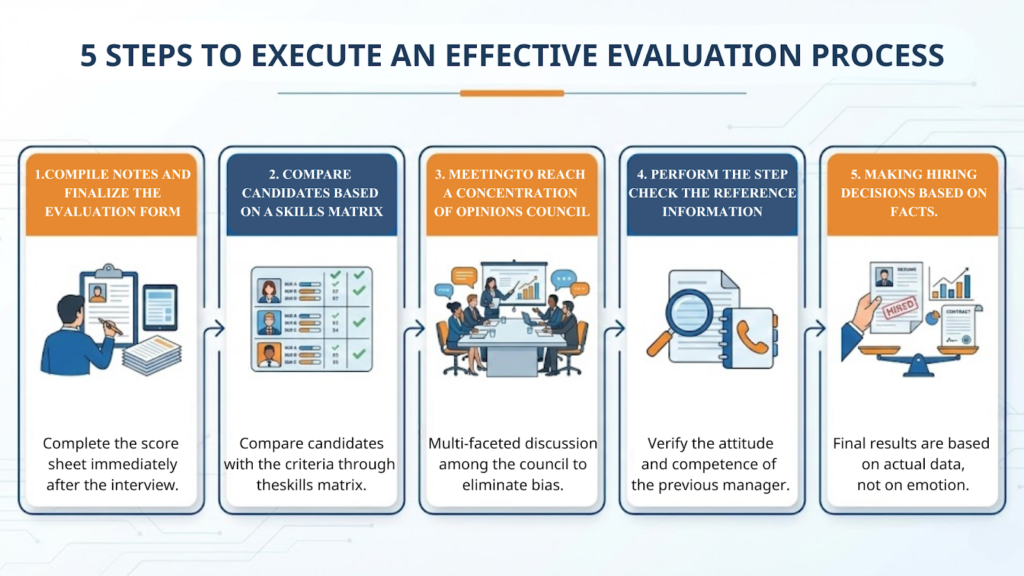
1. Document Individual Assessments Immediately
Within 15-20 minutes after the interview, interviewers should complete individual evaluation forms independently. This written record prevents groupthink and serves as evidence for subsequent discussions.
2. Compare Candidates Using a Skill Matrix
Aggregate data into a dashboard or Skill Matrix showing side-by-side comparisons. However, measure each candidate against job standards first, not just against each other. This matrix provides objective perspective and minimizes emotion.
3. Conduct a Team Debrief Meeting
Schedule a Debrief within 24-48 hours. All interviewers present their assessments while HR moderates to maintain objectivity. If scorecard differences exist, require evidence. This multi-dimensional perspective informs the final decision.
4. Complete Reference Checks
Contact former managers to validate information and assess work attitude, stress management, and team collaboration. A 10-minute reference call can prevent hiring failures—never skip this step.
5. Make the Final Decision with Complete Data
Combine interview scores, debrief notes, assessment results, and reference feedback for the final decision. Once selected, extend an offer quickly. For rejected candidates, send a professional thank-you letter to maintain your brand reputation.
Common Evaluation Mistakes
- Halo/Horn Effect: Allowing one strong or weak trait to dominate the entire evaluation. Score components separately and compartmentalize.
- Comparing Against Competitors Instead of Standards: Selecting the “best of available candidates” even if they don’t meet JD requirements. Always measure against the job description first.
- Overlooking Red Flags: Dismissing attitude concerns because of strong technical skills. Attitude is often more important than aptitude for long-term success.
Conclusion
Building a post-interview candidate evaluation process is a strategic investment. By applying clear evaluation criteria, using transparent interview scorecards, and avoiding psychological traps, your organization will make smarter hiring decisions and build a stronger workforce.
For guidance on recruitment and talent management strategies, contact Wacontre Accounting Services at Hotline: (028) 3820 1213 or email [email protected]. Our experienced team supports Vietnam company formation and HR operations. (Japanese clients: Hotline (050) 5534 5505.)
Understand “Why did this candidate apply for this position?” Motivation drives engagement and retention. Assess seriousness through preparation quality and thoughtful questions. Finding alignment between the candidate’s personal goals and the organization’s objectives ensures sustainable partnership.
5-Step Evaluation Process
1. Document Individual Assessments Immediately
Within 15-20 minutes after the interview, interviewers should complete individual evaluation forms independently. This written record prevents groupthink and serves as evidence for subsequent discussions.
2. Compare Candidates Using a Skill Matrix
Aggregate data into a dashboard or Skill Matrix showing side-by-side comparisons. However, measure each candidate against job standards first, not just against each other. This matrix provides objective perspective and minimizes emotion.
3. Conduct a Team Debrief Meeting
Schedule a Debrief within 24-48 hours. All interviewers present their assessments while HR moderates to maintain objectivity. If scorecard differences exist, require evidence. This multi-dimensional perspective informs the final decision.
4. Complete Reference Checks
Contact former managers to validate information and assess work attitude, stress management, and team collaboration. A 10-minute reference call can prevent hiring failures—never skip this step.
5. Make the Final Decision with Complete Data
Combine interview scores, debrief notes, assessment results, and reference feedback for the final decision. Once selected, extend an offer quickly. For rejected candidates, send a professional thank-you letter to maintain your brand reputation.
Common Evaluation Mistakes
- Halo/Horn Effect: Allowing one strong or weak trait to dominate the entire evaluation. Score components separately and compartmentalize.
- Comparing Against Competitors Instead of Standards: Selecting the “best of available candidates” even if they don’t meet JD requirements. Always measure against the job description first.
- Overlooking Red Flags: Dismissing attitude concerns because of strong technical skills. Attitude is often more important than aptitude for long-term success.
Conclusion
Building a post-interview candidate evaluation process is a strategic investment. By applying clear evaluation criteria, using transparent interview scorecards, and avoiding psychological traps, your organization will make smarter hiring decisions and build a stronger workforce.
For guidance on recruitment and talent management strategies, contact Wacontre Accounting Services at Hotline: (028) 3820 1213 or email [email protected]. Our experienced team supports Vietnam company formation and HR operations. (Japanese clients: Hotline (050) 5534 5505.)
4. Motivation and Career Commitment
Understand “Why did this candidate apply for this position?” Motivation drives engagement and retention. Assess seriousness through preparation quality and thoughtful questions. Finding alignment between the candidate’s personal goals and the organization’s objectives ensures sustainable partnership.
5-Step Evaluation Process
1. Document Individual Assessments Immediately
Within 15-20 minutes after the interview, interviewers should complete individual evaluation forms independently. This written record prevents groupthink and serves as evidence for subsequent discussions.
2. Compare Candidates Using a Skill Matrix
Aggregate data into a dashboard or Skill Matrix showing side-by-side comparisons. However, measure each candidate against job standards first, not just against each other. This matrix provides objective perspective and minimizes emotion.
3. Conduct a Team Debrief Meeting
Schedule a Debrief within 24-48 hours. All interviewers present their assessments while HR moderates to maintain objectivity. If scorecard differences exist, require evidence. This multi-dimensional perspective informs the final decision.
4. Complete Reference Checks
Contact former managers to validate information and assess work attitude, stress management, and team collaboration. A 10-minute reference call can prevent hiring failures—never skip this step.
5. Make the Final Decision with Complete Data
Combine interview scores, debrief notes, assessment results, and reference feedback for the final decision. Once selected, extend an offer quickly. For rejected candidates, send a professional thank-you letter to maintain your brand reputation.
Common Evaluation Mistakes
- Halo/Horn Effect: Allowing one strong or weak trait to dominate the entire evaluation. Score components separately and compartmentalize.
- Comparing Against Competitors Instead of Standards: Selecting the “best of available candidates” even if they don’t meet JD requirements. Always measure against the job description first.
- Overlooking Red Flags: Dismissing attitude concerns because of strong technical skills. Attitude is often more important than aptitude for long-term success.
Conclusion
Building a post-interview candidate evaluation process is a strategic investment. By applying clear evaluation criteria, using transparent interview scorecards, and avoiding psychological traps, your organization will make smarter hiring decisions and build a stronger workforce.
For guidance on recruitment and talent management strategies, contact Wacontre Accounting Services at Hotline: (028) 3820 1213 or email [email protected]. Our experienced team supports Vietnam company formation and HR operations. (Japanese clients: Hotline (050) 5534 5505.)
“Culture fit” does not mean hiring duplicates of current employees. It means assessing whether candidates’ values align with your company’s core values. For example, if transparency is central to your culture, an evasive candidate will struggle to integrate. Poor cultural fit is a leading cause of early turnover.
4. Motivation and Career Commitment
Understand “Why did this candidate apply for this position?” Motivation drives engagement and retention. Assess seriousness through preparation quality and thoughtful questions. Finding alignment between the candidate’s personal goals and the organization’s objectives ensures sustainable partnership.
5-Step Evaluation Process
1. Document Individual Assessments Immediately
Within 15-20 minutes after the interview, interviewers should complete individual evaluation forms independently. This written record prevents groupthink and serves as evidence for subsequent discussions.
2. Compare Candidates Using a Skill Matrix
Aggregate data into a dashboard or Skill Matrix showing side-by-side comparisons. However, measure each candidate against job standards first, not just against each other. This matrix provides objective perspective and minimizes emotion.
3. Conduct a Team Debrief Meeting
Schedule a Debrief within 24-48 hours. All interviewers present their assessments while HR moderates to maintain objectivity. If scorecard differences exist, require evidence. This multi-dimensional perspective informs the final decision.
4. Complete Reference Checks
Contact former managers to validate information and assess work attitude, stress management, and team collaboration. A 10-minute reference call can prevent hiring failures—never skip this step.
5. Make the Final Decision with Complete Data
Combine interview scores, debrief notes, assessment results, and reference feedback for the final decision. Once selected, extend an offer quickly. For rejected candidates, send a professional thank-you letter to maintain your brand reputation.
Common Evaluation Mistakes
- Halo/Horn Effect: Allowing one strong or weak trait to dominate the entire evaluation. Score components separately and compartmentalize.
- Comparing Against Competitors Instead of Standards: Selecting the “best of available candidates” even if they don’t meet JD requirements. Always measure against the job description first.
- Overlooking Red Flags: Dismissing attitude concerns because of strong technical skills. Attitude is often more important than aptitude for long-term success.
Conclusion
Building a post-interview candidate evaluation process is a strategic investment. By applying clear evaluation criteria, using transparent interview scorecards, and avoiding psychological traps, your organization will make smarter hiring decisions and build a stronger workforce.
For guidance on recruitment and talent management strategies, contact Wacontre Accounting Services at Hotline: (028) 3820 1213 or email [email protected]. Our experienced team supports Vietnam company formation and HR operations. (Japanese clients: Hotline (050) 5534 5505.)
3. Cultural Alignment
“Culture fit” does not mean hiring duplicates of current employees. It means assessing whether candidates’ values align with your company’s core values. For example, if transparency is central to your culture, an evasive candidate will struggle to integrate. Poor cultural fit is a leading cause of early turnover.
4. Motivation and Career Commitment
Understand “Why did this candidate apply for this position?” Motivation drives engagement and retention. Assess seriousness through preparation quality and thoughtful questions. Finding alignment between the candidate’s personal goals and the organization’s objectives ensures sustainable partnership.
5-Step Evaluation Process
1. Document Individual Assessments Immediately
Within 15-20 minutes after the interview, interviewers should complete individual evaluation forms independently. This written record prevents groupthink and serves as evidence for subsequent discussions.
2. Compare Candidates Using a Skill Matrix
Aggregate data into a dashboard or Skill Matrix showing side-by-side comparisons. However, measure each candidate against job standards first, not just against each other. This matrix provides objective perspective and minimizes emotion.
3. Conduct a Team Debrief Meeting
Schedule a Debrief within 24-48 hours. All interviewers present their assessments while HR moderates to maintain objectivity. If scorecard differences exist, require evidence. This multi-dimensional perspective informs the final decision.
4. Complete Reference Checks
Contact former managers to validate information and assess work attitude, stress management, and team collaboration. A 10-minute reference call can prevent hiring failures—never skip this step.
5. Make the Final Decision with Complete Data
Combine interview scores, debrief notes, assessment results, and reference feedback for the final decision. Once selected, extend an offer quickly. For rejected candidates, send a professional thank-you letter to maintain your brand reputation.
Common Evaluation Mistakes
- Halo/Horn Effect: Allowing one strong or weak trait to dominate the entire evaluation. Score components separately and compartmentalize.
- Comparing Against Competitors Instead of Standards: Selecting the “best of available candidates” even if they don’t meet JD requirements. Always measure against the job description first.
- Overlooking Red Flags: Dismissing attitude concerns because of strong technical skills. Attitude is often more important than aptitude for long-term success.
Conclusion
Building a post-interview candidate evaluation process is a strategic investment. By applying clear evaluation criteria, using transparent interview scorecards, and avoiding psychological traps, your organization will make smarter hiring decisions and build a stronger workforce.
For guidance on recruitment and talent management strategies, contact Wacontre Accounting Services at Hotline: (028) 3820 1213 or email [email protected]. Our experienced team supports Vietnam company formation and HR operations. (Japanese clients: Hotline (050) 5534 5505.)
In modern environments, soft skills are as crucial as technical expertise. Evaluate communication, teamwork, time management, and critical thinking. How does the candidate handle difficult questions? Do they remain calm and logical? Look for high adaptability and progressive mindsets.
3. Cultural Alignment
“Culture fit” does not mean hiring duplicates of current employees. It means assessing whether candidates’ values align with your company’s core values. For example, if transparency is central to your culture, an evasive candidate will struggle to integrate. Poor cultural fit is a leading cause of early turnover.
4. Motivation and Career Commitment
Understand “Why did this candidate apply for this position?” Motivation drives engagement and retention. Assess seriousness through preparation quality and thoughtful questions. Finding alignment between the candidate’s personal goals and the organization’s objectives ensures sustainable partnership.
5-Step Evaluation Process
1. Document Individual Assessments Immediately
Within 15-20 minutes after the interview, interviewers should complete individual evaluation forms independently. This written record prevents groupthink and serves as evidence for subsequent discussions.
2. Compare Candidates Using a Skill Matrix
Aggregate data into a dashboard or Skill Matrix showing side-by-side comparisons. However, measure each candidate against job standards first, not just against each other. This matrix provides objective perspective and minimizes emotion.
3. Conduct a Team Debrief Meeting
Schedule a Debrief within 24-48 hours. All interviewers present their assessments while HR moderates to maintain objectivity. If scorecard differences exist, require evidence. This multi-dimensional perspective informs the final decision.
4. Complete Reference Checks
Contact former managers to validate information and assess work attitude, stress management, and team collaboration. A 10-minute reference call can prevent hiring failures—never skip this step.
5. Make the Final Decision with Complete Data
Combine interview scores, debrief notes, assessment results, and reference feedback for the final decision. Once selected, extend an offer quickly. For rejected candidates, send a professional thank-you letter to maintain your brand reputation.
Common Evaluation Mistakes
- Halo/Horn Effect: Allowing one strong or weak trait to dominate the entire evaluation. Score components separately and compartmentalize.
- Comparing Against Competitors Instead of Standards: Selecting the “best of available candidates” even if they don’t meet JD requirements. Always measure against the job description first.
- Overlooking Red Flags: Dismissing attitude concerns because of strong technical skills. Attitude is often more important than aptitude for long-term success.
Conclusion
Building a post-interview candidate evaluation process is a strategic investment. By applying clear evaluation criteria, using transparent interview scorecards, and avoiding psychological traps, your organization will make smarter hiring decisions and build a stronger workforce.
For guidance on recruitment and talent management strategies, contact Wacontre Accounting Services at Hotline: (028) 3820 1213 or email [email protected]. Our experienced team supports Vietnam company formation and HR operations. (Japanese clients: Hotline (050) 5534 5505.)
2. Soft Skills and Problem-Solving Ability
In modern environments, soft skills are as crucial as technical expertise. Evaluate communication, teamwork, time management, and critical thinking. How does the candidate handle difficult questions? Do they remain calm and logical? Look for high adaptability and progressive mindsets.
3. Cultural Alignment
“Culture fit” does not mean hiring duplicates of current employees. It means assessing whether candidates’ values align with your company’s core values. For example, if transparency is central to your culture, an evasive candidate will struggle to integrate. Poor cultural fit is a leading cause of early turnover.
4. Motivation and Career Commitment
Understand “Why did this candidate apply for this position?” Motivation drives engagement and retention. Assess seriousness through preparation quality and thoughtful questions. Finding alignment between the candidate’s personal goals and the organization’s objectives ensures sustainable partnership.
5-Step Evaluation Process
1. Document Individual Assessments Immediately
Within 15-20 minutes after the interview, interviewers should complete individual evaluation forms independently. This written record prevents groupthink and serves as evidence for subsequent discussions.
2. Compare Candidates Using a Skill Matrix
Aggregate data into a dashboard or Skill Matrix showing side-by-side comparisons. However, measure each candidate against job standards first, not just against each other. This matrix provides objective perspective and minimizes emotion.
3. Conduct a Team Debrief Meeting
Schedule a Debrief within 24-48 hours. All interviewers present their assessments while HR moderates to maintain objectivity. If scorecard differences exist, require evidence. This multi-dimensional perspective informs the final decision.
4. Complete Reference Checks
Contact former managers to validate information and assess work attitude, stress management, and team collaboration. A 10-minute reference call can prevent hiring failures—never skip this step.
5. Make the Final Decision with Complete Data
Combine interview scores, debrief notes, assessment results, and reference feedback for the final decision. Once selected, extend an offer quickly. For rejected candidates, send a professional thank-you letter to maintain your brand reputation.
Common Evaluation Mistakes
- Halo/Horn Effect: Allowing one strong or weak trait to dominate the entire evaluation. Score components separately and compartmentalize.
- Comparing Against Competitors Instead of Standards: Selecting the “best of available candidates” even if they don’t meet JD requirements. Always measure against the job description first.
- Overlooking Red Flags: Dismissing attitude concerns because of strong technical skills. Attitude is often more important than aptitude for long-term success.
Conclusion
Building a post-interview candidate evaluation process is a strategic investment. By applying clear evaluation criteria, using transparent interview scorecards, and avoiding psychological traps, your organization will make smarter hiring decisions and build a stronger workforce.
For guidance on recruitment and talent management strategies, contact Wacontre Accounting Services at Hotline: (028) 3820 1213 or email [email protected]. Our experienced team supports Vietnam company formation and HR operations. (Japanese clients: Hotline (050) 5534 5505.)
Beyond degrees or years listed on a CV, evaluate whether candidates possess actual skills to perform the job. Distinguish between “Must-have” and “Nice-to-have” skills. Focus assessments on specific achievements: What did the candidate accomplish, what was their contribution, and what metrics support it?
2. Soft Skills and Problem-Solving Ability
In modern environments, soft skills are as crucial as technical expertise. Evaluate communication, teamwork, time management, and critical thinking. How does the candidate handle difficult questions? Do they remain calm and logical? Look for high adaptability and progressive mindsets.
3. Cultural Alignment
“Culture fit” does not mean hiring duplicates of current employees. It means assessing whether candidates’ values align with your company’s core values. For example, if transparency is central to your culture, an evasive candidate will struggle to integrate. Poor cultural fit is a leading cause of early turnover.
4. Motivation and Career Commitment
Understand “Why did this candidate apply for this position?” Motivation drives engagement and retention. Assess seriousness through preparation quality and thoughtful questions. Finding alignment between the candidate’s personal goals and the organization’s objectives ensures sustainable partnership.
5-Step Evaluation Process
1. Document Individual Assessments Immediately
Within 15-20 minutes after the interview, interviewers should complete individual evaluation forms independently. This written record prevents groupthink and serves as evidence for subsequent discussions.
2. Compare Candidates Using a Skill Matrix
Aggregate data into a dashboard or Skill Matrix showing side-by-side comparisons. However, measure each candidate against job standards first, not just against each other. This matrix provides objective perspective and minimizes emotion.
3. Conduct a Team Debrief Meeting
Schedule a Debrief within 24-48 hours. All interviewers present their assessments while HR moderates to maintain objectivity. If scorecard differences exist, require evidence. This multi-dimensional perspective informs the final decision.
4. Complete Reference Checks
Contact former managers to validate information and assess work attitude, stress management, and team collaboration. A 10-minute reference call can prevent hiring failures—never skip this step.
5. Make the Final Decision with Complete Data
Combine interview scores, debrief notes, assessment results, and reference feedback for the final decision. Once selected, extend an offer quickly. For rejected candidates, send a professional thank-you letter to maintain your brand reputation.
Common Evaluation Mistakes
- Halo/Horn Effect: Allowing one strong or weak trait to dominate the entire evaluation. Score components separately and compartmentalize.
- Comparing Against Competitors Instead of Standards: Selecting the “best of available candidates” even if they don’t meet JD requirements. Always measure against the job description first.
- Overlooking Red Flags: Dismissing attitude concerns because of strong technical skills. Attitude is often more important than aptitude for long-term success.
Conclusion
Building a post-interview candidate evaluation process is a strategic investment. By applying clear evaluation criteria, using transparent interview scorecards, and avoiding psychological traps, your organization will make smarter hiring decisions and build a stronger workforce.
For guidance on recruitment and talent management strategies, contact Wacontre Accounting Services at Hotline: (028) 3820 1213 or email [email protected]. Our experienced team supports Vietnam company formation and HR operations. (Japanese clients: Hotline (050) 5534 5505.)
1. Professional Competence and Practical Experience
Beyond degrees or years listed on a CV, evaluate whether candidates possess actual skills to perform the job. Distinguish between “Must-have” and “Nice-to-have” skills. Focus assessments on specific achievements: What did the candidate accomplish, what was their contribution, and what metrics support it?
2. Soft Skills and Problem-Solving Ability
In modern environments, soft skills are as crucial as technical expertise. Evaluate communication, teamwork, time management, and critical thinking. How does the candidate handle difficult questions? Do they remain calm and logical? Look for high adaptability and progressive mindsets.
3. Cultural Alignment
“Culture fit” does not mean hiring duplicates of current employees. It means assessing whether candidates’ values align with your company’s core values. For example, if transparency is central to your culture, an evasive candidate will struggle to integrate. Poor cultural fit is a leading cause of early turnover.
4. Motivation and Career Commitment
Understand “Why did this candidate apply for this position?” Motivation drives engagement and retention. Assess seriousness through preparation quality and thoughtful questions. Finding alignment between the candidate’s personal goals and the organization’s objectives ensures sustainable partnership.
5-Step Evaluation Process
1. Document Individual Assessments Immediately
Within 15-20 minutes after the interview, interviewers should complete individual evaluation forms independently. This written record prevents groupthink and serves as evidence for subsequent discussions.
2. Compare Candidates Using a Skill Matrix
Aggregate data into a dashboard or Skill Matrix showing side-by-side comparisons. However, measure each candidate against job standards first, not just against each other. This matrix provides objective perspective and minimizes emotion.
3. Conduct a Team Debrief Meeting
Schedule a Debrief within 24-48 hours. All interviewers present their assessments while HR moderates to maintain objectivity. If scorecard differences exist, require evidence. This multi-dimensional perspective informs the final decision.
4. Complete Reference Checks
Contact former managers to validate information and assess work attitude, stress management, and team collaboration. A 10-minute reference call can prevent hiring failures—never skip this step.
5. Make the Final Decision with Complete Data
Combine interview scores, debrief notes, assessment results, and reference feedback for the final decision. Once selected, extend an offer quickly. For rejected candidates, send a professional thank-you letter to maintain your brand reputation.
Common Evaluation Mistakes
- Halo/Horn Effect: Allowing one strong or weak trait to dominate the entire evaluation. Score components separately and compartmentalize.
- Comparing Against Competitors Instead of Standards: Selecting the “best of available candidates” even if they don’t meet JD requirements. Always measure against the job description first.
- Overlooking Red Flags: Dismissing attitude concerns because of strong technical skills. Attitude is often more important than aptitude for long-term success.
Conclusion
Building a post-interview candidate evaluation process is a strategic investment. By applying clear evaluation criteria, using transparent interview scorecards, and avoiding psychological traps, your organization will make smarter hiring decisions and build a stronger workforce.
For guidance on recruitment and talent management strategies, contact Wacontre Accounting Services at Hotline: (028) 3820 1213 or email [email protected]. Our experienced team supports Vietnam company formation and HR operations. (Japanese clients: Hotline (050) 5534 5505.)
A structured evaluation requires clear criteria, typically captured in an Interview Scorecard.
1. Professional Competence and Practical Experience
Beyond degrees or years listed on a CV, evaluate whether candidates possess actual skills to perform the job. Distinguish between “Must-have” and “Nice-to-have” skills. Focus assessments on specific achievements: What did the candidate accomplish, what was their contribution, and what metrics support it?
2. Soft Skills and Problem-Solving Ability
In modern environments, soft skills are as crucial as technical expertise. Evaluate communication, teamwork, time management, and critical thinking. How does the candidate handle difficult questions? Do they remain calm and logical? Look for high adaptability and progressive mindsets.
3. Cultural Alignment
“Culture fit” does not mean hiring duplicates of current employees. It means assessing whether candidates’ values align with your company’s core values. For example, if transparency is central to your culture, an evasive candidate will struggle to integrate. Poor cultural fit is a leading cause of early turnover.
4. Motivation and Career Commitment
Understand “Why did this candidate apply for this position?” Motivation drives engagement and retention. Assess seriousness through preparation quality and thoughtful questions. Finding alignment between the candidate’s personal goals and the organization’s objectives ensures sustainable partnership.
5-Step Evaluation Process
1. Document Individual Assessments Immediately
Within 15-20 minutes after the interview, interviewers should complete individual evaluation forms independently. This written record prevents groupthink and serves as evidence for subsequent discussions.
2. Compare Candidates Using a Skill Matrix
Aggregate data into a dashboard or Skill Matrix showing side-by-side comparisons. However, measure each candidate against job standards first, not just against each other. This matrix provides objective perspective and minimizes emotion.
3. Conduct a Team Debrief Meeting
Schedule a Debrief within 24-48 hours. All interviewers present their assessments while HR moderates to maintain objectivity. If scorecard differences exist, require evidence. This multi-dimensional perspective informs the final decision.
4. Complete Reference Checks
Contact former managers to validate information and assess work attitude, stress management, and team collaboration. A 10-minute reference call can prevent hiring failures—never skip this step.
5. Make the Final Decision with Complete Data
Combine interview scores, debrief notes, assessment results, and reference feedback for the final decision. Once selected, extend an offer quickly. For rejected candidates, send a professional thank-you letter to maintain your brand reputation.
Common Evaluation Mistakes
- Halo/Horn Effect: Allowing one strong or weak trait to dominate the entire evaluation. Score components separately and compartmentalize.
- Comparing Against Competitors Instead of Standards: Selecting the “best of available candidates” even if they don’t meet JD requirements. Always measure against the job description first.
- Overlooking Red Flags: Dismissing attitude concerns because of strong technical skills. Attitude is often more important than aptitude for long-term success.
Conclusion
Building a post-interview candidate evaluation process is a strategic investment. By applying clear evaluation criteria, using transparent interview scorecards, and avoiding psychological traps, your organization will make smarter hiring decisions and build a stronger workforce.
For guidance on recruitment and talent management strategies, contact Wacontre Accounting Services at Hotline: (028) 3820 1213 or email [email protected]. Our experienced team supports Vietnam company formation and HR operations. (Japanese clients: Hotline (050) 5534 5505.)
Key Evaluation Criteria for Interview Scorecards
A structured evaluation requires clear criteria, typically captured in an Interview Scorecard.
1. Professional Competence and Practical Experience
Beyond degrees or years listed on a CV, evaluate whether candidates possess actual skills to perform the job. Distinguish between “Must-have” and “Nice-to-have” skills. Focus assessments on specific achievements: What did the candidate accomplish, what was their contribution, and what metrics support it?
2. Soft Skills and Problem-Solving Ability
In modern environments, soft skills are as crucial as technical expertise. Evaluate communication, teamwork, time management, and critical thinking. How does the candidate handle difficult questions? Do they remain calm and logical? Look for high adaptability and progressive mindsets.
3. Cultural Alignment
“Culture fit” does not mean hiring duplicates of current employees. It means assessing whether candidates’ values align with your company’s core values. For example, if transparency is central to your culture, an evasive candidate will struggle to integrate. Poor cultural fit is a leading cause of early turnover.
4. Motivation and Career Commitment
Understand “Why did this candidate apply for this position?” Motivation drives engagement and retention. Assess seriousness through preparation quality and thoughtful questions. Finding alignment between the candidate’s personal goals and the organization’s objectives ensures sustainable partnership.
5-Step Evaluation Process
1. Document Individual Assessments Immediately
Within 15-20 minutes after the interview, interviewers should complete individual evaluation forms independently. This written record prevents groupthink and serves as evidence for subsequent discussions.
2. Compare Candidates Using a Skill Matrix
Aggregate data into a dashboard or Skill Matrix showing side-by-side comparisons. However, measure each candidate against job standards first, not just against each other. This matrix provides objective perspective and minimizes emotion.
3. Conduct a Team Debrief Meeting
Schedule a Debrief within 24-48 hours. All interviewers present their assessments while HR moderates to maintain objectivity. If scorecard differences exist, require evidence. This multi-dimensional perspective informs the final decision.
4. Complete Reference Checks
Contact former managers to validate information and assess work attitude, stress management, and team collaboration. A 10-minute reference call can prevent hiring failures—never skip this step.
5. Make the Final Decision with Complete Data
Combine interview scores, debrief notes, assessment results, and reference feedback for the final decision. Once selected, extend an offer quickly. For rejected candidates, send a professional thank-you letter to maintain your brand reputation.
Common Evaluation Mistakes
- Halo/Horn Effect: Allowing one strong or weak trait to dominate the entire evaluation. Score components separately and compartmentalize.
- Comparing Against Competitors Instead of Standards: Selecting the “best of available candidates” even if they don’t meet JD requirements. Always measure against the job description first.
- Overlooking Red Flags: Dismissing attitude concerns because of strong technical skills. Attitude is often more important than aptitude for long-term success.
Conclusion
Building a post-interview candidate evaluation process is a strategic investment. By applying clear evaluation criteria, using transparent interview scorecards, and avoiding psychological traps, your organization will make smarter hiring decisions and build a stronger workforce.
For guidance on recruitment and talent management strategies, contact Wacontre Accounting Services at Hotline: (028) 3820 1213 or email [email protected]. Our experienced team supports Vietnam company formation and HR operations. (Japanese clients: Hotline (050) 5534 5505.)
Candidate Experience is critical for Employer Branding. A professional evaluation process enables quick, accurate feedback. A smooth internal process demonstrates respect and transparency, turning rejected candidates into future brand advocates.
Key Evaluation Criteria for Interview Scorecards
A structured evaluation requires clear criteria, typically captured in an Interview Scorecard.
1. Professional Competence and Practical Experience
Beyond degrees or years listed on a CV, evaluate whether candidates possess actual skills to perform the job. Distinguish between “Must-have” and “Nice-to-have” skills. Focus assessments on specific achievements: What did the candidate accomplish, what was their contribution, and what metrics support it?
2. Soft Skills and Problem-Solving Ability
In modern environments, soft skills are as crucial as technical expertise. Evaluate communication, teamwork, time management, and critical thinking. How does the candidate handle difficult questions? Do they remain calm and logical? Look for high adaptability and progressive mindsets.
3. Cultural Alignment
“Culture fit” does not mean hiring duplicates of current employees. It means assessing whether candidates’ values align with your company’s core values. For example, if transparency is central to your culture, an evasive candidate will struggle to integrate. Poor cultural fit is a leading cause of early turnover.
4. Motivation and Career Commitment
Understand “Why did this candidate apply for this position?” Motivation drives engagement and retention. Assess seriousness through preparation quality and thoughtful questions. Finding alignment between the candidate’s personal goals and the organization’s objectives ensures sustainable partnership.
5-Step Evaluation Process
1. Document Individual Assessments Immediately
Within 15-20 minutes after the interview, interviewers should complete individual evaluation forms independently. This written record prevents groupthink and serves as evidence for subsequent discussions.
2. Compare Candidates Using a Skill Matrix
Aggregate data into a dashboard or Skill Matrix showing side-by-side comparisons. However, measure each candidate against job standards first, not just against each other. This matrix provides objective perspective and minimizes emotion.
3. Conduct a Team Debrief Meeting
Schedule a Debrief within 24-48 hours. All interviewers present their assessments while HR moderates to maintain objectivity. If scorecard differences exist, require evidence. This multi-dimensional perspective informs the final decision.
4. Complete Reference Checks
Contact former managers to validate information and assess work attitude, stress management, and team collaboration. A 10-minute reference call can prevent hiring failures—never skip this step.
5. Make the Final Decision with Complete Data
Combine interview scores, debrief notes, assessment results, and reference feedback for the final decision. Once selected, extend an offer quickly. For rejected candidates, send a professional thank-you letter to maintain your brand reputation.
Common Evaluation Mistakes
- Halo/Horn Effect: Allowing one strong or weak trait to dominate the entire evaluation. Score components separately and compartmentalize.
- Comparing Against Competitors Instead of Standards: Selecting the “best of available candidates” even if they don’t meet JD requirements. Always measure against the job description first.
- Overlooking Red Flags: Dismissing attitude concerns because of strong technical skills. Attitude is often more important than aptitude for long-term success.
Conclusion
Building a post-interview candidate evaluation process is a strategic investment. By applying clear evaluation criteria, using transparent interview scorecards, and avoiding psychological traps, your organization will make smarter hiring decisions and build a stronger workforce.
For guidance on recruitment and talent management strategies, contact Wacontre Accounting Services at Hotline: (028) 3820 1213 or email [email protected]. Our experienced team supports Vietnam company formation and HR operations. (Japanese clients: Hotline (050) 5534 5505.)
3. Strengthen Candidate Experience and Employer Brand
Candidate Experience is critical for Employer Branding. A professional evaluation process enables quick, accurate feedback. A smooth internal process demonstrates respect and transparency, turning rejected candidates into future brand advocates.
Key Evaluation Criteria for Interview Scorecards
A structured evaluation requires clear criteria, typically captured in an Interview Scorecard.
1. Professional Competence and Practical Experience
Beyond degrees or years listed on a CV, evaluate whether candidates possess actual skills to perform the job. Distinguish between “Must-have” and “Nice-to-have” skills. Focus assessments on specific achievements: What did the candidate accomplish, what was their contribution, and what metrics support it?
2. Soft Skills and Problem-Solving Ability
In modern environments, soft skills are as crucial as technical expertise. Evaluate communication, teamwork, time management, and critical thinking. How does the candidate handle difficult questions? Do they remain calm and logical? Look for high adaptability and progressive mindsets.
3. Cultural Alignment
“Culture fit” does not mean hiring duplicates of current employees. It means assessing whether candidates’ values align with your company’s core values. For example, if transparency is central to your culture, an evasive candidate will struggle to integrate. Poor cultural fit is a leading cause of early turnover.
4. Motivation and Career Commitment
Understand “Why did this candidate apply for this position?” Motivation drives engagement and retention. Assess seriousness through preparation quality and thoughtful questions. Finding alignment between the candidate’s personal goals and the organization’s objectives ensures sustainable partnership.
5-Step Evaluation Process
1. Document Individual Assessments Immediately
Within 15-20 minutes after the interview, interviewers should complete individual evaluation forms independently. This written record prevents groupthink and serves as evidence for subsequent discussions.
2. Compare Candidates Using a Skill Matrix
Aggregate data into a dashboard or Skill Matrix showing side-by-side comparisons. However, measure each candidate against job standards first, not just against each other. This matrix provides objective perspective and minimizes emotion.
3. Conduct a Team Debrief Meeting
Schedule a Debrief within 24-48 hours. All interviewers present their assessments while HR moderates to maintain objectivity. If scorecard differences exist, require evidence. This multi-dimensional perspective informs the final decision.
4. Complete Reference Checks
Contact former managers to validate information and assess work attitude, stress management, and team collaboration. A 10-minute reference call can prevent hiring failures—never skip this step.
5. Make the Final Decision with Complete Data
Combine interview scores, debrief notes, assessment results, and reference feedback for the final decision. Once selected, extend an offer quickly. For rejected candidates, send a professional thank-you letter to maintain your brand reputation.
Common Evaluation Mistakes
- Halo/Horn Effect: Allowing one strong or weak trait to dominate the entire evaluation. Score components separately and compartmentalize.
- Comparing Against Competitors Instead of Standards: Selecting the “best of available candidates” even if they don’t meet JD requirements. Always measure against the job description first.
- Overlooking Red Flags: Dismissing attitude concerns because of strong technical skills. Attitude is often more important than aptitude for long-term success.
Conclusion
Building a post-interview candidate evaluation process is a strategic investment. By applying clear evaluation criteria, using transparent interview scorecards, and avoiding psychological traps, your organization will make smarter hiring decisions and build a stronger workforce.
For guidance on recruitment and talent management strategies, contact Wacontre Accounting Services at Hotline: (028) 3820 1213 or email [email protected]. Our experienced team supports Vietnam company formation and HR operations. (Japanese clients: Hotline (050) 5534 5505.)
Even experienced interviewers are influenced by unconscious bias. Without objective systems, hiring becomes emotional and unfair—often favoring candidates similar to existing team members (Affinity Bias). Standardized processes with quantitative scoring focus discussions on data, not feelings, ensuring fairness and diversity.
3. Strengthen Candidate Experience and Employer Brand
Candidate Experience is critical for Employer Branding. A professional evaluation process enables quick, accurate feedback. A smooth internal process demonstrates respect and transparency, turning rejected candidates into future brand advocates.
Key Evaluation Criteria for Interview Scorecards
A structured evaluation requires clear criteria, typically captured in an Interview Scorecard.
1. Professional Competence and Practical Experience
Beyond degrees or years listed on a CV, evaluate whether candidates possess actual skills to perform the job. Distinguish between “Must-have” and “Nice-to-have” skills. Focus assessments on specific achievements: What did the candidate accomplish, what was their contribution, and what metrics support it?
2. Soft Skills and Problem-Solving Ability
In modern environments, soft skills are as crucial as technical expertise. Evaluate communication, teamwork, time management, and critical thinking. How does the candidate handle difficult questions? Do they remain calm and logical? Look for high adaptability and progressive mindsets.
3. Cultural Alignment
“Culture fit” does not mean hiring duplicates of current employees. It means assessing whether candidates’ values align with your company’s core values. For example, if transparency is central to your culture, an evasive candidate will struggle to integrate. Poor cultural fit is a leading cause of early turnover.
4. Motivation and Career Commitment
Understand “Why did this candidate apply for this position?” Motivation drives engagement and retention. Assess seriousness through preparation quality and thoughtful questions. Finding alignment between the candidate’s personal goals and the organization’s objectives ensures sustainable partnership.
5-Step Evaluation Process
1. Document Individual Assessments Immediately
Within 15-20 minutes after the interview, interviewers should complete individual evaluation forms independently. This written record prevents groupthink and serves as evidence for subsequent discussions.
2. Compare Candidates Using a Skill Matrix
Aggregate data into a dashboard or Skill Matrix showing side-by-side comparisons. However, measure each candidate against job standards first, not just against each other. This matrix provides objective perspective and minimizes emotion.
3. Conduct a Team Debrief Meeting
Schedule a Debrief within 24-48 hours. All interviewers present their assessments while HR moderates to maintain objectivity. If scorecard differences exist, require evidence. This multi-dimensional perspective informs the final decision.
4. Complete Reference Checks
Contact former managers to validate information and assess work attitude, stress management, and team collaboration. A 10-minute reference call can prevent hiring failures—never skip this step.
5. Make the Final Decision with Complete Data
Combine interview scores, debrief notes, assessment results, and reference feedback for the final decision. Once selected, extend an offer quickly. For rejected candidates, send a professional thank-you letter to maintain your brand reputation.
Common Evaluation Mistakes
- Halo/Horn Effect: Allowing one strong or weak trait to dominate the entire evaluation. Score components separately and compartmentalize.
- Comparing Against Competitors Instead of Standards: Selecting the “best of available candidates” even if they don’t meet JD requirements. Always measure against the job description first.
- Overlooking Red Flags: Dismissing attitude concerns because of strong technical skills. Attitude is often more important than aptitude for long-term success.
Conclusion
Building a post-interview candidate evaluation process is a strategic investment. By applying clear evaluation criteria, using transparent interview scorecards, and avoiding psychological traps, your organization will make smarter hiring decisions and build a stronger workforce.
For guidance on recruitment and talent management strategies, contact Wacontre Accounting Services at Hotline: (028) 3820 1213 or email [email protected]. Our experienced team supports Vietnam company formation and HR operations. (Japanese clients: Hotline (050) 5534 5505.)
2. Eliminate Unconscious Bias
Even experienced interviewers are influenced by unconscious bias. Without objective systems, hiring becomes emotional and unfair—often favoring candidates similar to existing team members (Affinity Bias). Standardized processes with quantitative scoring focus discussions on data, not feelings, ensuring fairness and diversity.
3. Strengthen Candidate Experience and Employer Brand
Candidate Experience is critical for Employer Branding. A professional evaluation process enables quick, accurate feedback. A smooth internal process demonstrates respect and transparency, turning rejected candidates into future brand advocates.
Key Evaluation Criteria for Interview Scorecards
A structured evaluation requires clear criteria, typically captured in an Interview Scorecard.
1. Professional Competence and Practical Experience
Beyond degrees or years listed on a CV, evaluate whether candidates possess actual skills to perform the job. Distinguish between “Must-have” and “Nice-to-have” skills. Focus assessments on specific achievements: What did the candidate accomplish, what was their contribution, and what metrics support it?
2. Soft Skills and Problem-Solving Ability
In modern environments, soft skills are as crucial as technical expertise. Evaluate communication, teamwork, time management, and critical thinking. How does the candidate handle difficult questions? Do they remain calm and logical? Look for high adaptability and progressive mindsets.
3. Cultural Alignment
“Culture fit” does not mean hiring duplicates of current employees. It means assessing whether candidates’ values align with your company’s core values. For example, if transparency is central to your culture, an evasive candidate will struggle to integrate. Poor cultural fit is a leading cause of early turnover.
4. Motivation and Career Commitment
Understand “Why did this candidate apply for this position?” Motivation drives engagement and retention. Assess seriousness through preparation quality and thoughtful questions. Finding alignment between the candidate’s personal goals and the organization’s objectives ensures sustainable partnership.
5-Step Evaluation Process
1. Document Individual Assessments Immediately
Within 15-20 minutes after the interview, interviewers should complete individual evaluation forms independently. This written record prevents groupthink and serves as evidence for subsequent discussions.
2. Compare Candidates Using a Skill Matrix
Aggregate data into a dashboard or Skill Matrix showing side-by-side comparisons. However, measure each candidate against job standards first, not just against each other. This matrix provides objective perspective and minimizes emotion.
3. Conduct a Team Debrief Meeting
Schedule a Debrief within 24-48 hours. All interviewers present their assessments while HR moderates to maintain objectivity. If scorecard differences exist, require evidence. This multi-dimensional perspective informs the final decision.
4. Complete Reference Checks
Contact former managers to validate information and assess work attitude, stress management, and team collaboration. A 10-minute reference call can prevent hiring failures—never skip this step.
5. Make the Final Decision with Complete Data
Combine interview scores, debrief notes, assessment results, and reference feedback for the final decision. Once selected, extend an offer quickly. For rejected candidates, send a professional thank-you letter to maintain your brand reputation.
Common Evaluation Mistakes
- Halo/Horn Effect: Allowing one strong or weak trait to dominate the entire evaluation. Score components separately and compartmentalize.
- Comparing Against Competitors Instead of Standards: Selecting the “best of available candidates” even if they don’t meet JD requirements. Always measure against the job description first.
- Overlooking Red Flags: Dismissing attitude concerns because of strong technical skills. Attitude is often more important than aptitude for long-term success.
Conclusion
Building a post-interview candidate evaluation process is a strategic investment. By applying clear evaluation criteria, using transparent interview scorecards, and avoiding psychological traps, your organization will make smarter hiring decisions and build a stronger workforce.
For guidance on recruitment and talent management strategies, contact Wacontre Accounting Services at Hotline: (028) 3820 1213 or email [email protected]. Our experienced team supports Vietnam company formation and HR operations. (Japanese clients: Hotline (050) 5534 5505.)
A “bad hire” carries significant costs: salary during probation, recruitment expenses, management time, training, and reduced team productivity. A standardized process provides multiple evaluation filters that reveal competency gaps or attitude issues a polished interview may hide.
2. Eliminate Unconscious Bias
Even experienced interviewers are influenced by unconscious bias. Without objective systems, hiring becomes emotional and unfair—often favoring candidates similar to existing team members (Affinity Bias). Standardized processes with quantitative scoring focus discussions on data, not feelings, ensuring fairness and diversity.
3. Strengthen Candidate Experience and Employer Brand
Candidate Experience is critical for Employer Branding. A professional evaluation process enables quick, accurate feedback. A smooth internal process demonstrates respect and transparency, turning rejected candidates into future brand advocates.
Key Evaluation Criteria for Interview Scorecards
A structured evaluation requires clear criteria, typically captured in an Interview Scorecard.
1. Professional Competence and Practical Experience
Beyond degrees or years listed on a CV, evaluate whether candidates possess actual skills to perform the job. Distinguish between “Must-have” and “Nice-to-have” skills. Focus assessments on specific achievements: What did the candidate accomplish, what was their contribution, and what metrics support it?
2. Soft Skills and Problem-Solving Ability
In modern environments, soft skills are as crucial as technical expertise. Evaluate communication, teamwork, time management, and critical thinking. How does the candidate handle difficult questions? Do they remain calm and logical? Look for high adaptability and progressive mindsets.
3. Cultural Alignment
“Culture fit” does not mean hiring duplicates of current employees. It means assessing whether candidates’ values align with your company’s core values. For example, if transparency is central to your culture, an evasive candidate will struggle to integrate. Poor cultural fit is a leading cause of early turnover.
4. Motivation and Career Commitment
Understand “Why did this candidate apply for this position?” Motivation drives engagement and retention. Assess seriousness through preparation quality and thoughtful questions. Finding alignment between the candidate’s personal goals and the organization’s objectives ensures sustainable partnership.
5-Step Evaluation Process
1. Document Individual Assessments Immediately
Within 15-20 minutes after the interview, interviewers should complete individual evaluation forms independently. This written record prevents groupthink and serves as evidence for subsequent discussions.
2. Compare Candidates Using a Skill Matrix
Aggregate data into a dashboard or Skill Matrix showing side-by-side comparisons. However, measure each candidate against job standards first, not just against each other. This matrix provides objective perspective and minimizes emotion.
3. Conduct a Team Debrief Meeting
Schedule a Debrief within 24-48 hours. All interviewers present their assessments while HR moderates to maintain objectivity. If scorecard differences exist, require evidence. This multi-dimensional perspective informs the final decision.
4. Complete Reference Checks
Contact former managers to validate information and assess work attitude, stress management, and team collaboration. A 10-minute reference call can prevent hiring failures—never skip this step.
5. Make the Final Decision with Complete Data
Combine interview scores, debrief notes, assessment results, and reference feedback for the final decision. Once selected, extend an offer quickly. For rejected candidates, send a professional thank-you letter to maintain your brand reputation.
Common Evaluation Mistakes
- Halo/Horn Effect: Allowing one strong or weak trait to dominate the entire evaluation. Score components separately and compartmentalize.
- Comparing Against Competitors Instead of Standards: Selecting the “best of available candidates” even if they don’t meet JD requirements. Always measure against the job description first.
- Overlooking Red Flags: Dismissing attitude concerns because of strong technical skills. Attitude is often more important than aptitude for long-term success.
Conclusion
Building a post-interview candidate evaluation process is a strategic investment. By applying clear evaluation criteria, using transparent interview scorecards, and avoiding psychological traps, your organization will make smarter hiring decisions and build a stronger workforce.
For guidance on recruitment and talent management strategies, contact Wacontre Accounting Services at Hotline: (028) 3820 1213 or email [email protected]. Our experienced team supports Vietnam company formation and HR operations. (Japanese clients: Hotline (050) 5534 5505.)
1. Reduce Hiring Risk and Cost
A “bad hire” carries significant costs: salary during probation, recruitment expenses, management time, training, and reduced team productivity. A standardized process provides multiple evaluation filters that reveal competency gaps or attitude issues a polished interview may hide.
2. Eliminate Unconscious Bias
Even experienced interviewers are influenced by unconscious bias. Without objective systems, hiring becomes emotional and unfair—often favoring candidates similar to existing team members (Affinity Bias). Standardized processes with quantitative scoring focus discussions on data, not feelings, ensuring fairness and diversity.
3. Strengthen Candidate Experience and Employer Brand
Candidate Experience is critical for Employer Branding. A professional evaluation process enables quick, accurate feedback. A smooth internal process demonstrates respect and transparency, turning rejected candidates into future brand advocates.
Key Evaluation Criteria for Interview Scorecards
A structured evaluation requires clear criteria, typically captured in an Interview Scorecard.
1. Professional Competence and Practical Experience
Beyond degrees or years listed on a CV, evaluate whether candidates possess actual skills to perform the job. Distinguish between “Must-have” and “Nice-to-have” skills. Focus assessments on specific achievements: What did the candidate accomplish, what was their contribution, and what metrics support it?
2. Soft Skills and Problem-Solving Ability
In modern environments, soft skills are as crucial as technical expertise. Evaluate communication, teamwork, time management, and critical thinking. How does the candidate handle difficult questions? Do they remain calm and logical? Look for high adaptability and progressive mindsets.
3. Cultural Alignment
“Culture fit” does not mean hiring duplicates of current employees. It means assessing whether candidates’ values align with your company’s core values. For example, if transparency is central to your culture, an evasive candidate will struggle to integrate. Poor cultural fit is a leading cause of early turnover.
4. Motivation and Career Commitment
Understand “Why did this candidate apply for this position?” Motivation drives engagement and retention. Assess seriousness through preparation quality and thoughtful questions. Finding alignment between the candidate’s personal goals and the organization’s objectives ensures sustainable partnership.
5-Step Evaluation Process
1. Document Individual Assessments Immediately
Within 15-20 minutes after the interview, interviewers should complete individual evaluation forms independently. This written record prevents groupthink and serves as evidence for subsequent discussions.
2. Compare Candidates Using a Skill Matrix
Aggregate data into a dashboard or Skill Matrix showing side-by-side comparisons. However, measure each candidate against job standards first, not just against each other. This matrix provides objective perspective and minimizes emotion.
3. Conduct a Team Debrief Meeting
Schedule a Debrief within 24-48 hours. All interviewers present their assessments while HR moderates to maintain objectivity. If scorecard differences exist, require evidence. This multi-dimensional perspective informs the final decision.
4. Complete Reference Checks
Contact former managers to validate information and assess work attitude, stress management, and team collaboration. A 10-minute reference call can prevent hiring failures—never skip this step.
5. Make the Final Decision with Complete Data
Combine interview scores, debrief notes, assessment results, and reference feedback for the final decision. Once selected, extend an offer quickly. For rejected candidates, send a professional thank-you letter to maintain your brand reputation.
Common Evaluation Mistakes
- Halo/Horn Effect: Allowing one strong or weak trait to dominate the entire evaluation. Score components separately and compartmentalize.
- Comparing Against Competitors Instead of Standards: Selecting the “best of available candidates” even if they don’t meet JD requirements. Always measure against the job description first.
- Overlooking Red Flags: Dismissing attitude concerns because of strong technical skills. Attitude is often more important than aptitude for long-term success.
Conclusion
Building a post-interview candidate evaluation process is a strategic investment. By applying clear evaluation criteria, using transparent interview scorecards, and avoiding psychological traps, your organization will make smarter hiring decisions and build a stronger workforce.
For guidance on recruitment and talent management strategies, contact Wacontre Accounting Services at Hotline: (028) 3820 1213 or email [email protected]. Our experienced team supports Vietnam company formation and HR operations. (Japanese clients: Hotline (050) 5534 5505.)
A structured evaluation process delivers measurable value. Here are three critical reasons:
1. Reduce Hiring Risk and Cost
A “bad hire” carries significant costs: salary during probation, recruitment expenses, management time, training, and reduced team productivity. A standardized process provides multiple evaluation filters that reveal competency gaps or attitude issues a polished interview may hide.
2. Eliminate Unconscious Bias
Even experienced interviewers are influenced by unconscious bias. Without objective systems, hiring becomes emotional and unfair—often favoring candidates similar to existing team members (Affinity Bias). Standardized processes with quantitative scoring focus discussions on data, not feelings, ensuring fairness and diversity.
3. Strengthen Candidate Experience and Employer Brand
Candidate Experience is critical for Employer Branding. A professional evaluation process enables quick, accurate feedback. A smooth internal process demonstrates respect and transparency, turning rejected candidates into future brand advocates.
Key Evaluation Criteria for Interview Scorecards
A structured evaluation requires clear criteria, typically captured in an Interview Scorecard.
1. Professional Competence and Practical Experience
Beyond degrees or years listed on a CV, evaluate whether candidates possess actual skills to perform the job. Distinguish between “Must-have” and “Nice-to-have” skills. Focus assessments on specific achievements: What did the candidate accomplish, what was their contribution, and what metrics support it?
2. Soft Skills and Problem-Solving Ability
In modern environments, soft skills are as crucial as technical expertise. Evaluate communication, teamwork, time management, and critical thinking. How does the candidate handle difficult questions? Do they remain calm and logical? Look for high adaptability and progressive mindsets.
3. Cultural Alignment
“Culture fit” does not mean hiring duplicates of current employees. It means assessing whether candidates’ values align with your company’s core values. For example, if transparency is central to your culture, an evasive candidate will struggle to integrate. Poor cultural fit is a leading cause of early turnover.
4. Motivation and Career Commitment
Understand “Why did this candidate apply for this position?” Motivation drives engagement and retention. Assess seriousness through preparation quality and thoughtful questions. Finding alignment between the candidate’s personal goals and the organization’s objectives ensures sustainable partnership.
5-Step Evaluation Process
1. Document Individual Assessments Immediately
Within 15-20 minutes after the interview, interviewers should complete individual evaluation forms independently. This written record prevents groupthink and serves as evidence for subsequent discussions.
2. Compare Candidates Using a Skill Matrix
Aggregate data into a dashboard or Skill Matrix showing side-by-side comparisons. However, measure each candidate against job standards first, not just against each other. This matrix provides objective perspective and minimizes emotion.
3. Conduct a Team Debrief Meeting
Schedule a Debrief within 24-48 hours. All interviewers present their assessments while HR moderates to maintain objectivity. If scorecard differences exist, require evidence. This multi-dimensional perspective informs the final decision.
4. Complete Reference Checks
Contact former managers to validate information and assess work attitude, stress management, and team collaboration. A 10-minute reference call can prevent hiring failures—never skip this step.
5. Make the Final Decision with Complete Data
Combine interview scores, debrief notes, assessment results, and reference feedback for the final decision. Once selected, extend an offer quickly. For rejected candidates, send a professional thank-you letter to maintain your brand reputation.
Common Evaluation Mistakes
- Halo/Horn Effect: Allowing one strong or weak trait to dominate the entire evaluation. Score components separately and compartmentalize.
- Comparing Against Competitors Instead of Standards: Selecting the “best of available candidates” even if they don’t meet JD requirements. Always measure against the job description first.
- Overlooking Red Flags: Dismissing attitude concerns because of strong technical skills. Attitude is often more important than aptitude for long-term success.
Conclusion
Building a post-interview candidate evaluation process is a strategic investment. By applying clear evaluation criteria, using transparent interview scorecards, and avoiding psychological traps, your organization will make smarter hiring decisions and build a stronger workforce.
For guidance on recruitment and talent management strategies, contact Wacontre Accounting Services at Hotline: (028) 3820 1213 or email [email protected]. Our experienced team supports Vietnam company formation and HR operations. (Japanese clients: Hotline (050) 5534 5505.)
A structured evaluation process delivers measurable value. Here are three critical reasons:
1. Reduce Hiring Risk and Cost
A “bad hire” carries significant costs: salary during probation, recruitment expenses, management time, training, and reduced team productivity. A standardized process provides multiple evaluation filters that reveal competency gaps or attitude issues a polished interview may hide.
2. Eliminate Unconscious Bias
Even experienced interviewers are influenced by unconscious bias. Without objective systems, hiring becomes emotional and unfair—often favoring candidates similar to existing team members (Affinity Bias). Standardized processes with quantitative scoring focus discussions on data, not feelings, ensuring fairness and diversity.
3. Strengthen Candidate Experience and Employer Brand
Candidate Experience is critical for Employer Branding. A professional evaluation process enables quick, accurate feedback. A smooth internal process demonstrates respect and transparency, turning rejected candidates into future brand advocates.
Key Evaluation Criteria for Interview Scorecards
A structured evaluation requires clear criteria, typically captured in an Interview Scorecard.
1. Professional Competence and Practical Experience
Beyond degrees or years listed on a CV, evaluate whether candidates possess actual skills to perform the job. Distinguish between “Must-have” and “Nice-to-have” skills. Focus assessments on specific achievements: What did the candidate accomplish, what was their contribution, and what metrics support it?
2. Soft Skills and Problem-Solving Ability
In modern environments, soft skills are as crucial as technical expertise. Evaluate communication, teamwork, time management, and critical thinking. How does the candidate handle difficult questions? Do they remain calm and logical? Look for high adaptability and progressive mindsets.
3. Cultural Alignment
“Culture fit” does not mean hiring duplicates of current employees. It means assessing whether candidates’ values align with your company’s core values. For example, if transparency is central to your culture, an evasive candidate will struggle to integrate. Poor cultural fit is a leading cause of early turnover.
4. Motivation and Career Commitment
Understand “Why did this candidate apply for this position?” Motivation drives engagement and retention. Assess seriousness through preparation quality and thoughtful questions. Finding alignment between the candidate’s personal goals and the organization’s objectives ensures sustainable partnership.
5-Step Evaluation Process
1. Document Individual Assessments Immediately
Within 15-20 minutes after the interview, interviewers should complete individual evaluation forms independently. This written record prevents groupthink and serves as evidence for subsequent discussions.
2. Compare Candidates Using a Skill Matrix
Aggregate data into a dashboard or Skill Matrix showing side-by-side comparisons. However, measure each candidate against job standards first, not just against each other. This matrix provides objective perspective and minimizes emotion.
3. Conduct a Team Debrief Meeting
Schedule a Debrief within 24-48 hours. All interviewers present their assessments while HR moderates to maintain objectivity. If scorecard differences exist, require evidence. This multi-dimensional perspective informs the final decision.
4. Complete Reference Checks
Contact former managers to validate information and assess work attitude, stress management, and team collaboration. A 10-minute reference call can prevent hiring failures—never skip this step.
5. Make the Final Decision with Complete Data
Combine interview scores, debrief notes, assessment results, and reference feedback for the final decision. Once selected, extend an offer quickly. For rejected candidates, send a professional thank-you letter to maintain your brand reputation.
Common Evaluation Mistakes
- Halo/Horn Effect: Allowing one strong or weak trait to dominate the entire evaluation. Score components separately and compartmentalize.
- Comparing Against Competitors Instead of Standards: Selecting the “best of available candidates” even if they don’t meet JD requirements. Always measure against the job description first.
- Overlooking Red Flags: Dismissing attitude concerns because of strong technical skills. Attitude is often more important than aptitude for long-term success.
Conclusion
Building a post-interview candidate evaluation process is a strategic investment. By applying clear evaluation criteria, using transparent interview scorecards, and avoiding psychological traps, your organization will make smarter hiring decisions and build a stronger workforce.
For guidance on recruitment and talent management strategies, contact Wacontre Accounting Services at Hotline: (028) 3820 1213 or email [email protected]. Our experienced team supports Vietnam company formation and HR operations. (Japanese clients: Hotline (050) 5534 5505.)
Why Standardize the Evaluation Process?
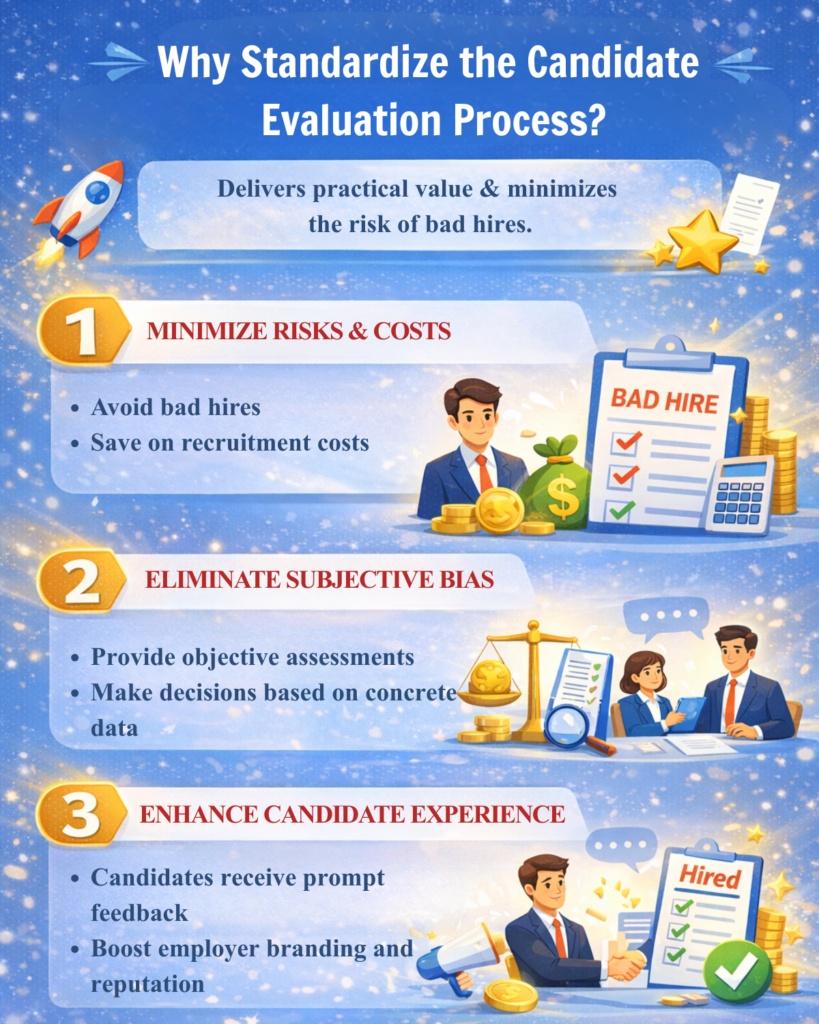
A structured evaluation process delivers measurable value. Here are three critical reasons:
1. Reduce Hiring Risk and Cost
A “bad hire” carries significant costs: salary during probation, recruitment expenses, management time, training, and reduced team productivity. A standardized process provides multiple evaluation filters that reveal competency gaps or attitude issues a polished interview may hide.
2. Eliminate Unconscious Bias
Even experienced interviewers are influenced by unconscious bias. Without objective systems, hiring becomes emotional and unfair—often favoring candidates similar to existing team members (Affinity Bias). Standardized processes with quantitative scoring focus discussions on data, not feelings, ensuring fairness and diversity.
3. Strengthen Candidate Experience and Employer Brand
Candidate Experience is critical for Employer Branding. A professional evaluation process enables quick, accurate feedback. A smooth internal process demonstrates respect and transparency, turning rejected candidates into future brand advocates.
Key Evaluation Criteria for Interview Scorecards
A structured evaluation requires clear criteria, typically captured in an Interview Scorecard.
1. Professional Competence and Practical Experience
Beyond degrees or years listed on a CV, evaluate whether candidates possess actual skills to perform the job. Distinguish between “Must-have” and “Nice-to-have” skills. Focus assessments on specific achievements: What did the candidate accomplish, what was their contribution, and what metrics support it?
2. Soft Skills and Problem-Solving Ability
In modern environments, soft skills are as crucial as technical expertise. Evaluate communication, teamwork, time management, and critical thinking. How does the candidate handle difficult questions? Do they remain calm and logical? Look for high adaptability and progressive mindsets.
3. Cultural Alignment
“Culture fit” does not mean hiring duplicates of current employees. It means assessing whether candidates’ values align with your company’s core values. For example, if transparency is central to your culture, an evasive candidate will struggle to integrate. Poor cultural fit is a leading cause of early turnover.
4. Motivation and Career Commitment
Understand “Why did this candidate apply for this position?” Motivation drives engagement and retention. Assess seriousness through preparation quality and thoughtful questions. Finding alignment between the candidate’s personal goals and the organization’s objectives ensures sustainable partnership.
5-Step Evaluation Process
1. Document Individual Assessments Immediately
Within 15-20 minutes after the interview, interviewers should complete individual evaluation forms independently. This written record prevents groupthink and serves as evidence for subsequent discussions.
2. Compare Candidates Using a Skill Matrix
Aggregate data into a dashboard or Skill Matrix showing side-by-side comparisons. However, measure each candidate against job standards first, not just against each other. This matrix provides objective perspective and minimizes emotion.
3. Conduct a Team Debrief Meeting
Schedule a Debrief within 24-48 hours. All interviewers present their assessments while HR moderates to maintain objectivity. If scorecard differences exist, require evidence. This multi-dimensional perspective informs the final decision.
4. Complete Reference Checks
Contact former managers to validate information and assess work attitude, stress management, and team collaboration. A 10-minute reference call can prevent hiring failures—never skip this step.
5. Make the Final Decision with Complete Data
Combine interview scores, debrief notes, assessment results, and reference feedback for the final decision. Once selected, extend an offer quickly. For rejected candidates, send a professional thank-you letter to maintain your brand reputation.
Common Evaluation Mistakes
- Halo/Horn Effect: Allowing one strong or weak trait to dominate the entire evaluation. Score components separately and compartmentalize.
- Comparing Against Competitors Instead of Standards: Selecting the “best of available candidates” even if they don’t meet JD requirements. Always measure against the job description first.
- Overlooking Red Flags: Dismissing attitude concerns because of strong technical skills. Attitude is often more important than aptitude for long-term success.
Conclusion
Building a post-interview candidate evaluation process is a strategic investment. By applying clear evaluation criteria, using transparent interview scorecards, and avoiding psychological traps, your organization will make smarter hiring decisions and build a stronger workforce.
For guidance on recruitment and talent management strategies, contact Wacontre Accounting Services at Hotline: (028) 3820 1213 or email [email protected]. Our experienced team supports Vietnam company formation and HR operations. (Japanese clients: Hotline (050) 5534 5505.)