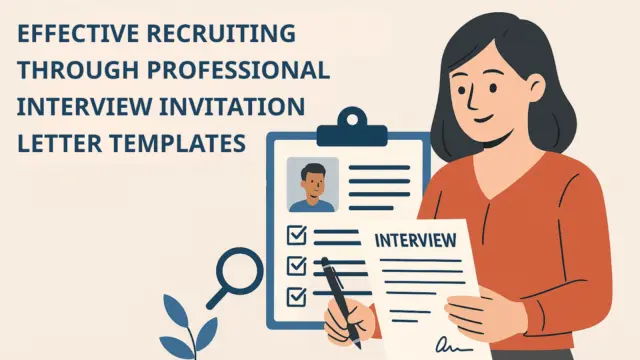

A professional interview invitation letter is your company’s first critical impression on top candidates. A well-crafted invitation demonstrates respect, increases acceptance rates, and strengthens your employer brand. This comprehensive guide provides interview invitation email templates, best practices, and step-by-step instructions for writing effective recruitment communications that candidates will appreciate.
- Why Interview Invitation Letters Matter: The Key to Successful Recruitment
- Essential Components of a Professional Interview Invitation
- How to Write a Professional Interview Invitation Letter: Templates and Best Practices
- Common Mistakes to Avoid
- Strategies to Increase Interview Acceptance Rates
- Conclusion
Why Interview Invitation Letters Matter: The Key to Successful Recruitment
An interview invitation is more than a scheduling notice—it is a strategic recruitment marketing tool that reflects your company’s professionalism, culture, and values. In today’s competitive labor market, top candidates receive multiple offers, and a professional invitation sets the tone for a positive employment relationship from the start.
A thoughtfully designed invitation serves three critical purposes:
- Builds Employer Brand: The quality, tone, and attention to detail signal your company’s professionalism and respect for candidates.
- Increases Acceptance Rates: Clear information about date, time, location, and format enables candidates to commit confidently to the interview.
- Reduces No-Shows: Including confirmation mechanisms and reminders decreases candidate absence rates, protecting your company’s time and resources.
Essential Components of a Professional Interview Invitation
An effective invitation letter must include these key elements:
1. Clear Position and Company Information
- Company Name: Use your official company name with logo (in HTML emails) for brand recognition.
- Job Title: State the exact position title clearly. Include a brief acknowledgment of the candidate’s relevant qualifications to personalize the message.
2. Complete Interview Details
- Date and Time: Specify the date, month, year, exact time, and estimated duration (e.g., 45 minutes). Include the time zone if applicable.
- Location or Access Link: For in-person interviews, provide the complete address, floor number, and building name with directions. For online interviews, provide the meeting link (Google Meet, Zoom) and instructions for accessing it.
- Interview Format: Clearly specify whether the interview is in-person, online, by phone, or assessment-based. Introduce the interviewer(s) by name and title.
3. Preparation and Confirmation Instructions
- Required Documents: List what candidates should bring (CV, portfolio, completed assignments, ID, etc.).
- Confirmation Deadline: Request confirmation by a specific date and time with a clear call-to-action (reply, click button, etc.).
- Rescheduling Policy: Provide clear instructions for candidates who need to reschedule or cancel, demonstrating flexibility and professionalism.
4. Contact Information
- Dedicated Contact: Provide the full name, title, phone number, and email of the recruiter or HR specialist for any questions or emergencies.

How to Write a Professional Interview Invitation Letter: Templates and Best Practices
Email Template (Most Formal)
- Subject Line: Use keywords: “[Company Name] – Interview Invitation for [Position Name].”
- Greeting: Personalize with the candidate’s name: “Dear Mr./Ms. [Last Name].”
- Opening Paragraph: Thank them for their application and mention a specific strength from their CV.
- Body: Use a clear format with position details, interview schedule, location/link, required documents, and confirmation instructions.
- Call-to-Action: Request confirmation and specify the deadline clearly.
- Signature: Include full name, title, department, phone number, and company website.
Quick Confirmation (Zalo/SMS)
Use this format for urgent follow-ups or supplementary confirmation:
- Keep it brief: Include company name, position, date, time, location/link, and request immediate confirmation (“Please reply OK to confirm”).
- Reference the detailed email: “Full details have been sent to your email. Please review and confirm.”
Personalization Strategies
- Reference Specific Skills: Mention a particular project or achievement from their CV to show you carefully reviewed their qualifications.
- Adjust Tone to the Role: Use dynamic language for creative roles; maintain formal tone for finance or compliance positions.
- Brand Consistency: Use company logo, colors, and professional fonts to reinforce your organization’s image.
Common Mistakes to Avoid
Spelling and Grammar Errors
- Misspelled candidate names or job titles damage your credibility. Always double-check personal information.
- Grammatical or formatting errors suggest carelessness. Proofread carefully and test emails across devices (desktop and mobile).
Vague or Incomplete Information
- Missing specific date, time, location, or meeting link details confuse candidates and increase no-show rates.
- Omitting the contact person’s name and phone number prevents candidates from reaching out with questions.
- Not mentioning interview duration, number of interviewers, or required documents leaves candidates unprepared.
Lack of Professionalism
- Generic subject lines (“Interview Notice”) are easily ignored. Use specific keywords.
- No clear call-to-action or confirmation deadline leaves the process passive and disorganized.
- Sending emails outside business hours suggests disrespect for candidates’ personal time.

Strategies to Increase Interview Acceptance Rates
- Highlight Position Value: Emphasize unique benefits, growth opportunities, and interesting projects. Example: “Work directly with senior leadership on digital transformation initiatives.”
- Be Transparent About the Process: Outline upcoming interview stages and expected timelines for results to reduce candidate anxiety.
- Offer Flexibility: Provide 2-3 time options for candidates to choose from, and include a calendar attachment (.ics file) to prevent scheduling conflicts.
- Use ATS Technology: Applicant Tracking Systems ensure personalized, consistent, and professional communications at scale.
Conclusion
A professional interview invitation letter is a critical component of modern recruitment strategy. It positions your company as organized, respectful, and serious about hiring top talent. By investing time in crafting clear, personalized, and well-structured invitations, you increase acceptance rates, reduce no-shows, and strengthen your employer brand.
Download our interview invitation letter template here.
For assistance with recruitment processes and HR management in Vietnam, contact Wacontre Accounting Services. Hotline: (028) 3820 1213 or email [email protected]. For Japanese clients, call (050) 5534 5505.