Accounting plays a crucial role in financial management and business sustainability. However, accounting requires a high level of accuracy and thorough understanding of legal regulations, particularly tax requirements. This article provides essential accounting considerations to help businesses avoid errors, optimize profits, and ensure full regulatory compliance.
Cost and Revenue Accounting Essentials
Accurate Cost Management
Cost management is critical in accounting, helping businesses track expenses and ensure costs remain within budget. Accurate cost recording prevents losses and improves operational efficiency. Costs should be clearly classified into operating expenses, capital expenditures, and other expenses to provide comprehensive financial visibility.
Proper Revenue Analysis
Revenue is a key business growth indicator. Effective revenue analysis requires accountants to closely monitor income from different business activities and ensure accuracy and transparency. Revenue analysis identifies which products or services generate highest profits, supporting strategic planning and development.
Accounting for Hidden Costs
Hidden costs are expenses that are not immediately visible but significantly impact profitability. Examples include machinery maintenance, fixed asset depreciation, and irregular incidental expenses. Accountants must carefully calculate these costs to ensure no expense affecting financial performance is overlooked.
Standards-Compliant Revenue Reporting
Revenue reporting must comply with accounting standards to ensure transparency and control. Reports should clearly present revenue amounts, income sources, and related expenses. This enables better financial position management and provides the foundation for important strategic decisions.
Tax Accounting Fundamentals
Understanding Current Tax Regulations
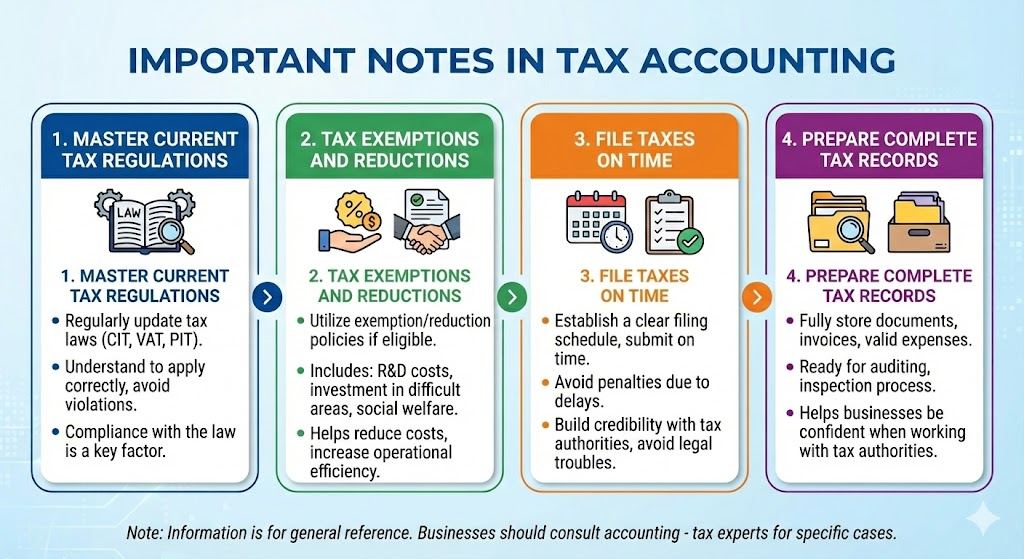
Taxation is a critical element of accounting and corporate financial management. Staying current with tax regulations helps businesses comply with the law and avoid penalties. Accountants must clearly understand regulations related to corporate income tax, value-added tax (VAT), and personal income tax to apply them accurately.
Tax Exemptions and Incentives
Businesses may be eligible for tax exemptions or incentives when meeting legal conditions. These may include deductions or exemptions for R&D activities, investments in disadvantaged areas, or social welfare expenditures. Maximizing tax incentives reduces costs and improves operational efficiency.
Timely Tax Filing
Filing tax returns on time is essential to avoid late-filing penalties. Businesses should establish a clear tax filing schedule and ensure all tax declarations are submitted within required deadlines. Timely compliance enhances company credibility with tax authorities and prevents unnecessary legal issues.
Proper Tax Documentation
Tax records must be prepared thoroughly and accurately to avoid legal complications. Accountants should retain all relevant business documents, invoices, and valid expense records for audits or inspections. Complete and well-organized tax documentation provides confidence when dealing with tax authority reviews.
Auditing and Financial Evaluation
Periodic Internal Audits
Internal auditing identifies and corrects financial errors in a timely manner. Accountants should conduct regular internal audits by reviewing financial statements, reconciling income and expenses, and verifying accuracy and reasonableness of accounting data. This prevents financial misstatements that could cause losses.
Financial Performance Evaluation
Financial performance evaluation enables businesses to understand key indicators and improve operational efficiency. Accountants should analyze metrics such as profit margins, debt-to-equity ratios, and liquidity ratios for clear financial position visibility. Accurate evaluation allows businesses to adjust financial strategies and support sustainable growth.
Reviewing Expense Reasonableness
Accountants must review incurred expenses to ensure all expenditures are reasonable and cost-effective. Expenses should be properly classified to determine validity and compliance. Large or unusual expenses should be carefully examined to prevent waste and optimize financial resources.
Working with Independent Auditors
When cooperating with independent auditors, businesses should provide complete documentation and transparent financial reports. This enables auditors to form accurate conclusions and improves financial transparency. Close cooperation with auditors strengthens company credibility with partners, investors, and customers.
Secure Accounting Data and Records Management
Protecting Accounting Data
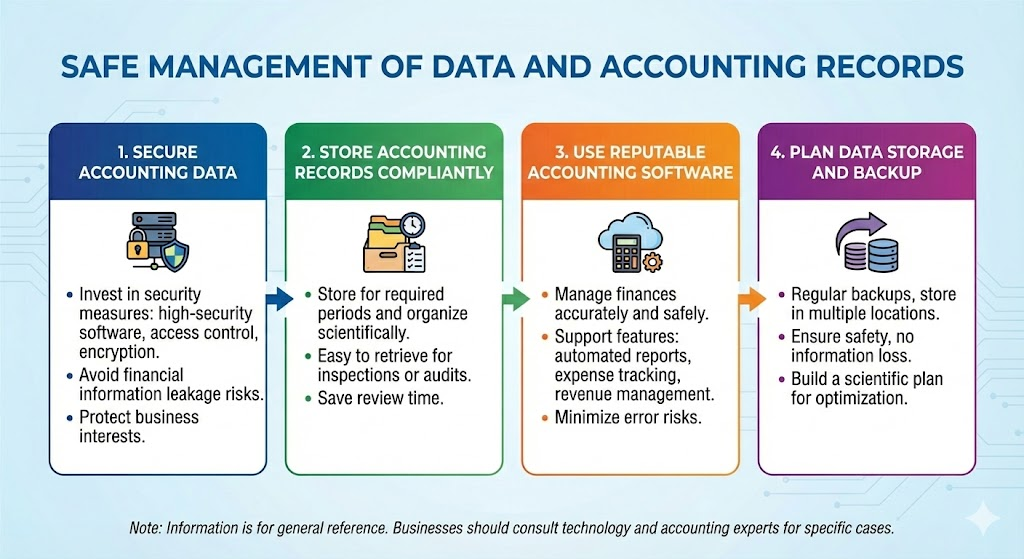
Accounting data is a critical business asset and must be strictly protected. Companies should invest in security measures such as highly secure accounting software, access controls, and data encryption. These measures prevent financial data breaches and protect company interests.
Proper Record Storage
Storing accounting records in compliance with regulations is both a legal requirement and enables easy information retrieval. Accounting documents must be retained for required statutory periods and organized systematically for convenient access during inspections or audits. Proper record retention also saves time during internal reviews.
Using Reliable Accounting Software
Using reputable accounting software allows businesses to manage finances accurately and securely. Modern accounting systems offer automated financial reporting, expense tracking, and revenue management features. Reliable software not only improves efficiency but also reduces error risk.
Data Storage Planning and Backups
Regularly backing up accounting data is essential to prevent data loss. Businesses should perform scheduled backups and store data in multiple locations for safety. A well-structured data storage plan optimizes management processes and effectively safeguards accounting information.
Common Accounting Mistakes to Avoid
Failing to Properly Classify Expenses
Accurate expense classification is critical in preventing financial reporting errors. Failure to clearly classify expenses can misrepresent company financial position and create income-expenditure imbalance. Accountants must identify and correctly classify each expense for accurate financial overview.
Fixed Asset Management Errors
Inaccurate fixed asset management is a common mistake resulting in financial losses. Accountants should closely monitor asset values and conditions, conduct periodic inventories, and ensure assets serve their intended purposes to prevent waste and mismanagement.
Neglecting Accounting Reports
Regular monitoring of accounting reports keeps businesses informed about current financial status. Neglecting these reports may prevent timely error detection and cause loss of financial control. Accountants should update and review reports periodically to maintain stable financial management.
Weak Internal Controls
Inadequate internal controls increase risk of asset loss and financial statement inaccuracies. Businesses need strong internal control systems to prevent risks and ensure accounting transparency. Effective internal controls are essential for maintaining financial stability and integrity.
Accounting best practices ensure accuracy and transparency while creating a solid foundation for business growth. Understanding accounting principles, complying with tax regulations, and managing data effectively help businesses minimize risks and optimize financial resources. Choosing reputable accounting software and professional advisory services provides an ideal solution for maintaining sustainability and stability in competitive business environments.
For inquiries, contact Wacontre Accounting Services at Hotline: (028) 3820 1213 or email [email protected] for prompt assistance. Wacontre’s team of experienced professionals provides dedicated and efficient service. (Japanese clients, contact Hotline: (050) 5534 5505).