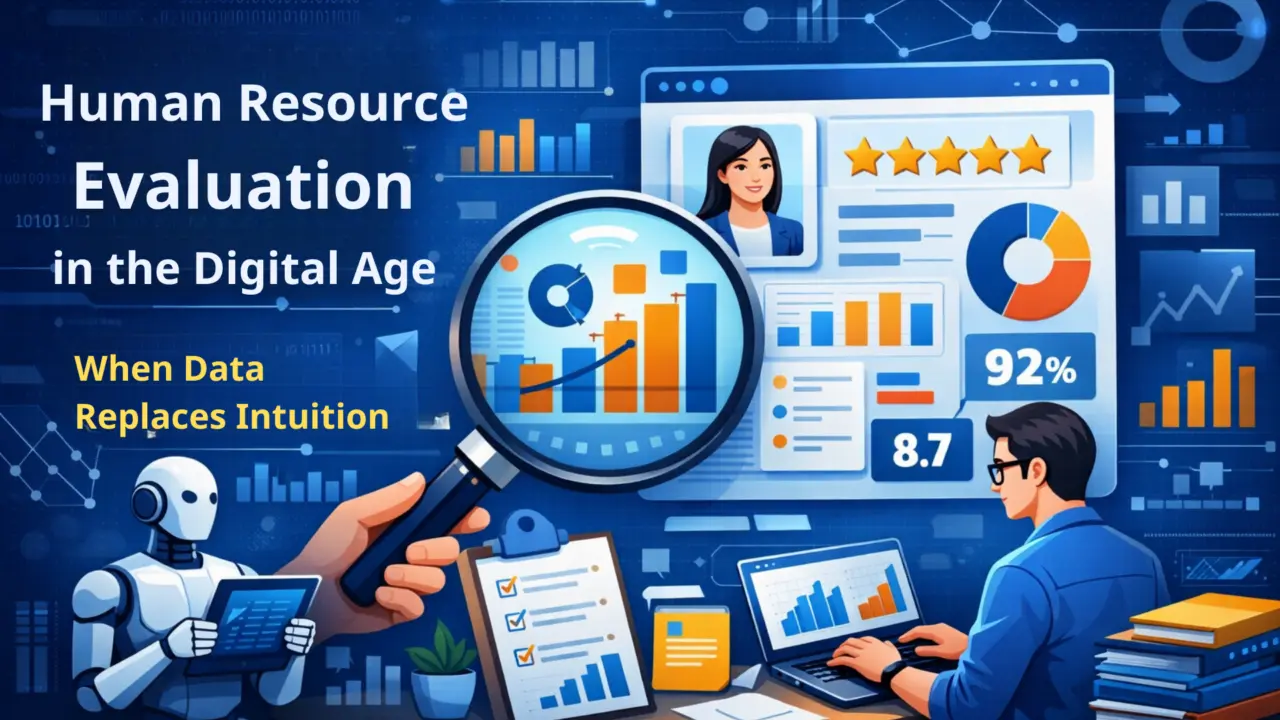
In the current era, digital personnel appraisal is transformative. By integrating data-driven HR management and People Analytics, businesses can eliminate subjective bias, ensuring transparency and maximizing workforce potential.
What is Digital Personnel Appraisal?
In the context of a global economy shifting rapidly toward digital models, traditional management methods are increasingly revealing inherent limitations. Digital personnel appraisal is not merely the act of replacing paper-based surveys with online forms. In fact, it is a revolution in management mindset where every human-related decision is built upon a foundation of factual data (Evidence-based HR).
Unlike traditional appraisals—which typically occur annually and rely heavily on a manager’s memory or fleeting emotions—digital appraisal is continuous and multi-dimensional. It is a process of collecting, analyzing, and interpreting data regarding employee performance, attitude, skills, and contribution levels through modern technological tools. This data is extracted from ERP and CRM systems, project management software, and internal communication platforms.
In Vietnam, this concept is becoming more urgent than ever as businesses face the challenge of optimizing operating costs and retaining top talent. Data-driven appraisal helps eliminate “gray areas” in management, where quiet but highly effective employees are often overlooked.
Core Benefits of Data-Driven HR Management
Transitioning from intuition-based management to data-driven HR management brings immense added value to an enterprise. Here are three key benefits:
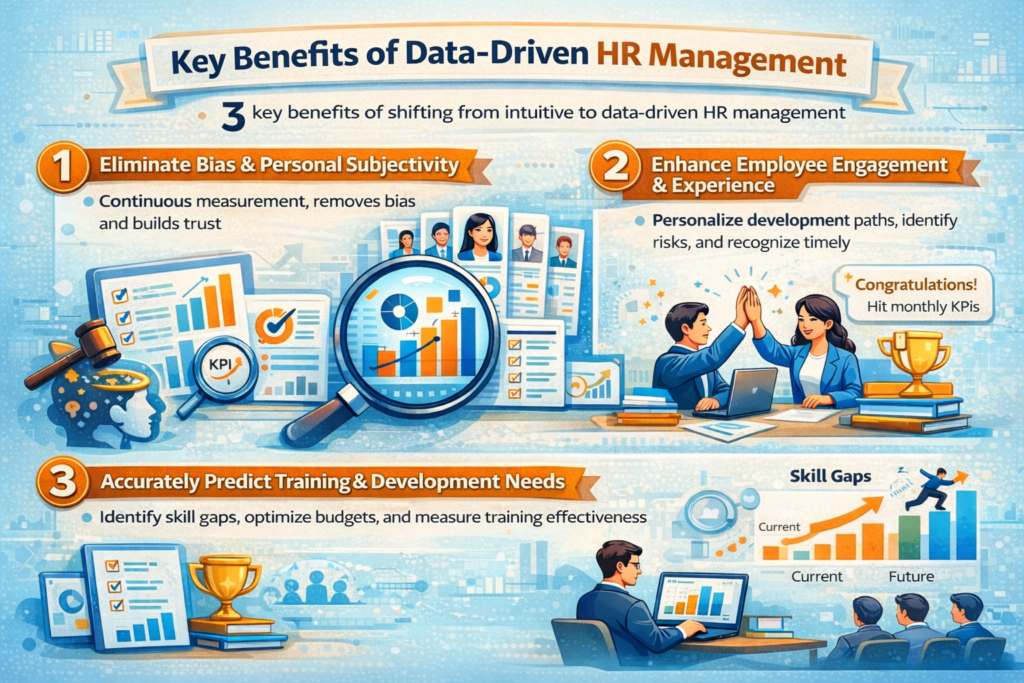
1. Eliminating Bias and Personal Favoritism
Bias is the greatest barrier to organizational fairness. Applying data helps:
- Overcome Cognitive Biases: Eliminate the “Halo Effect” (where one strength overshadows all flaws) or “Recency Bias” (remembering only the most recent events).
- Continuous Measurement: Systems record performance 365 days a year, including KPI completion rates, response times, and output quality.
- Building Trust: Employees feel confident that their efforts are recognized through objective figures, thereby minimizing internal conflict.
- Transparent Promotions: Appointment decisions are based on factual evidence rather than personal relationships.
2. Enhancing Employee Engagement and Experience
Data helps businesses understand employees at a deeper level, leading to improved satisfaction:
- Personalized Career Paths: Data identifies individual strengths and weaknesses to adjust roles to best fit an employee’s capabilities.
- Early Risk Detection: Behavioral data analysis helps identify early signs of burnout or disengagement before an employee decides to resign.
- Pulse Surveys: Collect instant feedback on the work environment instead of waiting until the end of the year.
- Timely Recognition: Systems can automatically send congratulations or rewards when employees hit key data milestones, providing instant motivation.
3. Accurately Forecasting Training and Development Needs
Data-driven management turns training into an investment with a clear Return on Investment (ROI):
- Identifying Skill Gaps: Performance data pinpoints exactly which skills are lacking (e.g., sales closing skills vs. time management).
- Budget Optimization: Focus resources on courses that are truly necessary instead of wasteful mass training.
- Measuring Training Effectiveness: Compare performance data before and after training to evaluate the program’s quality.
- Succession Planning: Analyze potential data to select top “seeds” for future leadership positions.
Modern Personnel Appraisal Models in the Digital Age
1. Real-time KPI Systems
Unlike traditional KPIs, real-time KPIs offer maximum flexibility:
- Visual Dashboards: Both managers and employees track work progress hourly through dynamic charts.
- Rapid Response: Immediately detect operational bottlenecks to address them, rather than waiting for month-end meetings.
- Intrinsic Motivation: Seeing completion metrics rise daily stimulates the employee’s work spirit.
2. Objectives and Key Results (OKR)
OKR is a model that connects every individual to the company’s collective vision through data:
- Absolute Transparency: Every member can view each other’s OKRs, fostering cross-departmental collaboration.
- Focus on Output Value: Appraisals are based on the actual value created rather than counting hours spent at the office.
- Agility: OKRs allow for quarterly goal adjustments to stay aligned with the rapid fluctuations of the digital market.
3. Online 360-Degree Feedback
This model provides the most comprehensive view of an individual:
- Multi-dimensional Data: Collect feedback from superiors, peers, subordinates, and even customers.
- Quantifying Qualitative Info: Criteria such as “team spirit” are converted into specific numerical scores.
- Identity Security: Technology ensures the anonymity of respondents, resulting in more honest and objective data.
The Transition Process: From Intuition to Data-Driven Appraisal
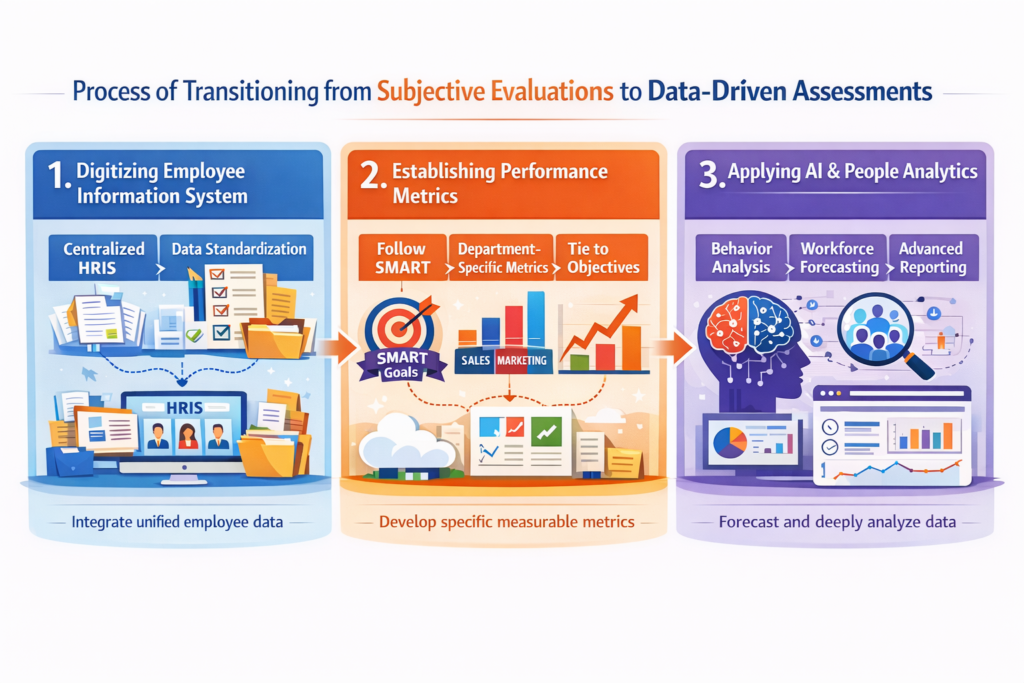
1. Digitizing HR Information Systems
This is the foundational step for all future analysis:
- Building an HRIS (Human Resource Information System): Consolidate profiles, payroll, and work history into a single platform.
- Data Standardization: Eliminate manual paper reports or scattered Excel files to ensure consistency.
- Cloud Storage: Ensure data is accessible anytime, anywhere, while maintaining high security.
2. Establishing Performance Metrics
Define “success” through the language of numbers:
- Apply SMART Goals: Metrics must be Specific, Measurable, Achievable, Relevant, and Time-bound.
- Department-Specific Metrics: Build unique metrics for each role (e.g., Marketing measures Leads, Sales measures Revenue, IT measures Ticket Resolution Time).
- Align with Business Goals: Ensure every HR metric contributes to the overall growth of the company.
3. Applying AI and People Analytics
The pinnacle of HR management is the ability to forecast:
- Behavioral Pattern Analysis: AI helps decode the “why” behind performance numbers.
- HR Forecasting: Predict turnover rates or future hiring needs based on historical data.
- Decision Support: Provide deep analytical reports that help leaders implement high-precision HR strategies.
Challenges and Solutions for the Vietnamese Market
1. Barriers of Traditional Management Mindsets
Change always comes with resistance:
- Challenge: A psychological preference for “intuition” over numbers and the fear of losing personal authority.
- Solution: Organize training on a Data Mindset, demonstrating that data is a supportive tool, not a replacement for leadership.
2. Data Security and Privacy
Employees may feel uncomfortable being “digitized” in every activity:
- Challenge: Concerns about over-surveillance leading to psychological pressure.
- Solution: Transparently communicate data usage policies. Commit to using data solely for employee development and ensuring absolute privacy of personal information.
3. Selecting the Right Appraisal Software
The explosion of HR Tech solutions can be overwhelming:
- Challenge: Investing in systems that are too complex or incompatible with actual workflows.
- Solution: Start with core needs. Prioritize solutions with high customization, user-friendly interfaces, and strong technical support within Vietnam.
Conclusion
Digital personnel appraisal is an inevitable journey for building a resilient enterprise. However, data only reaches its maximum potential when combined with the empathy of a manager. Use data for fairness, but use your heart to lead.
To empower your business in overcoming HR management challenges and staying fully committed to your strategic goals, Wacontre provides specialized solutions:
- [RPO Services]: A comprehensive recruitment process outsourcing solution.
- [BPO Services]: Strategic outsourcing to streamline business processes and optimize operational costs.
For any inquiries, contact Wacontre Accounting Services via Hotline: (028) 3820 1213 or email [email protected] for prompt assistance. With a team of experienced professionals, Wacontre is committed to providing dedicated and efficient service. (For Japanese clients, please contact Hotline: (050) 5534 5505).