
In the digital age, recruitment management software helps optimize processes and ensures companies do not miss potential candidates through smart candidate management and modern HR technology.
What is Recruitment Management Software?
In today’s digital age, Recruitment Management Software (also known as an Applicant Tracking System – ATS) is an essential tool for HR professionals in Vietnam. Fundamentally, it is a technological solution designed to automate and optimize the entire recruitment lifecycle.
Instead of managing hundreds of emails or fragmented Excel files, HR departments can now centralize all data on a single platform. This enhances transparency, facilitates seamless collaboration between departments, and accelerates decision-making.
The emergence of ATS was driven by the need to resolve bottlenecks in traditional processes. Previously, recruiters spent excessive time on repetitive administrative tasks such as responding to candidates or scheduling interviews.
Why Do Businesses Easily Miss Out on Potential Talent Without Technology?
Many businesses in Vietnam still struggle with the question: “Why do we spend so much on advertising yet fail to hire the right people?” The answer often lies in outdated, manual recruitment operations.
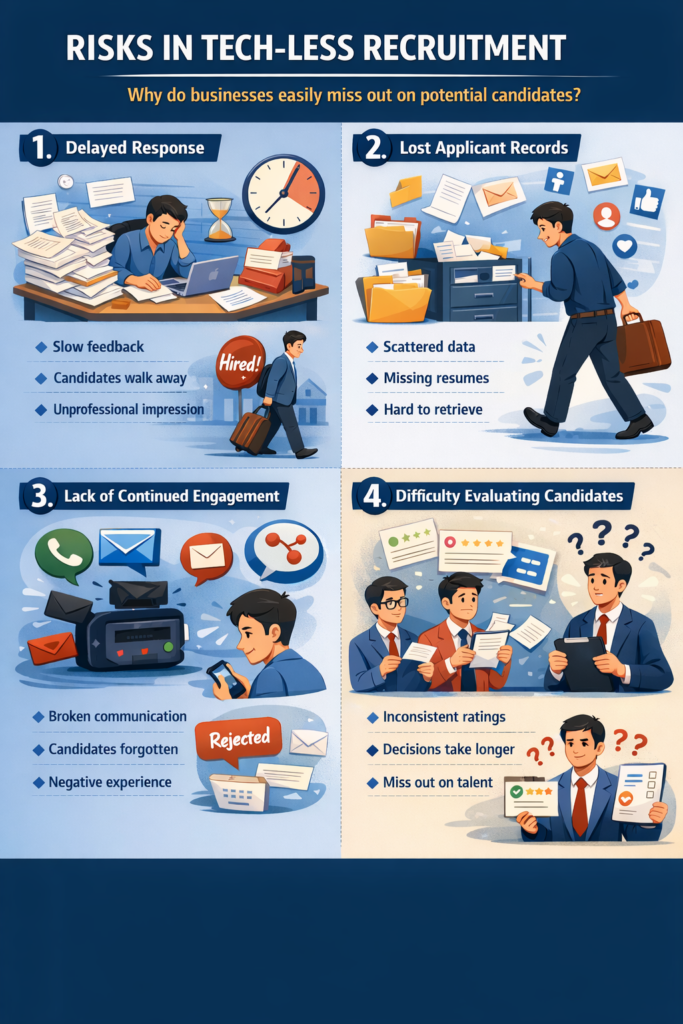
1. Manual Processes Lead to Delayed Responses
Speed is a vital factor in modern recruitment, especially for high-level positions or the tech industry.
- Loss of Competitive Advantage: Without software support, manually processing thousands of resumes causes delays ranging from days to weeks.
- Candidate Drop-off: Talented candidates often have multiple options; if you do not respond promptly, they will quickly accept offers from more agile competitors.
- Negative Impression: Excessive silence creates a perception of unprofessionalism, diminishing the company’s image in the eyes of the candidate.
2. Fragmentation of Candidate Data from Multiple Sources
Currently, businesses post vacancies across various platforms such as LinkedIn, Facebook, and local job boards.
- Scattered Data: Without a centralized system, resumes are scattered across personal inboxes, social networks, or individual Excel files.
- Wasted Resources: Fragmented management leads to recruiters overlooking high-quality profiles that have applied previously.
- Search Difficulties: When trying to re-find a past candidate for a new role, HR often spends significant time or fails to locate the data entirely.
3. Lack of Continuous Connection and Engagement
Relationships with candidates must be nurtured, even if they are not a fit for the current role.
- Communication Breakdown: Lack of technology makes it difficult for recruiters to maintain regular interaction with “potential candidates” in the talent pool.
- Negative Experience: Failing to notify candidates of interview results makes them feel disrespected and unlikely to re-apply in the future.
- Lack of Personalization: Manual processes turn sending personalized emails into an enormous administrative burden.
4. Difficulties in Evaluating and Comparing Candidate Competencies
Evaluating candidates based on intuition or handwritten notes often leads to hiring mistakes.
- Lack of Standardization: Every interviewer may have different criteria, leading to subjective assessments.
- Prolonged Decision-Making: Without a shared system for discussion, reaching a consensus on whom to hire becomes extremely time-consuming.
- Missing Out on Talent: Individuals with real potential who may not make a strong initial impression might be unfairly rejected due to lack of a standardized scorecard.
Strategic Benefits of Recruitment Software in the Digital Era
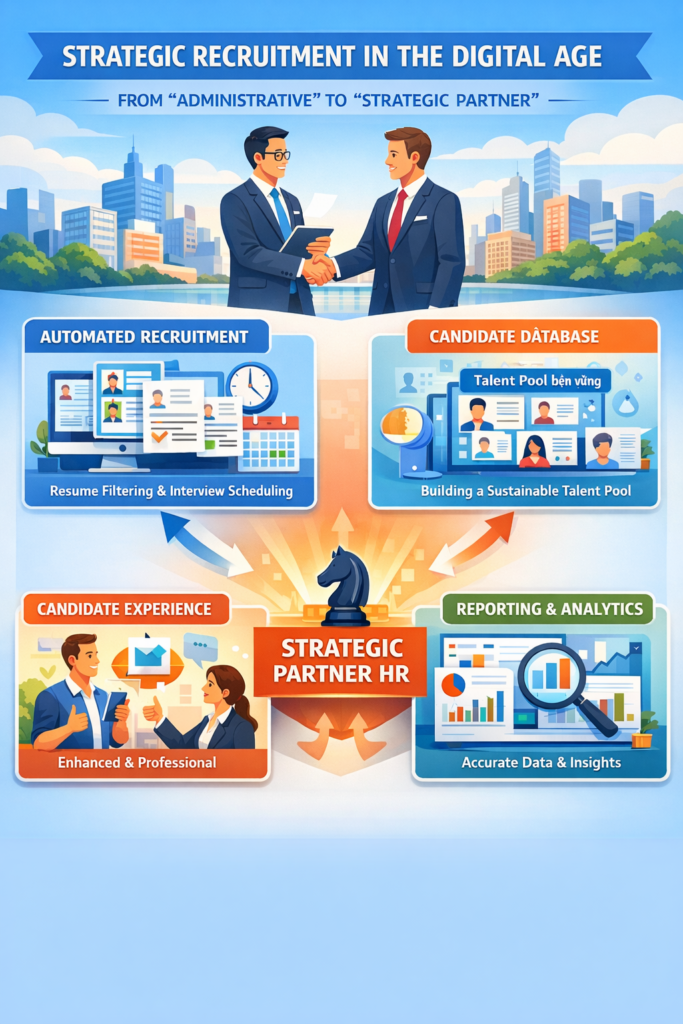
Implementing recruitment software helps the HR department transition from an “administrative” role to a “strategic partner” of the business.
1. Automating Screening and Interview Scheduling
The most apparent benefit is saving time and resources for the HR team.
- Smart Screening: Software automatically scans keywords in CVs to filter out unqualified applicants, allowing HR to focus on the top 10% of candidates.
- Calendar Integration: Automated scheduling eliminates the back-and-forth communication required to find an open time slot.
- Increased Productivity: Accelerates hiring speed by 2-3 times, helping fill vacant positions quickly.
2. Building and Leveraging a Sustainable Talent Pool
This is the most significant long-term value an ATS provides.
- Data Reusability: Businesses can re-access potential candidates who previously applied but were not a fit at that specific time.
- Cost Reduction: Instead of spending on new ads, you can simply screen your existing database for suitable talent.
- History Management: The system stores all past interactions, helping HR understand why a candidate was previously declined.
3. Enhancing Candidate Experience and Employer Branding
In today’s market, the candidate is the “customer” and the recruitment process is the “product.”
- Rapid Feedback: Automated emails updating application status make candidates feel valued.
- Professionalization: A smooth process from application to onboarding builds absolute trust in the organization.
- Brand Ambassadors: A candidate with a positive experience will refer others or become a customer of the company in the future.
4. Data-Driven Reporting and Analytics
“What cannot be measured, cannot be managed” – the software brings transparency to all metrics.
- Time-to-hire: Know exactly how long it takes to fill a position to adjust business plans accordingly.
- Source Tracking: Identify which channel (LinkedIn, Facebook, Web) provides the highest quality candidates to optimize the budget.
- Trend Forecasting: Use historical data to project future hiring needs and budgets.
Key Features of Professional Recruitment Software
1. Multi-Channel Posting with One Touch
Save time: Draft job postings once and publish them to multiple platforms simultaneously.
Centralized management: All feedback from different sources flows into a single interface for easy management.
2. Applicant Tracking System (ATS)
Digitize the journey: Track each step of the candidate’s progress from CV submission to contract signing.
Centralized storage: All comments, scores, and documents of candidates are stored in a single digital file.
3. Collaboration Tool Between HR and Specialized Departments
Fast approval: Allows managers to directly score and write comments on the system.
Eliminate information barriers: Everyone in the recruitment team can understand each other’s work status without needing too many meetings.
4. Integrating AI in Screening and Recommending Suitable Talent
Intelligent Matching: AI algorithms accurately match candidates with job requirements.
Behavioral Analysis: Identifying candidate interest levels through their interaction with emails to prioritize contact.
Conclusion
Investing in recruitment management software is no longer a luxury—it is a mandatory requirement to compete in the digital age. By optimizing processes and valuing every candidate, businesses not only secure top talent but also build a foundation for a strong corporate culture.
——————————————————————————————————————————-
To empower your business in overcoming HR management challenges and staying fully committed to your strategic goals, we provide specialized solutions:
- [RPO Services]: A comprehensive recruitment process outsourcing solution for Vietnam company formation.
- [BPO Services]: Strategic outsourcing to streamline business processes and optimize operational costs.
For any inquiries about Vietnam company formation or accounting and HR services, contact Wacontre via Hotline: (028) 3820 1213 or email [email protected] for prompt assistance. With a team of experienced professionals, Wacontre is committed to providing dedicated service. (For Japanese clients, please contact Hotline: (050) 5534 5505).