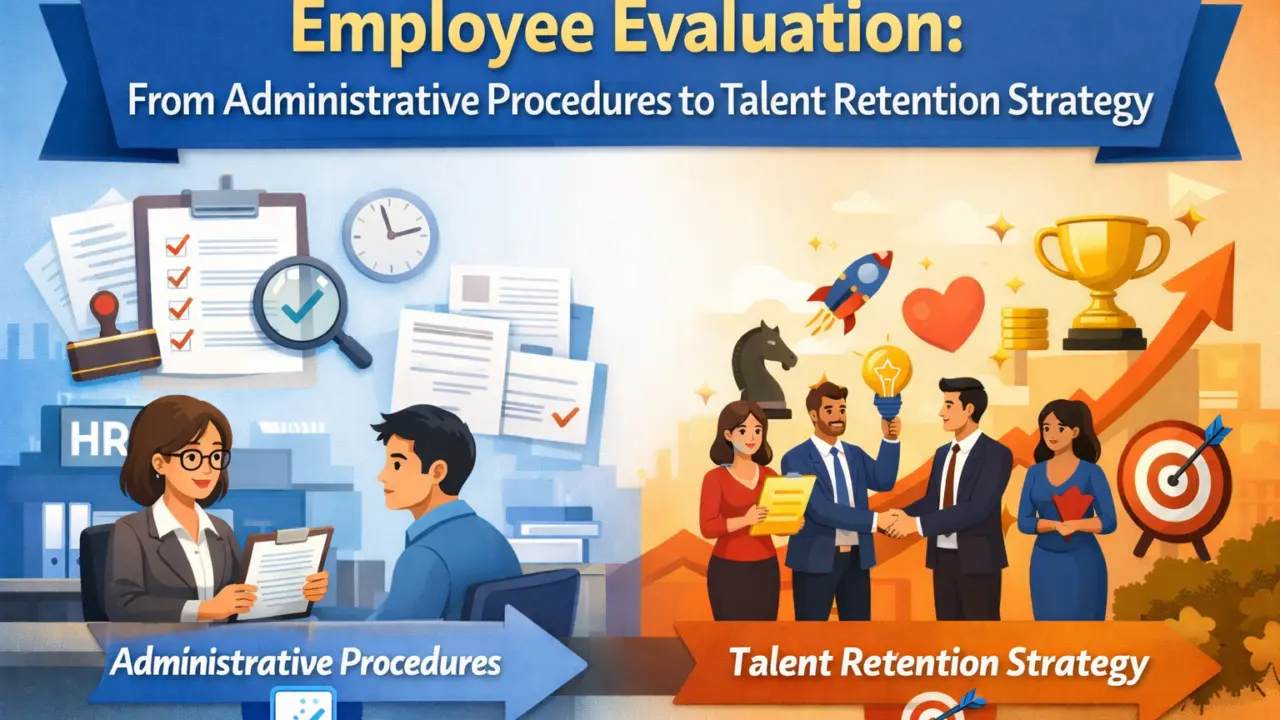
Performance appraisal is more than just an administrative task; it is the heart of modern HR management. By streamlining the performance review process and establishing clear employee evaluation criteria, firms can optimize KPIs and performance, paving the way for a long-term talent retention strategy.
In the Management 4.0 era, a business’s most valuable asset is not machinery or technology—it is people. However, how can we measure the value of this “asset” fairly and effectively? The answer lies in performance appraisal. In Vietnam, many enterprises still view this as a paperwork burden; in reality, it is the key to unlocking employee productivity and engagement.
What is Performance Appraisal?
Performance appraisal is a systematic management process designed to review, quantify, and provide feedback on an employee’s work results, capabilities, and attitude. It is not merely a scoring exercise, but a continuous cycle consisting of:
- Setting Expectations: Aligning goals from the outset.
- Progress Tracking: Observing and supporting employees during execution.
- Feedback and Evaluation: Summarizing results and drawing lessons.
- Development Planning: Orienting the roadmap for the next phase.
The Importance of Performance Appraisal in Modern Business
1. An Accurate Measure of Performance and Capability
Appraisals provide a “tangible” view of an employee’s abstract contributions:
- Quantifying Value: Converting effort into concrete data such as revenue, output, or customer satisfaction rates.
- Identifying Bottlenecks: Recognizing departments or individuals facing difficulties to intervene promptly.
- Personnel Categorization: Clearly identifying “High Performers” versus “Underperformers” who require further training.
2. A Scientific Basis for Compensation and Promotion
Rather than relying on managerial intuition, appraisals provide “clean data” for HR decisions:
- Fair Compensation: Ensuring pay is based on actual contribution, eliminating internal resentment.
- Succession Planning: Identifying individuals with leadership potential through management skills and attitude criteria.
- Transparency of Opportunity: Employees know exactly what they must achieve to earn a promotion.
3. Aligning Individual Goals with Organizational Vision
A successful appraisal helps employees answer the question, “Why am I here?”:
- Goal Alignment: Helping employees see how their daily tasks contribute to the company’s overall success.
- Increased Commitment: When personal goals (income, career) align with company growth, employees work with greater autonomy.
Building Professional Evaluation Criteria
1. Key Performance Indicators (KPIs) and OKRs
Different types of businesses in Vietnam prioritize different methodologies:
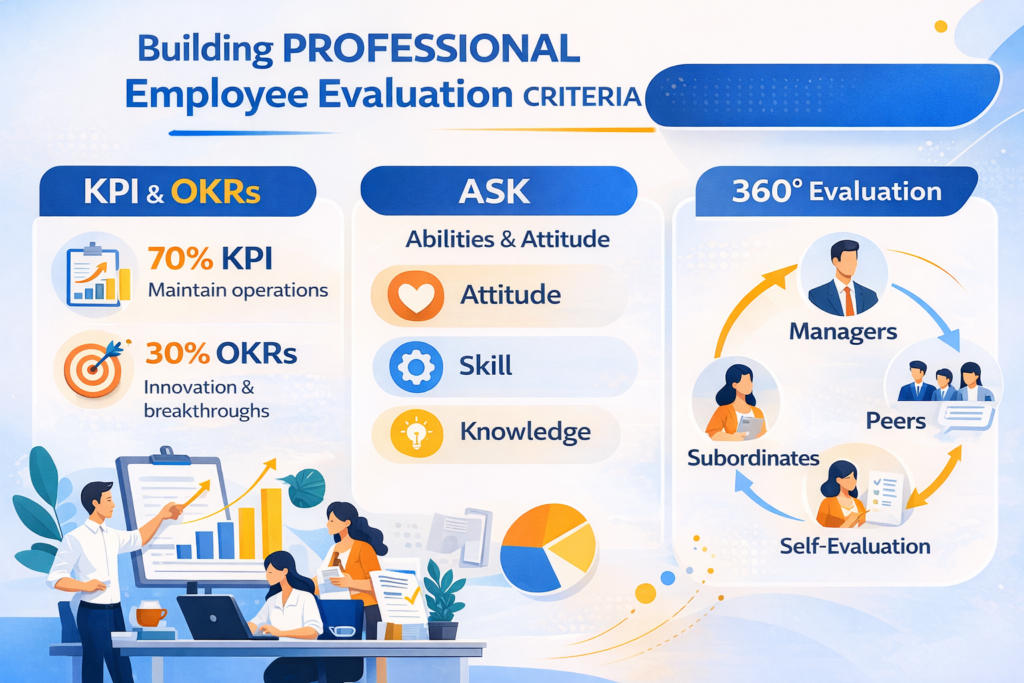
- KPIs (Key Performance Indicators):
- Best for roles with clear outputs (Sales, Manufacturing, Customer Service).
- Focuses on stability and measuring final results.
- OKRs (Objectives and Key Results):
- Best for Creative, Marketing, and Tech departments.
- Drives breakthroughs and allows for trial and error to find new directions.
- The Hybrid Model: Modern firms often use 70% KPIs for operations and 30% OKRs for innovation projects.
2. Evaluating Based on Behavior and Attitude (ASK Model)
Results are important, but the behavior used to achieve them determines sustainability:
- Attitude: Integrity, responsibility, stress tolerance, and cultural fit.
- Skill: Technical expertise, languages, communication, and teamwork.
- Knowledge: Understanding of products, markets, and internal processes.
3. The 360-Degree Feedback Method
Removing hierarchical barriers in traditional evaluations:
- Supervisor Review: Strategic and objective-oriented perspective.
- Peer Review: Insights into collaboration and supportiveness.
- Subordinate Review: Insights into leadership and management (for Managers).
- Self-Assessment: Allowing employees to reflect and express their own aspirations.
Talent Retention Strategies Through Appraisal Results
1. Personalized Learning & Development (L&D)
Don’t let the appraisal be the end; let it be the start of learning:
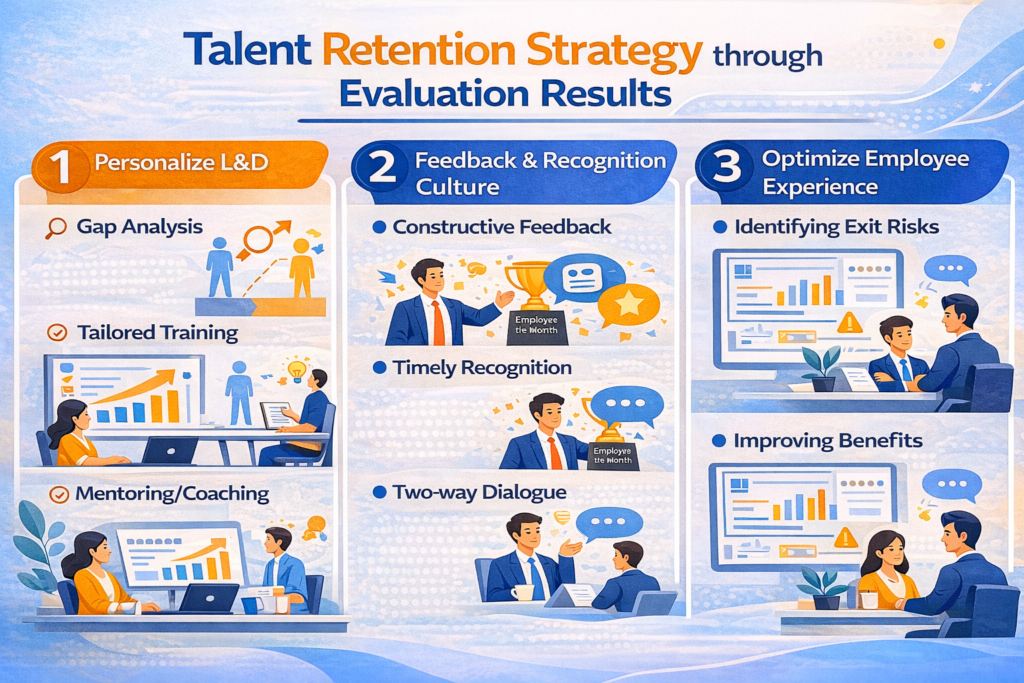
- Gap Analysis: Identifying the distance between current skills and the requirements of the role.
- Tailored Training: Designing workshops focused on specific weaknesses rather than generic mass training.
- Mentoring/Coaching: Pairing high-performing employees with those who are struggling.
2. Fostering a Culture of Feedback and Recognition
Employees stay not just for the salary, but because they feel “seen” and “heard”:
- Constructive Feedback: Focusing on behaviors and solutions rather than personal attacks.
- Timely Recognition: Small awards for “Employee of the Month” create significant psychological motivation.
- Two-way Dialogue: Allowing employees to present challenges and request resources from the company.
3. Optimizing Employee Experience to Reduce Turnover
Appraisal data is “gold” for improving the work environment:
- Identifying Turnover Risks: If a top performer’s score drops suddenly, HR can intervene to find the cause (stress, toxic environment, etc.).
- Refining Benefits: Adjusting bonuses and leave policies based on what employees truly value.
Common Mistakes in Performance Appraisal in Vietnam
1. Subjectivity and Bias
- Favoritism: Rating someone higher based on shared opinions, hometowns, or hobbies.
- Central Tendency Error: Managers rating everyone as “Average” to avoid conflict, which demotivates top talent.
2. Focusing on Mistakes Rather Than Future Growth
- Punitive Mindset: Treating the appraisal as a list of past failures.
- Lack of Solutions: Telling employees they performed poorly without guiding them on how to improve.
3. Lack of Two-Way Communication
- One-way Notifications: Sending results via email without a face-to-face discussion.
- Imposing Goals: Forcing employees to accept unrealistic KPIs without the right to provide feedback.
Conclusion
Performance appraisal is not a tool for control, but a medium for understanding. When a business shifts its mindset from “inspecting faults” to “creating success,” it gains a workforce that is not only high-performing but fiercely loyal. Investing in a professional appraisal process is the smartest investment a company can make to retain talent in today’s competitive market.
To empower your business in overcoming HR management challenges and staying fully committed to your strategic goals, Wacontre provides specialized solutions:
- [RPO Services]: A comprehensive recruitment process outsourcing solution.
- [BPO Services]: Strategic outsourcing to streamline business processes and optimize operational costs.
For any inquiries, contact Wacontre Accounting Services via Hotline: (028) 3820 1213 or email [email protected] for prompt assistance. With a team of experienced professionals, Wacontre is committed to providing dedicated and efficient service. (For Japanese clients, please contact Hotline: (050) 5534 5505).