
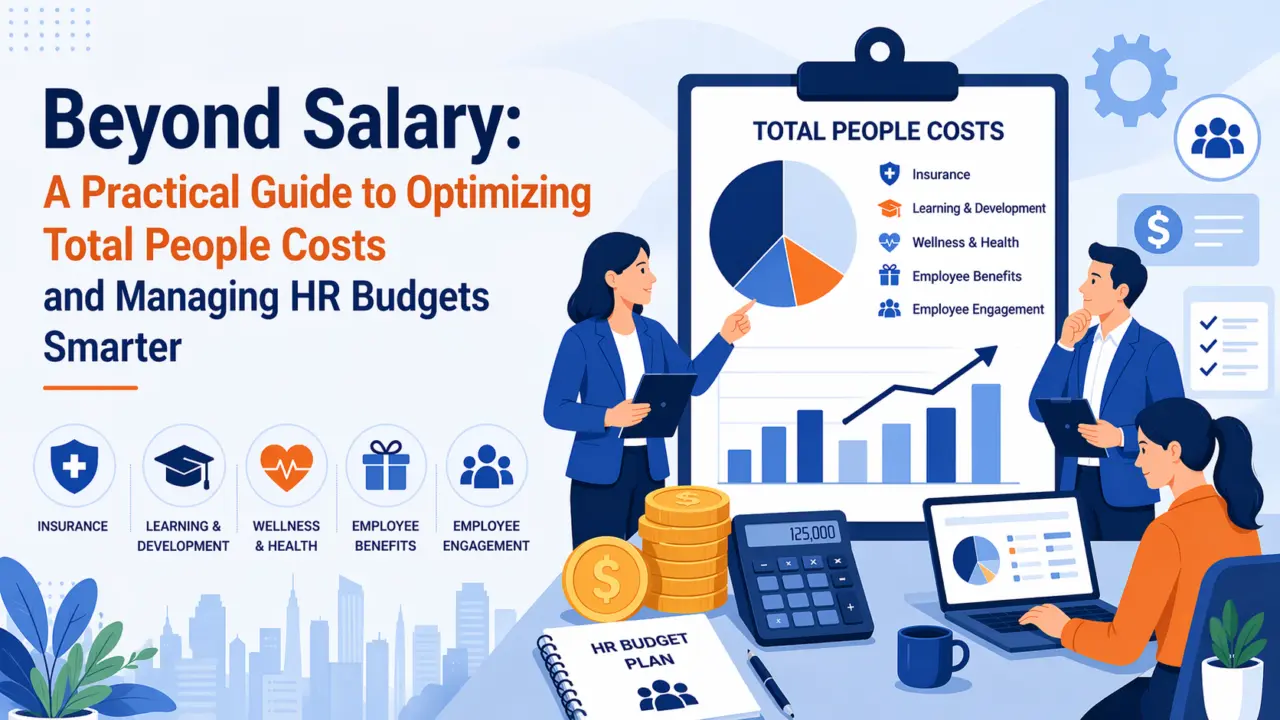
Effective human resource cost management goes beyond net salaries. HR professionals must understand costs beyond salary such as social insurance, union fees, and employee benefits to ensure efficient labor cost management.
What are the Costs Beyond Salary That Businesses Must Pay?
In human resource management, the concept of labor cost is not merely the figure displayed on an employee’s labor contract. Costs beyond salary encompass the total financial expenditures that an employer is obligated or chooses to pay to maintain their workforce. These costs are categorized into two primary groups: statutory mandatory costs (such as insurance and trade union fees) and voluntary benefit costs aimed at attracting talent.
A thorough understanding of these costs enables the HR department to build accurate budget forecasts and avoid unexpected deficits. For Foreign Direct Investment (FDI) enterprises, particularly Japanese or Western companies entering the Vietnamese market, grasping this cost structure is a prerequisite for appropriate product and service pricing. Miscalculating the norms for non-salary costs can lead to critical errors in long-term business strategies.
Mandatory expenses as prescribed by law
1. Social, Health and Unemployment Insurance
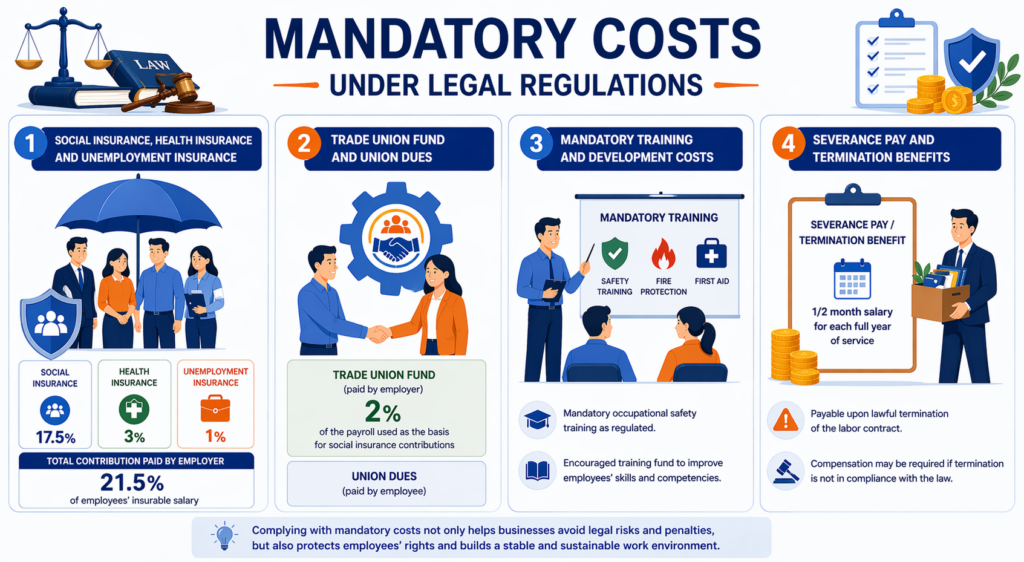
This category represents the largest portion of mandatory costs. Under current regulations, businesses must contribute a percentage based on the employee’s insurance-based salary fund. Specifically, employers typically contribute 17.5% for Social Insurance, 3% for Health Insurance, and 1% for Unemployment Insurance. In total, the insurance contribution rate borne by the business amounts to 21.5% of the employee’s gross insurance-based salary.
This expenditure is not only a legal obligation but also the foundation of social security for employees. HR professionals must note that the salary used for insurance calculations often includes the base salary and specific allowances as prescribed by law. Errors in calculation or late payments not only result in administrative fines but also damage the company’s reputation with government authorities and the workforce.
2. Trade Union Funds and Fees
Trade union funding is a unique feature of the Vietnamese labor legal system that often puzzles foreign enterprises. According to the Law on Trade Unions, all businesses—whether they have established a grassroots trade union or not—must contribute a trade union fee equal to 2% of the total salary fund used as the basis for social insurance. These funds are utilized to care for the lives of workers and to represent and protect their legal rights.
Many HR practitioners confuse the “Trade Union Fund” (paid by the employer) with “Trade Union Fees” (paid by the employee). In reality, this 2% fund is entirely an employer-paid expense and is recorded as a business management cost. Fulfilling this obligation helps businesses foster a harmonious, stable, and progressive labor relationship within the organization.
3. Mandatory Training and Development Costs
In specific industries with strict occupational safety requirements, businesses are mandated to pay for periodic occupational health and safety training. These are non-negotiable costs as they directly involve human life and legal compliance. These courses typically include first aid, fire prevention, and mandatory professional certifications depending on the field of operation.
Furthermore, the law encourages businesses to establish training funds to enhance worker skills. For employees participating in training courses fully funded by the business, both parties usually sign a training agreement with a commitment to a specific period of service after completion. This helps the business protect its intellectual investment against the risk of “brain drain.”
4. Compensation and Severance Pay
Upon termination of a labor contract, the business is responsible for paying severance pay or job-loss allowance to employees who have worked regularly for 12 months or more. Severance pay is usually calculated as half a month’s salary for each year of service. This is a financial reserve that HR must calculate in advance, particularly during large-scale restructuring or downsizing phases.
Additionally, businesses face the risk of paying compensation if the termination is not executed according to the legal procedures or justifications. These costs can be substantial and cause severe damage to both finances and reputation. Therefore, establishing standardized HR processes is the best way to minimize these unforeseen expenses.
Optional benefits and allowances
1. Transportation, Lunch and Housing Allowances
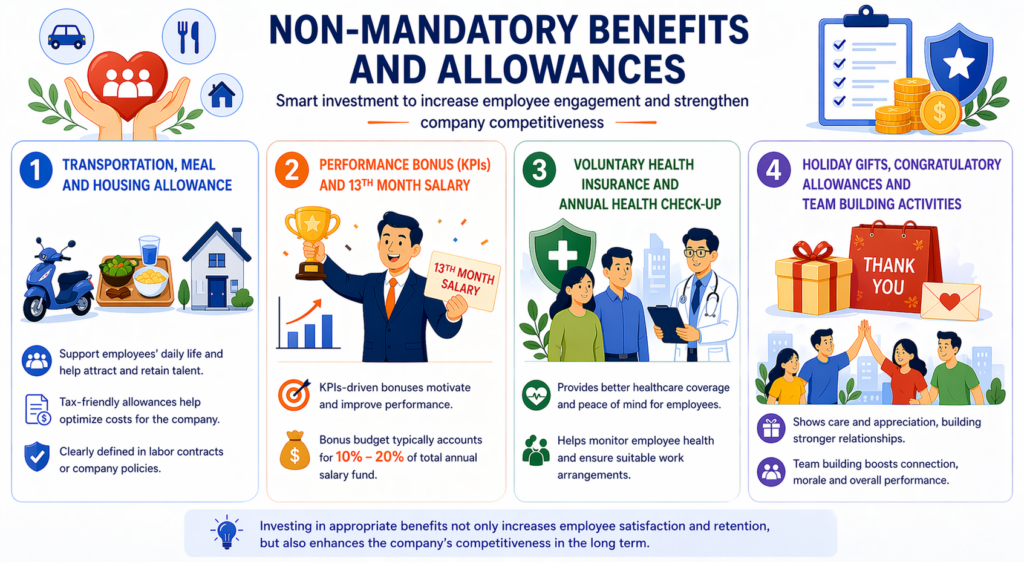
To increase engagement and support the daily lives of employees, most businesses in Vietnam apply allowances such as lunch, petrol, or housing support for those living far from home. If these allowances fall within the thresholds prescribed by Personal Income Tax (PIT) and Corporate Income Tax (CIT) laws, they provide a dual benefit: increasing the actual take-home pay for employees while optimizing tax costs for the company.
For example, the current non-taxable lunch allowance is 730,000 VND/month. Designing a “smart” payroll by isolating these allowances helps businesses remain more competitive in the labor market. However, HR must ensure these terms are clearly defined in the labor contract or the company’s financial regulations.
2. Performance Bonuses (KPIs) and 13th-Month Salary
The 13th-month salary has long been an indispensable part of corporate culture in Vietnam. While not legally mandatory, most candidates view it as a default component of the Total Rewards package. Furthermore, performance-based bonuses (KPIs) are effective tools to drive productivity and motivate elite employees.
The budget for bonuses typically accounts for 10% to 20% of the total annual salary fund. To manage this effectively, HR should build a transparent evaluation system to avoid “blanket” bonuses that cause dissatisfaction. When a business controls its bonus fund well, it manages not only cash flow but also creates a culture oriented toward superior results.
3. Voluntary Health Insurance and Periodic Health Checks
In addition to mandatory social insurance, leading enterprises often purchase premium health insurance packages (e.g., PVI, Bao Viet, Liberty) for employees and sometimes their families. This is a major highlight for talent when choosing a career destination. This expenditure provides employees with peace of mind, reducing financial pressure during unexpected health issues.
Annual periodic health checks are also a necessary expense that HR must include in the budget plan. This is not just a responsibility for occupational health care but also helps the business screen and arrange job positions suitable for each individual’s physical condition. A healthy workforce is the prerequisite for a sustainable business.
4. Holiday Gifts and Team Building Activities
Vietnamese culture places great importance on the sentiment and care shown by superiors toward employees’ personal lives. Expenditures for birthday gifts, Mid-Autumn Festival, Lunar New Year, or subsidies for weddings, funerals, and illness—though small—carry significant spiritual value. They create an invisible bond between the employee and the organization, turning the workplace into a “second family.”
Annual team-building activities and company trips also consume a significant budget but serve as golden opportunities to recharge energy and bond the team. HR needs to balance the cost of organization with the value of the experience provided. A successful trip breaks down communication barriers, thereby improving coordination efficiency throughout the year.
Operational and HR Management Costs
1. Recruitment and Onboarding Costs
Recruitment is an expensive process involving posting fees on platforms (VietnamWorks, LinkedIn), headhunter fees (typically 2-3 months of the candidate’s salary), and the HR department’s time. Additionally, onboarding costs such as orientation materials and welcome kits must be fully accounted for. HR should measure the “Cost per Hire” index to evaluate the effectiveness of recruitment channels.
Early turnover during the probation period results in a massive waste of both money and effort. Therefore, investing in a professional orientation process is key to optimizing this expenditure. When new hires feel welcomed and understand the company culture quickly, they contribute value sooner and offset the initial investment.
2. Work Equipment and Personal Protective Equipment (PPE)
Every employee requires a workspace and tools such as computers, desks, stationery, and uniforms upon joining. For manufacturing enterprises, PPE (shoes, hats, clothing, safety gear) is a mandatory periodic issuance. These costs are usually allocated via depreciation or charged directly to monthly operating expenses.
In the era of remote work, many businesses also support internet costs or equip employees with home-office gear. Whether in the office or remote, providing modern and safe work tools not only enhances productivity but also demonstrates the company’s professionalism and respect for its workforce.
3. HR Management Software and IT Infrastructure
In the digital transformation era, investing in Human Resource Management Systems (HRMS), online timekeeping, and payroll software is a strategic move. Although there are licensing or monthly subscription fees (SaaS), these tools minimize human error and save manpower for repetitive administrative tasks.
IT infrastructure and HR data security are “hidden” costs that HR must coordinate with the technical department to estimate. Protecting employee personal information is not only a legal requirement (Decree 13/2023/ND-CP) but also shields the business from legal risks and future disputes. Investing in technology is an investment in accuracy and transparency.
The Importance of Optimizing Non-Salary Costs
1. Balancing the Budget with Talent Retention
The greatest challenge for HR is saving costs for the business while maintaining a benefit package attractive enough to retain the best people. If non-salary costs are cut excessively, the business faces high turnover rates, leading to skyrocketing costs for new recruitment and retraining. This is a detrimental cycle for organizational stability.
Optimization is not about cutting; it is about investing in the right places. For instance, instead of excessively raising fixed salaries (which increases insurance costs), businesses can increase project-based bonuses or non-financial benefits like flexible working hours. A smart income structure provides the business with the flexibility to regulate cash flow according to actual business conditions.
2. Legal Compliance to Mitigate Administrative Risks
Mastering and correctly implementing statutory costs beyond salary acts as a shield for the business. Vietnamese authorities are increasingly tightening inspections regarding insurance, tax, and labor safety. Fines for labor law violations are not only costly but can also lead to the company being publicly named on media platforms.
Compliance also facilitates access to loans, investment calls, or participation in global supply chains. Many international partners now have strict requirements for Social Responsibility (ESG) reporting and labor standard compliance. Thus, HR serves as the “gatekeeper” ensuring the legal legitimacy and reputation of the entire organization.
3. Enhancing Employer Branding
In a competitive labor market, employer branding is built not through flashy advertisements but through the actual experience of employee benefits. Businesses that pay insurance in full, have transparent bonus schemes, and take good care of employee health possess a natural attraction for potential candidates.
When a business is known as a place with rewards that exceed expectations beyond the basic salary, they significantly reduce costs for massive recruitment campaigns. Employees are the best brand ambassadors; their praise regarding company benefits carries more weight than any billboard, helping the business build a loyal and dedicated workforce.
Managing the costs beyond salary that a business must pay is an art in modern human resource management. It requires HR professionals to be not only proficient with numbers and well-versed in the law but also empathetic toward employee psychology. By allocating budgets reasonably between mandatory and voluntary expenditures, businesses can ensure compliance while creating a powerful competitive advantage to attract and retain talent. A smart labor cost structure is the solid launchpad for the enduring growth of any organization in the Vietnamese market.
To empower your business in overcoming HR management challenges and staying fully committed to your strategic goals, we provide specialized solutions:
- [RPO Services]: A comprehensive recruitment process outsourcing solution.
- [BPO Services]: Strategic outsourcing to streamline business processes and optimize operational costs.
For any inquiries, contact Wacontre Accounting Services via Hotline: (028) 3820 1213 or email [email protected] for prompt assistance. With a team of experienced professionals, Wacontre is committed to providing dedicated and efficient service. (For Japanese clients, please contact Hotline: (050) 5534 5505).