
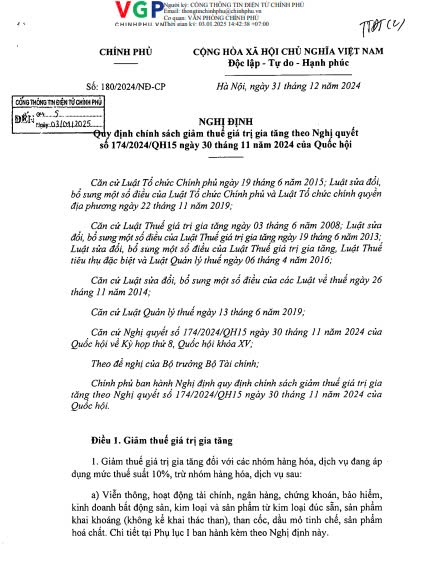
The reduction of Value-Added Tax (VAT) from 10% to 8% is a key government policy designed to support Vietnam’s post-pandemic economic recovery and ease the financial burden on businesses and consumers. The policy takes effect from January 1, 2025 to June 30, 2025, with the goal of lowering business costs, particularly in manufacturing and consumer services. The 8% VAT rate is expected to stimulate domestic consumption, reduce prices of goods, and create a more favorable environment for businesses still recovering from the pandemic. It is an economic support measure to help companies overcome difficulties and restore their production and service activities.
What Is the 8% VAT Reduction in 2025?
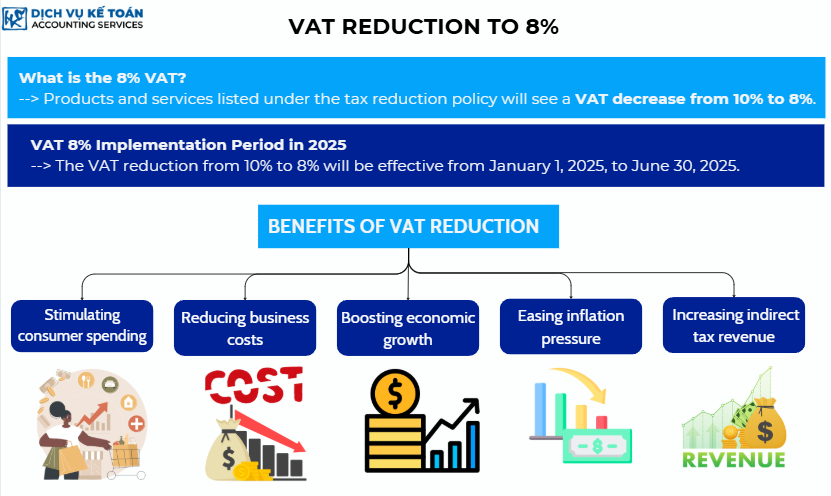
What Is the 8% VAT?
The 8% VAT is a tax rate applied to certain goods and services, replacing the previous 10% rate. In other words, products and services eligible for the reduction are taxed at 8% instead of 10%, helping lower input costs for businesses, reduce prices for consumers, and stimulate domestic consumption. The reduced rate applies for six months (January 1, 2025 to June 30, 2025), allowing businesses to cut production expenses and strengthen their competitiveness in the market.
Duration of the 8% VAT in 2025
The VAT reduction from 10% to 8% will be in effect from January 1, 2025 to June 30, 2025. This timeframe was set based on Vietnam’s domestic economic recovery outlook and the ongoing need to support businesses and consumers. The reduction is a timely measure to help companies sustain production, improve operational efficiency, and boost domestic demand for goods.
Benefits of the 8% VAT Reduction
The 8% VAT reduction helps ease the financial burden on businesses by lowering production and input costs. It allows companies to reduce product prices and stimulates domestic consumption, particularly for consumer goods and services. With lower taxes, consumers benefit from cheaper prices, which strengthens their purchasing power. The policy also encourages sustainable business growth and promotes investment in sectors with long-term development potential.
List of Goods and Services Eligible for the 8% VAT Reduction
Industries Eligible for the 8% VAT Reduction
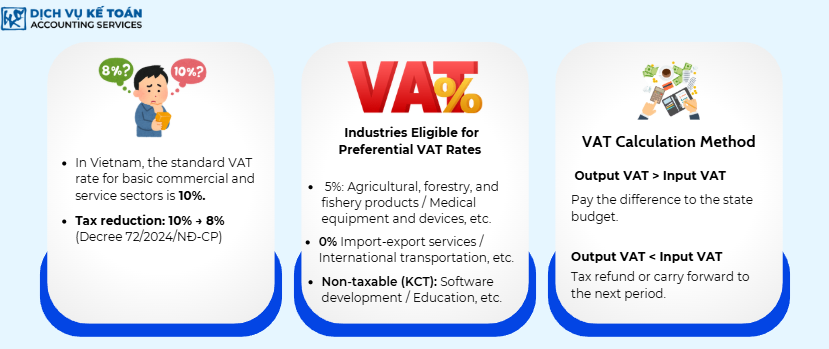
Under the new regulations, the 8% VAT rate applies to several groups of goods and services that were previously taxed at 10%. The sectors that benefit most include production and consumer-facing industries, such as food, essential consumer products, transportation services, education, and healthcare. Businesses in these sectors can lower input costs and gain a more competitive position in the market. The government expects this policy to boost consumer purchasing power and accelerate the broader economic recovery.
Goods and Services Excluded from the 8% VAT Reduction
Not every industry benefits from the 8% VAT reduction. Sectors such as telecommunications, banking, securities, insurance, real estate, metals and fabricated metal products, mining (excluding coal), and refined petroleum products are not eligible and will continue to apply the 10% VAT rate. Businesses in these industries will not benefit from the reduction and remain subject to the higher rate.
How to Classify Goods and Services Eligible for the VAT Reduction
To apply the 8% VAT rate correctly, businesses must properly identify which goods and services qualify for the reduction. This requires clear categorization of products and verification of industry codes and applicable tax rates. Accurate classification helps avoid errors in tax filings and invoicing, ensuring that all commercial transactions remain fully compliant.
Key Points When Applying the 8% VAT
Businesses should pay close attention to which goods and services qualify for the 8% VAT rate. Since tax policies may be updated, companies should regularly monitor announcements from the tax authorities. Staying informed and updating internal processes promptly helps ensure full compliance and reduces the risk of legal violations.
How Businesses Should Apply the 8% VAT
Invoicing Procedure for the 8% VAT
When applying the 8% VAT, businesses must adjust their invoicing process to reflect the new rate. For eligible goods and services, invoices must clearly indicate a VAT rate of 8% instead of 10%. For products not eligible for the reduction, the 10% VAT rate continues to apply. Clearly stating the correct rate makes it easier for tax authorities to verify invoices and helps businesses avoid errors in tax declarations.
How to Calculate the 8% VAT for Goods and Services
Businesses must accurately calculate the VAT payable under the 8% rate. For eligible goods and services, the tax payable is lower than under the previous 10% rate. However, companies must ensure their calculations are correct and that taxes are declared accurately and in full, with no underreporting or omissions.
Steps to Apply the 8% VAT Reduction on Invoices
To apply the 8% VAT reduction on invoices, businesses must clearly state the applicable VAT rate for each product or service. In addition to listing the 8% rate, the invoice should explicitly note that the reduction is being applied under the relevant government regulation. This ensures transparency in transactions and makes verification easier if requested by tax authorities.
Key Points When Declaring the 8% VAT
Businesses should take care when filing taxes to ensure that the reduced 8% VAT rate is applied and recorded correctly. Tax authorities may request supporting documents to verify the reduced rate, so accurate declarations and strict compliance with regulations are essential in order to avoid fines and other penalties.
Regulations on VAT Invoices at the 8% Rate
Rules for Issuing Invoices Under the 8% VAT
When applying the 8% VAT under the new policy, businesses must follow strict invoicing rules. Sales and service invoices must clearly indicate the 8% VAT rate for any goods or services eligible for the reduction. Recording the correct rate is critical to avoid errors and ensure the legality of every transaction. The invoice must also include complete details about the product or service, along with the specific reduction amount. Non-compliance may result in penalties or required invoice adjustments.
Notes to Include When Issuing Invoices With the 8% VAT Reduction
In addition to stating the 8% VAT rate, businesses should include a specific note confirming that the reduction is being applied in accordance with the relevant government decree. The note must be clear and accurate to help buyers understand how the VAT has been applied. For example, the invoice may state: “2% VAT reduction applied under Decree No. 180/2024/ND-CP.” This makes it easy to confirm that the reduction complies with legal regulations and provides a clear reference if requested by the tax authorities.
How to Record Tax Reduction Information on Invoices
When recording tax reduction information on invoices, businesses must clearly show both the pre-reduction amount and the reduced VAT amount. For example, the “Total” column should list the full value of the goods or services before the reduction, while the “Total Goods/Services Price” column should clearly indicate the reduced tax amount (2%). The invoice must also confirm that the reduction has been applied in accordance with government regulations, making verification straightforward during any tax audit.
Things to Keep in Mind When Issuing 8% VAT Invoices
When issuing invoices with the 8% VAT, businesses should keep the following points in mind to ensure accuracy and full legal compliance:
- The invoice must follow the standard format required by the tax authority.
- Tax reductions must be recorded completely and accurately.
- All invoices should be properly retained for tax declarations and potential audits.
- The invoice must clearly show that the 8% VAT reduction has been applied to eligible goods and services.
- Businesses should implement internal checks to ensure that every eligible transaction is recorded and processed in line with regulations.
By following these guidelines, businesses can avoid mistakes in tax declarations and invoicing while maintaining full transparency and legality in their operations.
The VAT reduction from 10% to 8% in 2025 is an important measure to support post-pandemic business recovery in Vietnam, ease financial pressure, and stimulate domestic consumption. The reduced rate not only lowers product costs but also creates better conditions for businesses to grow in an increasingly competitive market. To ensure accuracy and compliance, however, businesses must thoroughly understand the regulations, especially when issuing invoices and filing taxes. A clear understanding of the process and strict adherence to the rules will help companies avoid unnecessary mistakes and maintain transparency in their operations.
For any inquiries, contact Wacontre Accounting Services via Hotline: (028) 3820 1213 or email [email protected] for prompt assistance. With a team of experienced professionals, Wacontre is committed to providing dedicated and efficient service. (For Japanese clients, please contact Hotline: (050) 5534 5505).