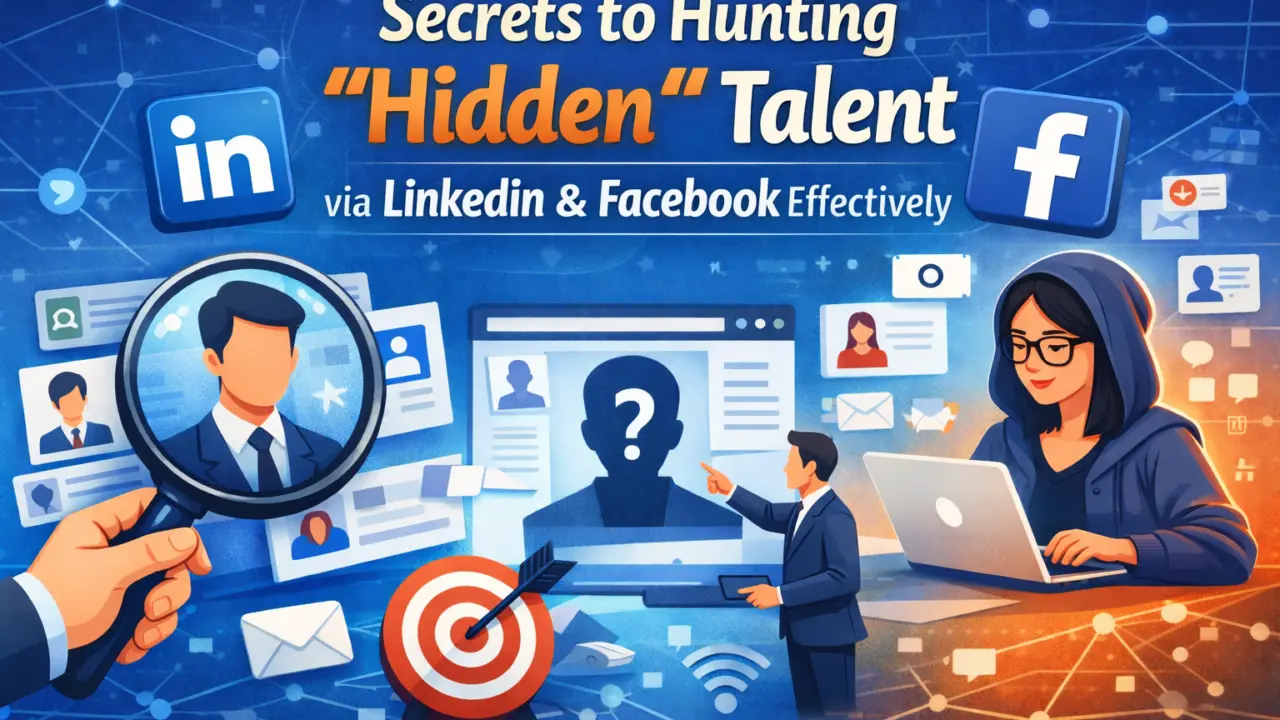
To effectively attract passive candidates, recruiters must master the art of recruiting on LinkedIn and Facebook. By leveraging these recruitment social networks, companies can uncover hidden talent and secure a consistent high-quality candidate pool for long-term growth.
In the digital age, the battle for talent is no longer simply about posting job ads and waiting for applications to come in. In fact, the best talent often does not actively seek jobs; they are “hidden talents” contributing to other organizations. Mastering talent search techniques on LinkedIn and Facebook is key for businesses to access this valuable resource, creating a sustainable competitive advantage in Vietnam’s volatile labor market.
- What is Talent Scouting on LinkedIn and Facebook?
- Why is “Passive Talent” a Top Priority for Businesses Today?
- Strategies for Maximizing LinkedIn to Find Talent
- Secrets to Turning Facebook into a Professional Passive Talent Channel
- The 5-Step Process to Attract Passive Candidates from Social Media
- Mistakes to Avoid in Social Media Recruitment
- Conclusion
What is Talent Scouting on LinkedIn and Facebook?
Talent scouting on LinkedIn and Facebook is a process that utilizes tools, algorithms, and networks on the two largest social media platforms to proactively reach, engage, and attract candidates. Instead of relying on traditional job boards, this method focuses on identifying individuals with the right skills and experience who are not currently looking to change jobs.
In Vietnam, LinkedIn is considered the professional network for office workers, professionals, and senior managers, while Facebook is fertile ground for targeting creative, technical, and skilled workers. Combining these two platforms helps recruiters build a high-quality candidate ecosystem, reducing intermediary recruitment costs and increasing conversion rates. This is not just a simple search technique, but also an art of building the recruiter’s personal brand and the company’s reputation online.
Why is “Passive Talent” a Top Priority for Businesses Today?
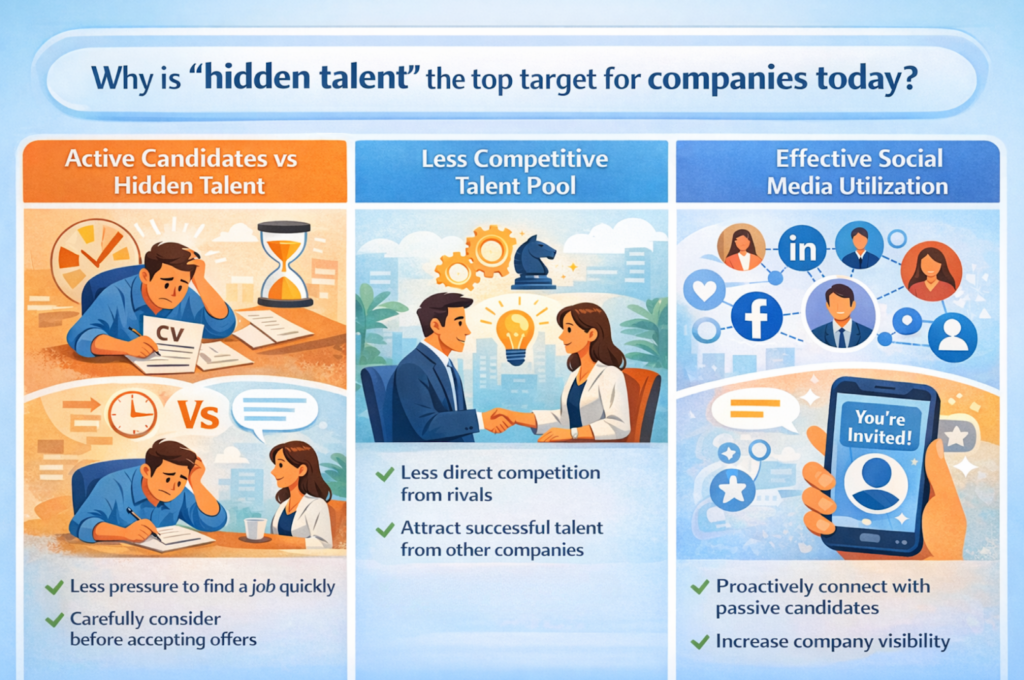
1. The Distinction Between Active Applicants and Passive Talent
Active applicants are individuals aggressively submitting resumes under the pressure of finding a job quickly. This urgency can sometimes lead to discrepancies in CVs or rushed decisions regarding company fit. Conversely, passive talent (or passive candidates) are those currently stable in their roles. They face no pressure to change; thus, when they accept an offer, it is typically the result of careful consideration of core values and career trajectory. Recruiting this group allows businesses to acquire individuals with high commitment levels and proven competence verified by their current performance.
2. Advantages of Engaging Passive Candidate Sources
When approaching passive talent, businesses encounter less direct competition from rivals compared to public job postings. You have the opportunity to engage them as “partners,” allowing for a deeper understanding of their expectations without the biases of mass interview rounds. Furthermore, attracting a high-performer from elsewhere brings “fresh perspectives,” management expertise, and established networks to your team. It is the fastest way to “upgrade” the quality of your human capital in a short period.
3. The Significance of Social Media in Headhunting Strategies
Social media dissolves geographical barriers and hierarchical distances. A recruiter can directly send a connection request to a C-suite executive via LinkedIn or engage in technical discussions with developers in Facebook Groups. Maintaining a consistent presence on recruitment social networks keeps your business “top of mind” for candidates. When a passive talent eventually considers a career move, your company—having consistently shared value and connected with them—will be the first name they consider.
Strategies for Maximizing LinkedIn to Find Talent
1. Optimizing Recruiter Profiles and Company Pages
Before going on the “hunt,” you must be a reputable “hunter.” A recruiter’s LinkedIn profile should be professionalized with a clear headshot and a headline that emphasizes your role as an opportunity connector. More importantly, the Company Page must be a vivid reflection of the workplace culture. Share internal activities, successful projects, and especially thought-leadership articles from leadership. When passive talent receives an invite, their first move is to verify who you are and if your company is trustworthy. A professional LinkedIn presence is the strongest testament to a business’s market position.
2. Utilizing Boolean Search to Filter Passive Talent
Search proficiency is what separates an average HR practitioner from an expert. Using logical operators such as AND, OR, NOT, and quotation marks allows you to narrow or expand search results with precision. For instance, the string (Java OR Python) AND “Software Engineer” NOT “Junior” helps you instantly filter for experienced engineers without being cluttered by internship profiles. Mastering this candidate search technique saves hours of aimless browsing and focuses resources on high-potential profiles.
3. InMail Techniques and the Non-Intrusive Approach
Never send a dry, templated recruitment message. For passive talent, who receive dozens of invites weekly, you must differentiate yourself through personalization. Mention a post they recently shared, an award they won, or a specific skill they possess. Frame the outreach as a “career conversation” or a request for advice rather than forcing them to review a job description. The goal of the initial message is not an immediate hire, but a response that opens a meaningful relationship.
4. Building an Employer Brand on LinkedIn
LinkedIn is not just for finding people; it is for being found. Encourage current employees to become “brand ambassadors.” When employees share their job satisfaction, it holds far more value than a corporate ad from HR. The most successful passive recruitment campaigns are backed by a consistent content strategy that showcases intangible values such as work-life balance, training policies, and clear promotion paths.
Secrets to Turning Facebook into a Professional Passive Talent Channel
1. Leveraging Professional Groups (Facebook Groups)
In Vietnam, Facebook Groups serve as vibrant professional communities—from graphic design and accounting to specialized industrial engineering. Instead of posting “job spam,” participate as an active member by contributing insights or asking technical questions. By observing members who consistently provide excellent answers or are highly regarded by the community, you can identify hidden passive talent. Connecting in an informal environment like a Group helps lower a candidate’s defensive barriers.
2. Using Facebook Ads to Target Candidates by Interests and Behavior
Facebook possesses a massive database of user behavior. You can set up recruitment ads targeting individuals working at a competitor, possessing specific technical interests, or residing in a particular area. This is a highly proactive way to recruit on LinkedIn and Facebook. A short video about company culture appearing on a potential candidate’s newsfeed can pique curiosity more effectively than any cold email.
3. Utilizing Search Tools and Third-Party Resources
While Facebook has restricted some direct search features, using smart keywords in the search bar or third-party tools still allows you to identify individuals with specific titles attending industry events. Pay attention to attendees of major seminars; these are often individuals with a growth mindset and a thirst for development—typical traits of a high-quality candidate pool.
4. Building a Talent Community via Recruitment Fan Pages
A recruitment fan page should not just be for “Urgent Hiring” posts. Transform it into a career resource. Share interview tips, market trends, or simple “behind-the-scenes” office moments. When passive talent “likes” your page, they are granting you permission to appear in their digital life. This is the first step in converting a stranger into someone interested in your employer brand.
The 5-Step Process to Attract Passive Candidates from Social Media
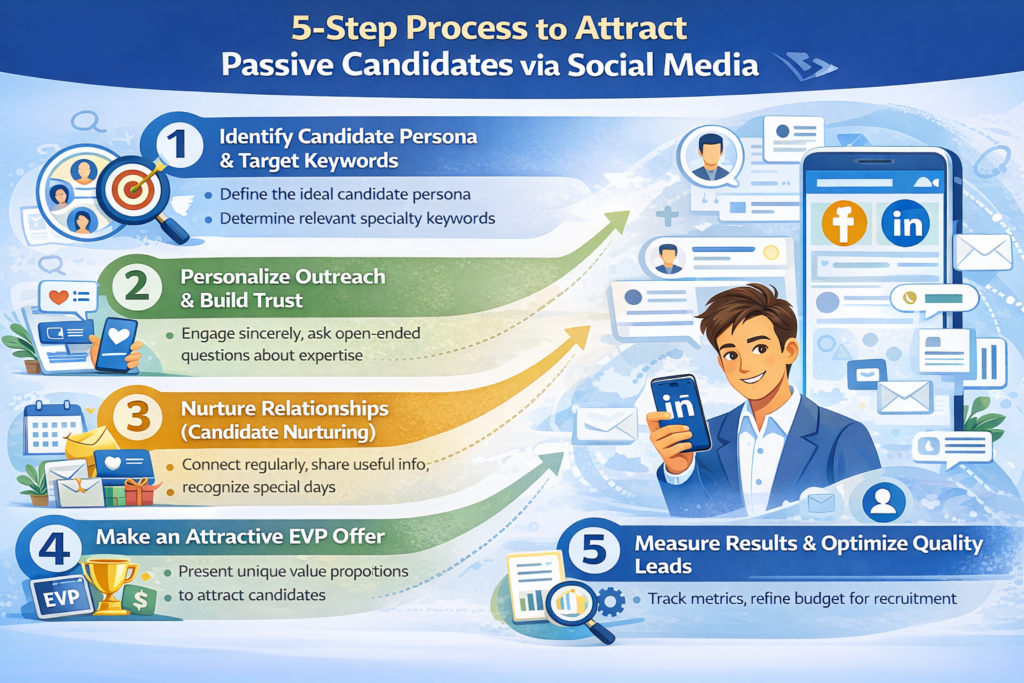
1. Define Candidate Personas and Target Keywords
HR must collaborate with technical departments to map out the ideal candidate. What do they read? Which groups do they join? What technical jargon do they use? Defining the right keyword set accounts for 50% of the campaign’s success.
2. Personalized Outreach and Trust Building
This stage requires patience. Do not rush into salary or benefits. Start by engaging with their posts, offering sincere compliments, or asking open-ended technical questions. Trust is the only foundation upon which passive talent will share their “pain points” at their current company with a stranger.
3. Candidate Nurturing
Not everyone is ready to move immediately. Maintain periodic connections by sending useful industry insights, inviting them to company workshops, or simply offering birthday wishes. This nurturing builds a “talent bank” ready for when a vacancy arises.
4. Delivering a Compelling Employer Value Proposition (EVP)
For passive talent, salary is often not the deciding factor. They seek change for a better environment, learning opportunities, or flexibility. Present your offer as a solution to their current challenges, emphasizing the unique EVP that only your business provides.
5. Measuring Effectiveness from Quality Sources
Always track metrics: Which source yields the most responses? What is the conversion rate from InMail to interview? Data analysis helps optimize budgets and time for channels that actually deliver results, ensuring sustainable growth for your recruitment social network.
Mistakes to Avoid in Social Media Recruitment
1. Mass Spamming and Lack of Content Investment
The biggest mistake is sending the same template to hundreds of people. This not only lowers response rates but also severely damages the corporate brand. Candidates will feel like a mere number on a list rather than a valued talent.
2. Ignoring Interaction and Candidate Feedback
Many businesses post aggressively but fail to have staff monitor comments or messages. Delays in response signal a lack of professionalism and a disregard for the candidate. In the world of social media, speed is critical to candidate experience.
3. Inconsistent Brand Image Across Platforms
If your LinkedIn is professional but your Facebook shares controversial or unmoderated content, candidates will question the company’s integrity. Consistency in messaging and imagery is a prerequisite for building long-term trust with passive talent.
Conclusion
Harnessing the power of social media to hunt for passive talent is a journey that demands both strategic thinking and empathy. By mastering recruitment techniques on LinkedIn and Facebook, businesses do more than just fill immediate vacancies; they build a community of talent that aligns with their organization. Remember, in modern recruitment, the winner is not the one with the most money for ads, but the one who knows how to connect and create real value for candidates from the very first touchpoint on social media.
For any inquiries about Vietnam company formation or accounting and HR services, contact Wacontre via Hotline: (028) 3820 1213 or email [email protected] for prompt assistance. With a team of experienced professionals, Wacontre is committed to providing dedicated service. (For Japanese clients, please contact Hotline: (050) 5534 5505).