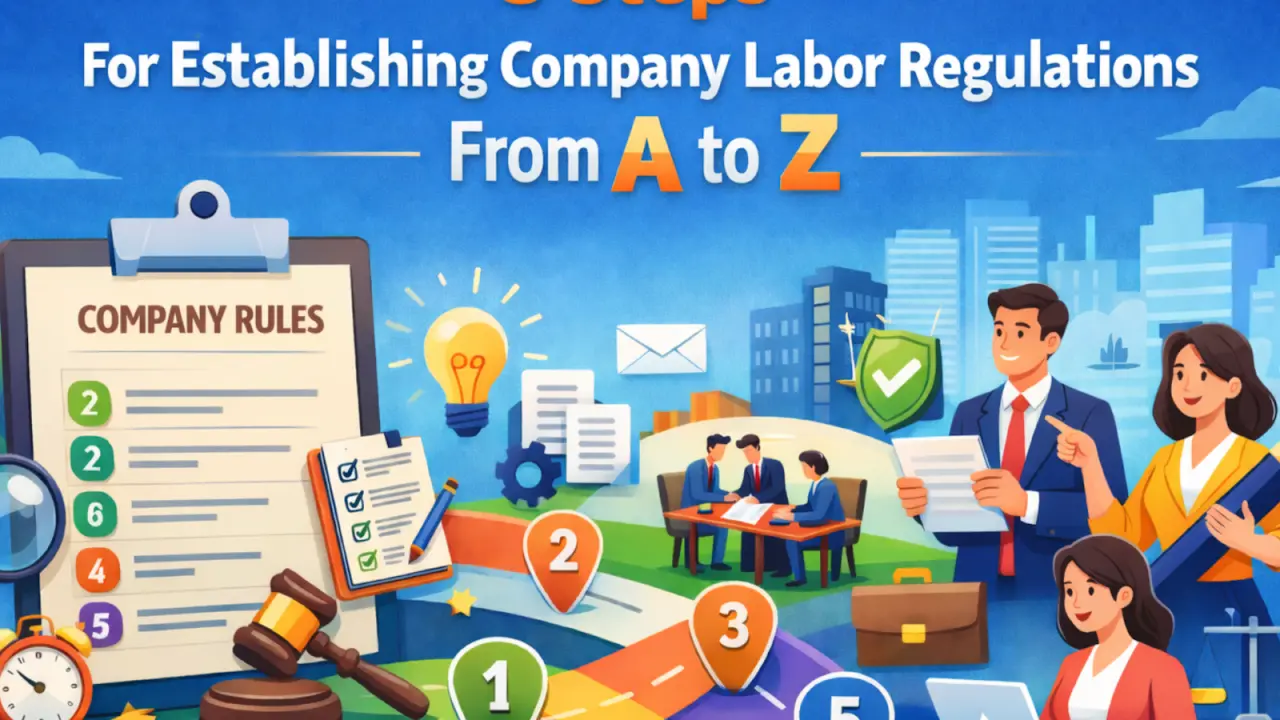
Building company internal labor rules is a critical step for any business in Vietnam. This guide covers the latest labor rule regulations and labor rule registration to ensure your workplace remains professional and legally compliant.
What are Company Internal Labor Rules (ILR)?
Building company internal labor rules is the process by which an enterprise applies labor law provisions to its specific operational conditions. This is not merely copying the Labor Code, but rather creating a unique “corporate constitution” tailored to your organization.
From a legal standpoint in Vietnam, every enterprise employing 10 or more workers is required to have written internal labor rules. These rules cover regulations on discipline, working hours, information confidentiality, and business ethics. Failure to implement proper labor rules or follow the registration process may expose the business to severe administrative penalties.
From a management perspective, these rules serve as a vital tool to protect the employer’s legal rights when disputes arise. They foster a fair working environment where every employee clearly understands their rights and responsibilities.
The Importance of Professional Internal Labor Rules
1. A Tool for Efficient and Transparent HR Management
When a business reaches a certain scale, verbal or intuitive management will reveal numerous loopholes. Drafting internal labor rules helps standardize behavior through the following benefits:
- Behavioral Standardization: Establishing common standards for all staff, from management to execution levels.
- Cultural Integration: Helping new hires quickly understand the company’s expectations and workplace culture.
- Time Efficiency: Significantly reducing the time HR departments spend explaining routine daily matters.
- Trust Building: Transparency in regulations fosters employee self-discipline and fairness within the workforce.
2. Legal Basis for Labor Disciplinary Actions
This is the most critical role of the ILR in dispute cases. In Vietnam, legal validity is demonstrated through:
- The “No Regulation – No Penalty” Principle: Enterprises do not have the right to discipline behaviors not specified in the registered rules.
- A Solid Shield: Well-drafted rules protect the business from counter-lawsuit risks when dismissing employees.
- Strict Enforcement: Ensuring all forms of discipline (reprimand, deferment of pay rise, dismissal) have a clear legal basis.
3. Mitigating Risks of Disputes and Court Claims
Investing in labor rule consultancy from the start helps businesses minimize financial and reputational damage:
- Procedural Error Prevention: Most lost lawsuits are due to procedural mistakes or documents not matching the internal rules.
- Material Liability Specification: Clearly defining compensation levels when employees damage assets or leak business secrets.
- Maintaining Harmonious Labor Relations: When expectations are clear, employees tend to comply better, allowing the business to focus on core operations.
Core Structure of Internal Labor Rules 2026 (Latest Regulations)
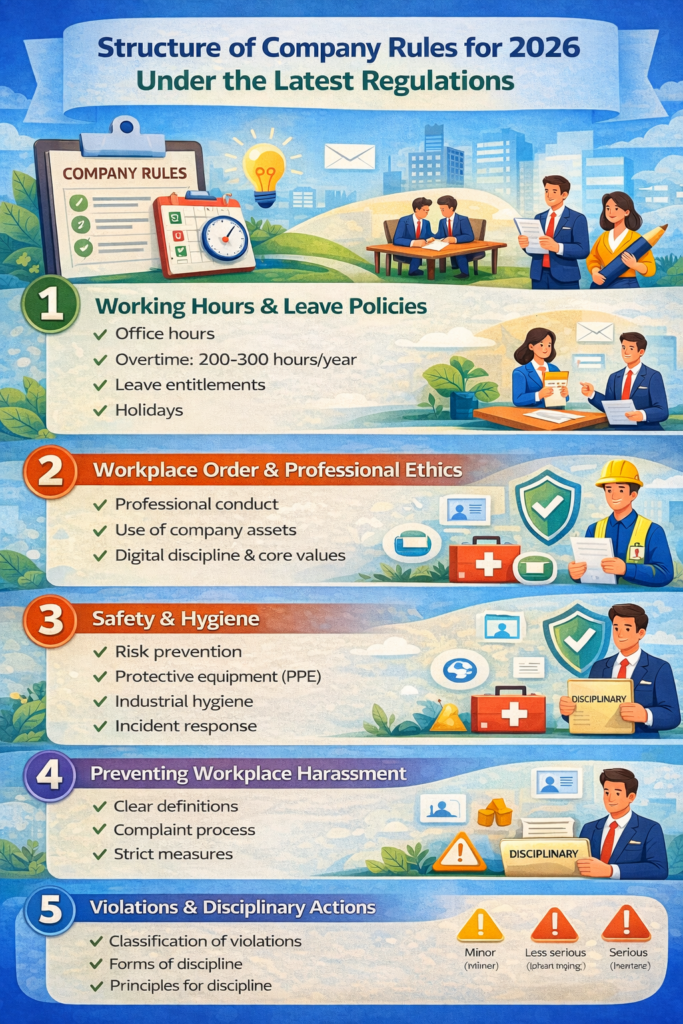
1. Working Hours, Rest Periods, and Holidays
Businesses must specify timeframes as a basis for calculating salary and benefits:
- Office Hours: Define start/end times and mid-shift breaks.
- Overtime: Detailed limits on overtime hours per statutory regulations (not exceeding 200-300 hours/year).
- Leave Policies: Procedures for registering annual leave, paid personal leave, and unpaid leave.
- Public Holidays: Listing statutory holidays and specific company holidays, if any.
2. Workplace Order and Professional Ethics
Building a civilized work environment through:
- Professional Conduct: Regulations on uniforms, ID badges, and communication attitudes with clients and colleagues.
- Use of Shared Assets: Guidelines for using machinery, stationery, and company technology.
- Digital Discipline: Rules on data security, internet usage, and social media statements related to the company.
- Core Values: Standards for integrity, anti-corruption, and business ethics.
3. Occupational Safety and Health Regulations
Safety is a non-negotiable factor in protecting human resources and avoiding costly compensations:
- Risk Prevention: Safe machinery operation procedures and fire safety measures.
- Personal Protective Equipment (PPE): Employee obligations regarding the use of protective gear in hazardous areas.
- Industrial Hygiene: Implementing 5S movements and maintaining workplace tidiness.
- Emergency Response: Quick response instructions for workplace accidents.
4. Prevention of Sexual Harassment (Mandatory Content)
This is a mandatory requirement to protect human rights:
- Clear Definition: Explaining what constitutes sexual harassment (verbal, physical, visual, or via social media).
- Grievance Procedure: Establishing a confidential channel to protect the victim’s identity.
- Disciplinary Actions: Specifying the highest disciplinary level (including dismissal) for violations against a colleague’s dignity.
- Leadership Commitment: Reflecting a culture of respect and a safe working environment for all.
5. List of Violations and Disciplinary Forms
This section serves as the sanctioning framework for the entire company:
- Classification of Violations: Minor, serious, and particularly serious violations.
- 4 Statutory Forms of Discipline:
- Reprimand (oral or written).
- Deferment of pay rise (not exceeding 6 months).
- Demotion.
- Dismissal (applicable for theft, embezzlement, disclosure of secrets, unauthorized absence, etc.).
- Disciplinary Principles: Must involve the labor union and establish proof of the employee’s fault.
5-Step Process for Legal Registration of Labor Rules
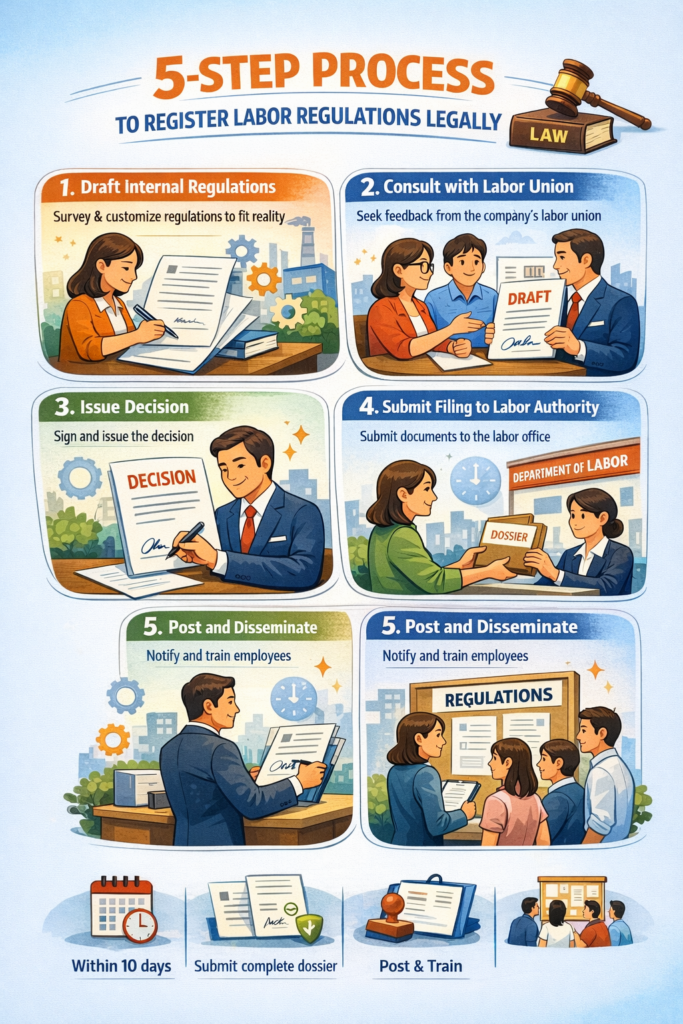
1. Drafting Regulations Based on Business Reality
Do not copy existing templates; customize them to suit your industry:
Operations Survey: Analyze the specifics of production and business to create practical regulations.
Concise Language: Avoid ambiguous interpretations; prioritize clarity and ease of implementation.
System Review: Ensure internal regulations are consistent with the Labor Contract and Collective Bargaining Agreement.
2. Consulting with Employee Representative Organizations
This is a mandatory step to ensure democracy and legality:
Gathering Union Opinions: Send the draft and hold meetings to gather feedback from the grassroots union executive committee.
Minutes of Consultation: Clearly document points of agreement and disagreement.
Consensus: Widespread feedback helps employees understand and support the company’s new regulations.
3. Issuing the Labor Regulations Decision
Signing and Issuing: The legal representative signs the decision along with the complete labor regulations.
Determining Effectiveness: Usually after completing the registration procedures at the relevant authority.
Final Check: Ensure there are no clauses that violate public morals or infringe on privacy.
4. Submitting the Registration Document to the Labor Management Authority
Deadline: Within 10 days from the date of issuance.
Documents Include: Request document, Labor Regulations, Union minutes, and related documents.
Response Time: After 7 working days, if the relevant authority does not respond, the regulations automatically become effective.
5. Publicly Posting and Disseminating to Employees
Method of Posting: Posted on bulletin boards or sent via email or internal portal.
Internal Training: Organize a dissemination session and require employees to sign to confirm they have read and understood the regulations.
Record Keeping: Keep employee confirmation records as evidence for future disciplinary actions.
Important Notes for Foreign-Invested Enterprises
- Compatibility Between Vietnamese Law and Global Culture: Adapt Global Codes of Conduct into language compliant with Vietnam’s Labor Law, especially regarding non-compete and confidentiality clauses.
- Language Priority: The Vietnamese version holds the highest legal value. Bilingual versions (English/Japanese) can be used for management but must ensure total consistency.
- Flexible Terms for Market Adaptation: Conduct annual reviews and use supplementary decisions or appendices to adapt to new decrees without re-registering the entire document too frequently.
Conclusion
Building company internal labor rules is not just an administrative procedure but a strategic investment in operational stability. A well-crafted set of rules ensures smooth operations, minimizes risks, and builds a professional workplace culture.
For inquiries, contact Wacontre Accounting Services via Hotline: (028) 3820 1213 or email [email protected] for prompt assistance. With a team of experienced professionals, Wacontre is committed to providing dedicated and efficient service. (For Japanese clients, please contact Hotline: (050) 5534 5505).