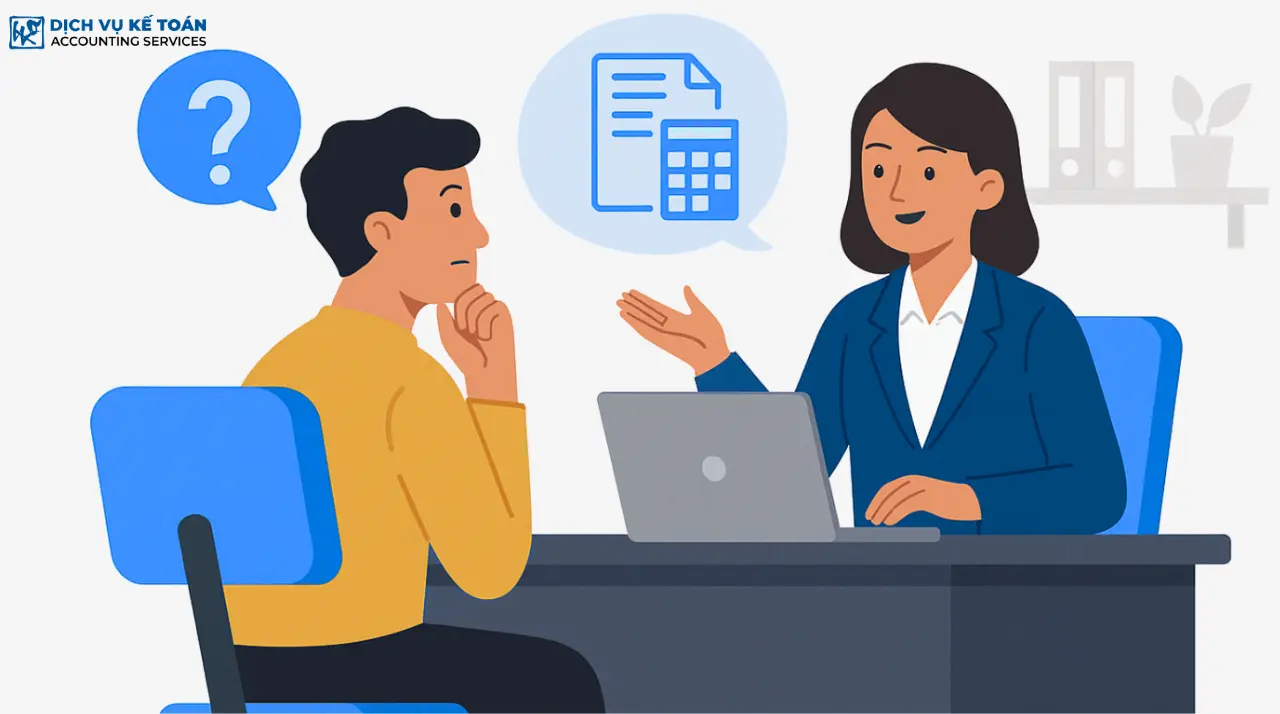
Should small businesses hire an accountant? Discover the key benefits of using professional accounting services.
From outsourced accounting to accounting for small businesses, this article explains why solid accounting is essential to sustainable growth.
- Do Small Businesses Really Need an Accountant?
- Benefits of Hiring an Accountant for a Small Business
- Risks for Small Businesses Without Professional Accounting
- In-House vs. Outsourced Accounting
- When Should a Small Business Use Accounting Services?
- How to Choose the Right Accounting Service for a Small Business
Do Small Businesses Really Need an Accountant?
In the early stages of a startup, many small business owners wonder whether hiring an accountant is truly necessary. With limited budgets and resources, some choose to handle the books themselves using software, or assign the work to a multitasking employee. But is that approach really effective and sustainable in the long run?
This article looks at the role of accounting for small businesses, the benefits of using professional accounting services, and the risks of neglecting financial accounting in day-to-day operations.
Benefits of Hiring an Accountant for a Small Business
Hiring an accountant, either as an in-house staff member or through an outsourced accounting service, brings several practical benefits to a small business.
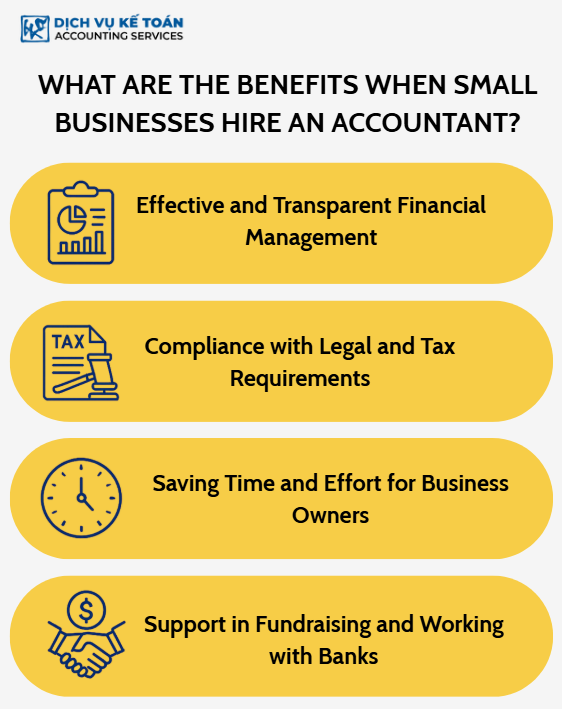
1. Effective and Transparent Financial Management
A well-structured accounting system helps small businesses control cash flow, track income and expenses, identify break-even points, and evaluate performance over time. This foundation allows owners to make informed decisions, from cost adjustments to investment strategy.
2. Compliance with Legal and Tax Requirements
Vietnam’s Accounting Law and Tax Law set clear obligations on bookkeeping, financial reporting, VAT filings, corporate income tax, personal income tax, and more. A professional accountant ensures these procedures are carried out correctly, helping the business avoid administrative penalties.
3. Saving Time and Effort for Business Owners
Instead of wrestling with numbers, invoices, and tax reports, business owners can focus on core activities such as sales, market development, and customer care.
4. Support in Fundraising and Working with Banks
A clear and transparent accounting system builds trust with investors and financial institutions.
Risks for Small Businesses Without Professional Accounting
Going without a professional accountant is not just a staffing gap; it exposes the business to a range of financial, legal, and operational risks.
1. Incorrect Tax Filings, Penalties, or Back Taxes
Tax regulations in Vietnam change frequently. If the person handling the books is not up to date with new circulars or decrees, the business may end up with incorrect filings, underpaid taxes, or missed deadlines. The result can be administrative fines and back taxes covering several years, with a serious impact on cash flow.
2. Lack of Reliable Data for Management
Accounting is not only about taxes; it is also the tool owners use to “see” the company’s financial health. Without accurate accounting data, owners cannot reliably determine net profit, inventory levels, or the risk attached to receivables.
3. Ineligibility for Audits or Fundraising
When seeking investment or applying for government or bank support programs, one key requirement is transparent financial reports prepared in line with accounting standards and ready for audit. Without professional accounting, or with poorly prepared reports, investors will question the business’s transparency and financial management capability.
4. Damage to Image and Reputation
A small accounting error can draw scrutiny from the tax authorities. If a business is publicly listed as a violator or faces enforcement action, it disrupts operations and damages the company’s image. In today’s environment of greater transparency, this is particularly dangerous for small businesses still building trust with partners and customers.
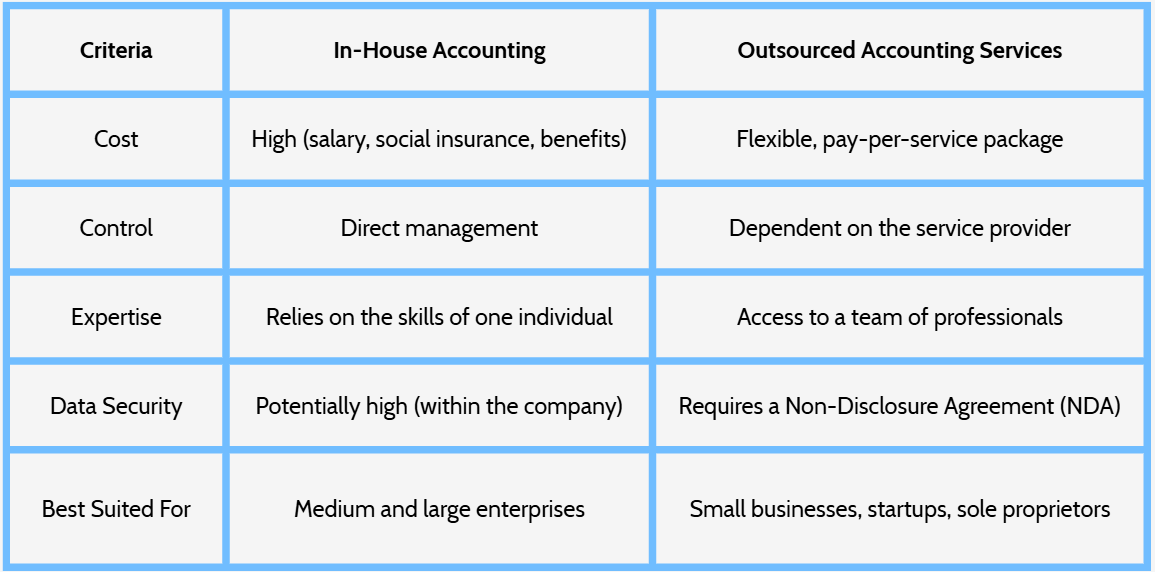
In-House vs. Outsourced Accounting
Both in-house accounting and outsourced accounting services have their own advantages and drawbacks. Businesses should weigh the options against their actual needs and resources.
When Should a Small Business Use Accounting Services?
Not every small business needs to hire an accountant from day one, but in the following situations, professional accounting services become essential:
When the Business Starts Generating Regular Monthly Revenue
At this stage, cash flow grows more complex and needs an accountant to track and report it accurately.
When Tax Filings and Financial Reports Are Required
Under Vietnamese regulations, businesses must file taxes quarterly and prepare annual reports. Handling this in-house without expertise often leads to errors.
When Working with Banks or Investors
This is when a business needs to demonstrate professionalism and transparency through its accounting records.
When You Want to Save Time and Resources
Rather than recruiting and training in-house accountants, small businesses can use outsourced accounting services to optimize costs.
How to Choose the Right Accounting Service for a Small Business
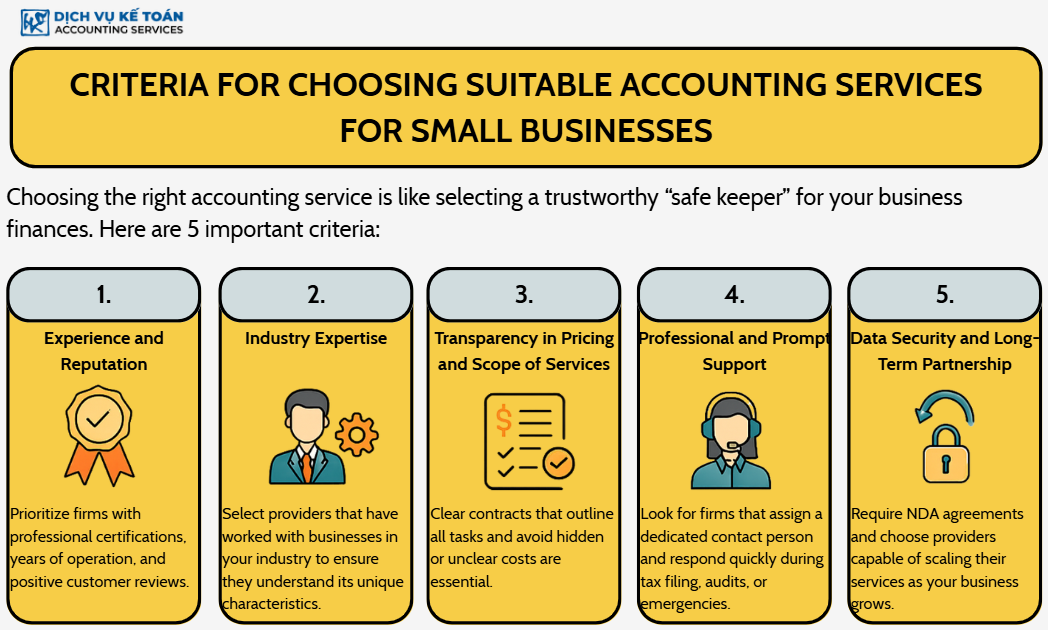
Choosing the right accounting service is like finding a trustworthy guardian for your finances. Here are key criteria you should not overlook:
1. Experience and Reputation
Prioritize accounting firms with a solid track record, certified professionals, and experience across different business types. Check customer reviews and feedback on Google Reviews, social media, and business forums.
2. Understanding of Your Industry
Accounting for trading companies is very different from accounting for construction, manufacturing, logistics, or services. Choosing a firm with experience in your sector makes collaboration smoother and saves time.
3. Clear and Transparent Pricing
A reputable accounting service openly discloses its service packages, clearly listing what is included, from tax filings and financial reporting to tax finalization support and financial management consulting.
4. Prompt and Professional Support
Fast response times and readiness to assist during critical periods, such as tax filings, finalizations, or unexpected incidents, are essential. Favor firms that offer multiple support channels (email, Zalo, hotline, online accounting software) and assign dedicated staff to your account.
5. Data Security and Long-Term Commitment
Accounting documents contain sensitive information about your operations and finances. A confidentiality agreement (NDA) with the service provider is strongly recommended. Also choose a partner willing to scale its services as your business grows, so you do not face disruption from switching providers later.
The real question is no longer whether a small business should hire an accountant, but rather how and when to do so, and which provider will deliver the best results. A professional accounting system not only ensures legal compliance but also lays the foundation for sustainable management and growth.
If you are a small business owner, it is worth seriously considering outsourced accounting services today to reduce risk and create an advantage for the future.
For any inquiries, contact Wacontre Accounting Services via Hotline: (028) 3820 1213 or email [email protected] for prompt assistance. With a team of experienced professionals, Wacontre is committed to providing dedicated and efficient service. (For Japanese clients, please contact Hotline: (050) 5534 5505).