
A practical guide to determining the correct VAT filing period for businesses in Vietnam. Choosing the right monthly or quarterly schedule helps you stay compliant and avoid penalties. The VAT filing period is a key part of tax compliance, and depending on your revenue, it may be either monthly or quarterly. Selecting the appropriate period optimizes tax management and reduces the risk of administrative fines.
What Is the VAT Filing Period?
The Value-Added Tax (VAT) filing period is the time frame in which a business must prepare and submit its VAT return and remit the tax due to the tax authority. Choosing the correct filing period is essential for complying with Vietnam’s tax laws, avoiding administrative penalties, and managing cash flow effectively. Under Circular 80/2021/TT-BTC and the Law on Tax Administration, businesses in Vietnam may file VAT either monthly or quarterly, subject to specific conditions.
Who Must File VAT Monthly vs. Quarterly
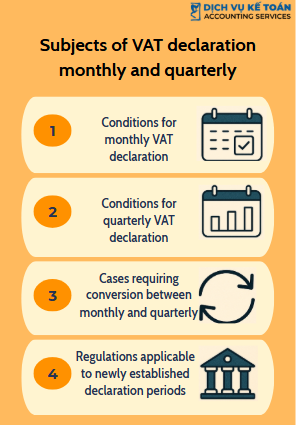
1. Conditions for Monthly VAT Filing
Businesses with total revenue from the sale of goods and provision of services in the preceding year exceeding VND 50 billion are required to file VAT returns monthly. The tax authority uses the previous year’s finalized tax return as the basis for this classification.
2. Conditions for Quarterly VAT Filing
Businesses with total revenue in the preceding year of VND 50 billion or less may choose to file VAT returns quarterly. This option is often preferable for small and medium-sized enterprises because it reduces reporting frequency and eases short-term cash flow pressure.
3. Switching Between Monthly and Quarterly Filing
Businesses may only reset their VAT filing period at the start of each calendar year. If the previous year’s revenue rises above or falls below the VND 50 billion threshold, the company must apply the corresponding filing period for the following year. The filing period cannot be changed mid-year, even if revenue fluctuates during the current year.
4. Rules for Newly Established Companies
Newly established businesses that have not yet generated determinable revenue file VAT quarterly by default. After the first full fiscal year, actual revenue becomes the basis for setting the filing period for the following year.
Key Considerations When Choosing a VAT Filing Period
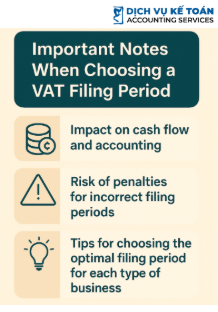
1. Impact on Cash Flow and Accounting
Quarterly filing reduces pressure on short-term cash flow and lowers ongoing accounting workload. Monthly filing, by contrast, requires businesses to prepare reports and meet tax payment deadlines more frequently.
2. Risk of Penalties for Choosing the Wrong Period
Filing under the wrong period can result in administrative penalties from the tax authority, and in cases involving material errors, the tax authority may also reassess the company’s tax liability. Understanding the correct filing schedule is essential to avoiding these risks.
3. Tips for Choosing the Optimal Filing Period by Business Type
– Businesses with fluctuating revenue should consider quarterly filing for better cash flow control.
– Businesses that frequently request VAT refunds should opt for monthly filing to shorten refund processing time.
– Exporters and companies operating in sectors with high input VAT should prioritize monthly filing to take advantage of faster VAT refund cycles.

Frequently Asked Questions About VAT Filing Periods
1. Can the VAT filing period be changed mid-year?
No. The filing period is set at the beginning of the calendar year and cannot be changed mid-year. Throughout the year, businesses must follow the registered period or the one assigned by the tax authority.
2. What if the business has no revenue during a filing period?
The business must still prepare and submit the VAT return on time, even when there is no revenue for that period. Late submission may result in penalties regardless of zero revenue.
3. How does the filing period affect VAT refunds?
The filing period directly affects how quickly VAT refunds are processed. Quarterly filing generally leads to longer refund timelines than monthly filing, so businesses should weigh this factor when selecting their filing period.
Selecting the correct VAT filing period helps your business comply with Vietnam’s tax laws, streamline tax administration, and avoid the risk of penalties. Depending on company size and operating model, businesses should regularly review annual revenue and register the most suitable filing period. If you are unsure, consulting an experienced accountant or tax advisor is highly recommended.
For any inquiries, please contact Wacontre Accounting Services via Hotline: (028) 3820 1213 or email [email protected] for prompt assistance. Backed by a team of experienced professionals, Wacontre is committed to delivering dedicated and efficient service. (For Japanese clients, please contact Hotline: (050) 5534 5505.)

EDITORIAL INFORMATION
Wacontre Accounting & Tax Editorial Team
This article is maintained by the Wacontre editorial team. A named reviewer and review date are shown only after individual sign-off; this article does not yet have that sign-off.
Official references
Update history
- : Added editorial ownership, official references, and update history; no individual expert review is claimed.
- : Originally published.