
Personal Income Tax (PIT) is a direct tax levied on individual income and plays an important role in Vietnam’s state budget. Understanding how PIT is defined and calculated will help you fulfill your tax obligations accurately while optimizing your personal finances. This article offers a clear guide to PIT calculation, legal regulations, and the key updates that apply in 2024.
What is Personal Income Tax?
Definition of PIT
Personal Income Tax (PIT) is a tax that individuals are required to pay on income generated from sources such as salaries, capital investments, capital transfers, and other earnings. PIT not only secures revenue for the state budget but also serves as a tool to balance income distribution across society.
Taxpayers Subject to PIT
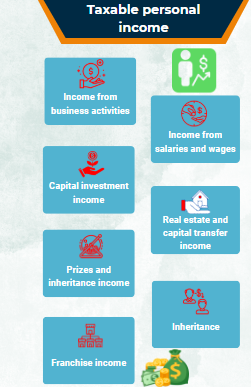
In Vietnam, PIT applies to two categories of taxpayers:
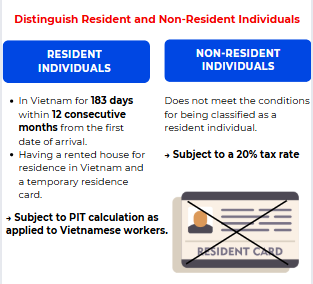
Taxable Personal Income
How to Calculate Personal Income Tax Accurately
PIT Calculation Formula
The amount of PIT payable is calculated as follows:
PIT Payable = Taxable Income × Tax Rate
Taxable Income: The income remaining after deductions for exemptions and family circumstances.
Tax Rate: Determined based on a progressive tax scale.
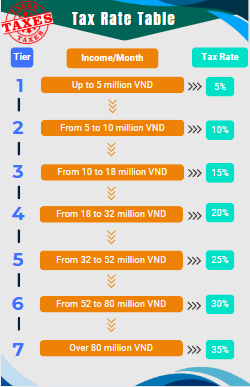
Progressive Tax Rates
The current PIT progressive tax scale consists of seven brackets, with rates ranging from 5% to 35%:
Deductions When Calculating PIT
Allowable deductions include:
- Family deductions: a personal deduction of VND 11 million per month and VND 4.4 million per month for each dependent.
- Mandatory insurance contributions: social insurance, health insurance, and unemployment insurance.
- Charitable contributions: deductible when supported by proper documentation.
New PIT Regulations for 2024
Exemptions from PIT
Under the latest regulations, PIT exemptions apply in cases such as:
- Property transfers between closely related individuals (for example, spouses, parents, and children).
- Income from gifts and inheritances exchanged between family members.
- Income from overtime and night-shift work that is paid at a rate higher than standard working hours.
Tax Periods and Applicable Rates
Depending on the taxpayer and the source of income, the tax period may be:
– Annual basis: income from salaries and business activities for resident individuals.
– Per occurrence: applicable to other income sources such as capital transfers, real estate transactions, and winnings.
– Monthly or annual basis: for securities transfers, based on the taxpayer’s choice.
Conditions for Determining Residency
According to Circular 111/2013/TT-BTC, an individual is classified as a tax resident in Vietnam if:
- They are present in Vietnam for at least 183 days in a calendar year.
- They maintain a regular place of residence as defined by residency laws, or hold a lease contract of 183 days or longer.
Important Notes for PIT Filing
Deadlines and Filing Methods
- Filing frequency: monthly or quarterly, depending on the size of the business.
- Submission deadline: by March 31 of the following year for income from salaries and business activities.
Tools for Tax Filing
- Electronic Tax Filing Software: enables convenient submission of tax declarations and easy retrieval of taxpayer information.
- Online Tax Portal: supports regulation lookups and fast online tax filing.
Tips to Avoid Errors in Tax Filing
- Verify all documents: ensure that every item of income and every deduction is fully declared.
- Plan periodic payments: keep a clear schedule to meet deadlines and avoid penalties.
- Stay updated on regulations: ongoing review helps ensure compliance and allows you to adjust to changes promptly.
A solid understanding of personal income tax regulations, the latest updates, and proper calculation methods enables you to meet your tax obligations effectively while remaining fully compliant with the law. Keep your knowledge current and take advantage of available tools to streamline the filing process and minimize legal risks.
Learn more:
Corporate Income Tax (CIT): Proper Understanding and Optimizing Efficiency
What is VAT? Essential Information Accountants Should Know About Value Added Tax (VAT)
For any inquiries, please contact Wacontre Accounting Services via Hotline: (028) 3820 1213 or email [email protected] for prompt assistance. With a team of experienced professionals, Wacontre is committed to delivering dedicated and efficient service. (For Japanese clients, please contact our Hotline: (050) 5534 5505.)