

The chief accountant holds a critical position in every business, responsible for managing finances, supervising accounting operations, and ensuring compliance with legal regulations. However, hiring the right chief accountant is not always straightforward. This article explains the role of the chief accountant, the qualifications required, and the key factors to consider when recruiting for this position.
What Is a Chief Accountant?
Primary Role of the Chief Accountant
The chief accountant oversees a company’s financial operations and ensures that every transaction is recorded in line with applicable regulations. They also support management in making strategic financial decisions based on accurate data. In addition, the chief accountant is responsible for preparing financial reports on time, complying with current accounting standards, and helping other departments manage their budgets.
Day-to-Day Responsibilities of the Chief Accountant
The daily work of a chief accountant includes reviewing accounting records, supervising the preparation of financial reports, monitoring cash flow, and ensuring that income and expenses are recorded accurately and legally. They are also in charge of budgeting, analyzing financial data to detect errors or fraud, and implementing measures to maintain the financial stability of the business.
Difference Between a Chief Accountant and an Accountant
A general accountant mainly performs bookkeeping and financial reporting tasks, while the chief accountant manages and supervises the entire accounting function and makes decisions related to the company’s financial strategy. The chief accountant must coordinate the work of the accounting department, plan long-term finances, and provide optimal solutions for efficient financial operations.
Required Skills and Experience
A chief accountant needs strong management, financial analysis, strategic planning, and communication skills, as well as the ability to work with internal and external stakeholders. They should also have solid experience in accounting, hold relevant professional certifications, and have a thorough understanding of the legal regulations governing corporate finance.
Why the Chief Accountant Matters to a Business
The chief accountant ensures that the business consistently complies with accounting regulations, helping it avoid financial risks and supporting sustainable growth. They also act as a bridge between the company and regulatory authorities, ensuring the business meets its tax obligations and maintains transparent, accurate financial reports.
Which Businesses Must Appoint a Chief Accountant?
Legal Requirements Regarding the Chief Accountant
Under Vietnamese law, businesses must appoint a chief accountant within 12 months from the date of establishment to ensure financial transparency. This requirement helps companies maintain a sound accounting system and comply with financial reporting standards. Businesses that fail to comply may face administrative fines or other legal penalties.
Businesses Required to Have a Chief Accountant
Medium and large enterprises, joint-stock companies, and foreign-invested companies are all required to have a chief accountant. This requirement strengthens financial control, protects the interests of shareholders and investors, and helps the business operate more efficiently. In these companies, the chief accountant also plays a key role in improving the quality of financial reports and supporting strategic decision-making.
When a Business Does Not Need a Chief Accountant
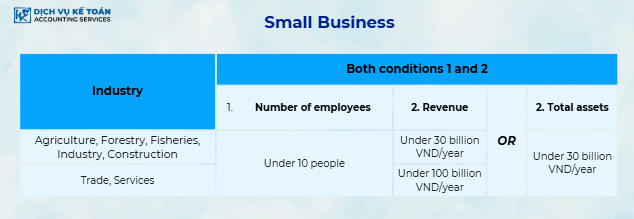
Micro-enterprises are not required to appoint a chief accountant, but they must still ensure that their financial accounting complies with regulations. They are required to employ an accountant or use outsourced accounting services to remain compliant and avoid financial risks. Outsourcing accounting can be an ideal solution for small businesses that want to control costs while maintaining operational efficiency.
Chief Accountant Services for Micro-Enterprises
Micro-enterprises can use outsourced chief accountant services instead of hiring an in-house staff member. This approach reduces costs while preserving professionalism and full compliance with accounting regulations. Using an external accounting service also gives businesses access to a team of experienced accountants who are well versed in Vietnamese legal requirements.
Chief Accountant for Foreign-Invested Enterprises
Foreign-invested enterprises are required to have a chief accountant to ensure compliance with Vietnamese law. The chief accountant plays a vital role in controlling finances and ensuring that financial reports meet both Vietnamese and international standards. As a result, they need strong knowledge of international accounting standards and the ability to work with major audit firms.
Who Is Not Allowed to Be a Chief Accountant?
Legal Criteria for Becoming a Chief Accountant
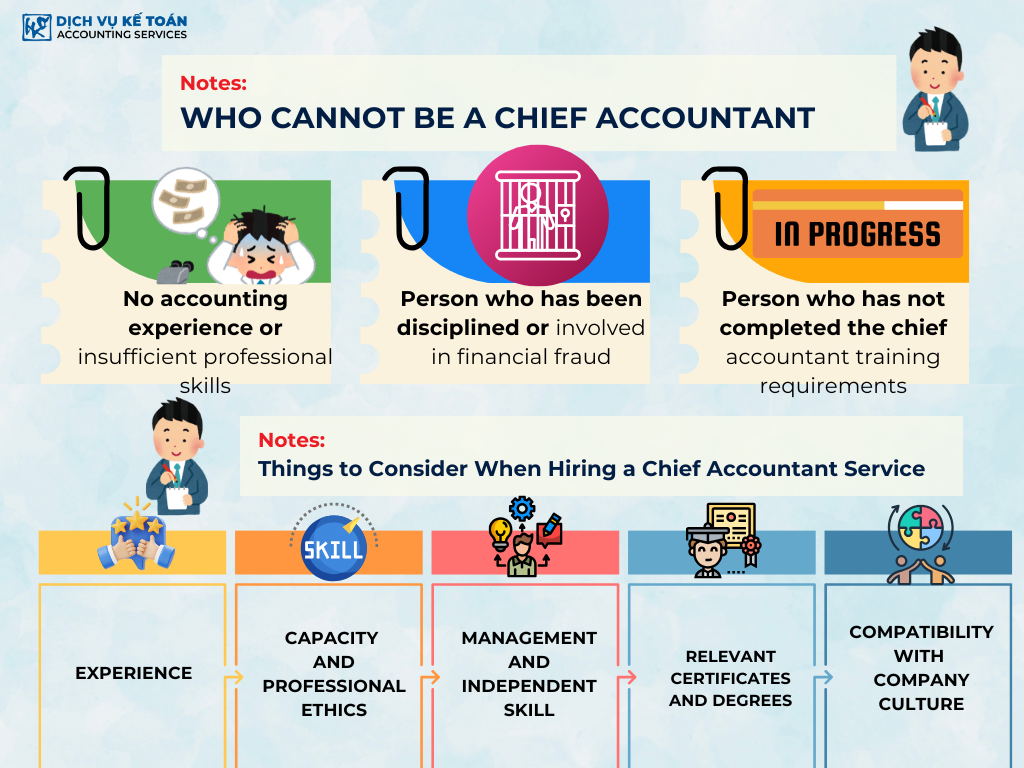
Under Vietnamese law, anyone who wishes to become a chief accountant must meet specific legal criteria. They must hold a degree in accounting or finance, have at least three years of practical experience in corporate accounting, and possess a chief accountant certification issued by the competent authority. Individuals who do not meet these criteria are not permitted to hold the position.
Individuals Prohibited from Holding the Chief Accountant Position
The law also defines who is not allowed to serve as chief accountant. Individuals with a criminal record relating to financial offenses, embezzlement, fraud, or accounting fraud are prohibited from holding this position. In addition, those who have been disciplined for misconduct in the accounting field or who have violated accounting regulations in previous roles are also disqualified. These restrictions exist to safeguard transparency, honesty, and accountability in the company’s accounting operations.
Verifying a Chief Accountant Candidate’s Qualifications
To ensure compliance with accounting regulations, businesses must thoroughly verify a candidate’s qualifications before appointing them as chief accountant. The verification process should include checking the candidate’s degree, work experience, chief accountant certification, and personal records. Companies may also require candidates to take professional assessments to evaluate their practical abilities. This helps ensure that the selected chief accountant has the right competence and professional ethics.
Handling Accounting Violations
If a chief accountant breaks the law or commits financial fraud, the business may face penalties under current regulations. These can include administrative fines, compensation for damages, or even criminal liability in serious cases. Chief accountants must therefore take their responsibilities seriously and strictly comply with the law to avoid harmful consequences for themselves and the company.
The Importance of Professional Ethics for a Chief Accountant
Professional ethics are essential for any chief accountant. They must follow the principles of honesty, transparency, and objectivity in their work. A chief accountant with strong ethical standards helps the business operate smoothly, avoid the risk of financial fraud, and grow sustainably. They are also responsible for training and guiding accounting staff, ensuring that the entire accounting team works professionally and effectively.
Key Considerations When Hiring a Chief Accountant
Hiring a chief accountant is an important decision that has a significant impact on the financial development of a business. Below are the key factors to consider when recruiting for this position:
Experience and Expertise
Experience is a crucial factor when hiring a chief accountant. Businesses should look for candidates with accounting experience in companies of similar size. Where possible, prioritize candidates who have worked in foreign-invested companies, as they tend to have a stronger understanding of international accounting standards and reporting requirements.
Competence and Professional Ethics
A chief accountant must combine strong professional knowledge with high ethical standards. Candidates with solid ethical principles help ensure transparency in accounting operations and reduce the risk of financial fraud. When hiring, businesses should carefully review each candidate’s background and obtain references from previous employers.
Ability to Work Independently and Manage Teams
A chief accountant must be able to work independently while also leading the accounting department. Candidates should therefore have strong leadership capabilities and work well in a team. Team management skills and the ability to organize work effectively are essential for this role.
Relevant Certifications and Qualifications
Candidates should hold qualifications in accounting and finance and other relevant certifications. International credentials such as CPA (Certified Public Accountant) or ACCA (Association of Chartered Certified Accountants) are a significant advantage.
Cultural Fit with the Company
The chief accountant works closely with other departments across the company, so cultural fit is an important consideration. Businesses should ensure that the selected candidate can integrate easily into the company’s environment and collaborate effectively with the wider team.
See more: Common Types of Taxes
The chief accountant plays a critical role in every business, especially in safeguarding financial transparency and ensuring compliance with accounting laws. However, hiring a chief accountant is not a simple task; companies must carefully evaluate experience, professional competence, and ethical standards. A capable chief accountant helps the business grow steadily and sustainably.
If your business is looking for a chief accountant, choose someone whose skills and qualities match the job requirements and who can help the company thrive in a transparent and efficient financial environment.
For any inquiries, please contact Wacontre Accounting Services via Hotline: (028) 3820 1213 or email [email protected] for prompt assistance. With a team of experienced professionals, Wacontre is committed to delivering dedicated and efficient service. (For Japanese clients, please contact Hotline: (050) 5534 5505.)