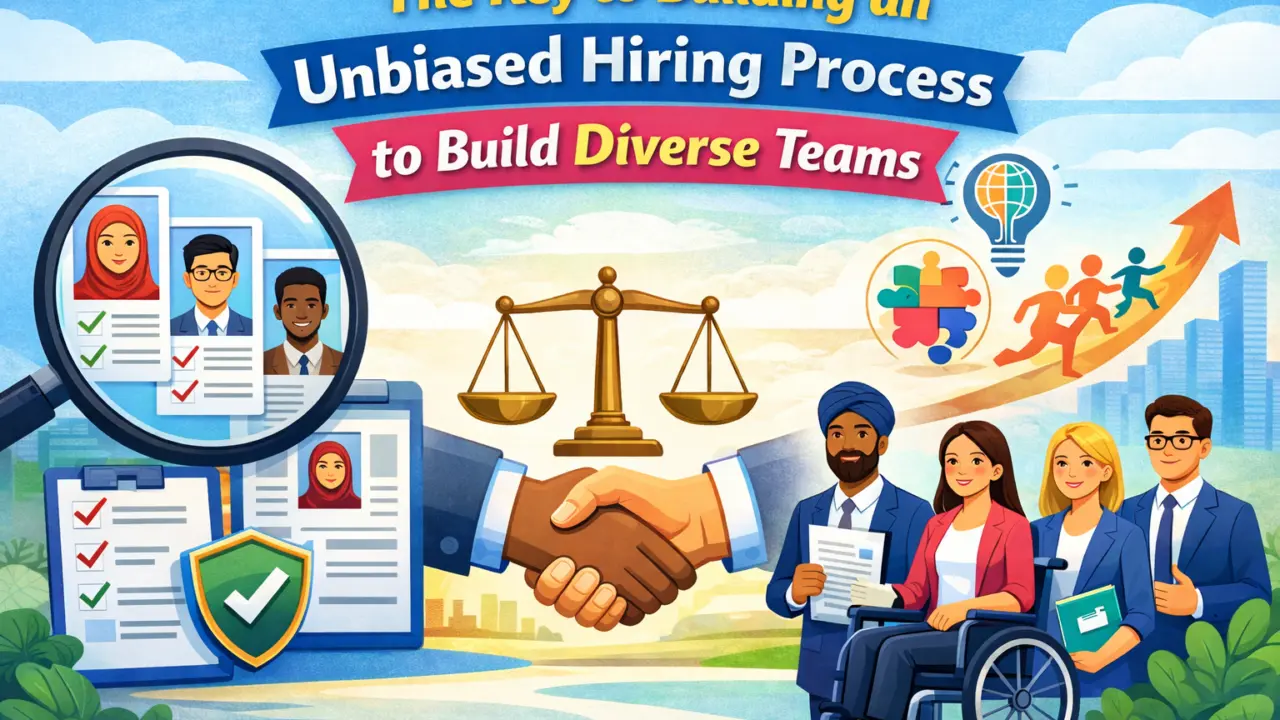
Learning how to build an unbiased recruitment process is the key to diversifying your workforce. A fair hiring process eliminates bias and ensures you attract the best talent.
What is an Unbiased Recruitment Process?
In the context of Vietnam’s rapidly transforming labor market, the concept of “Unbiased Recruitment” has become the gold standard for modern enterprises. Fundamentally, building an unbiased recruitment process involves designing a screening and evaluation system based entirely on an applicant’s actual competencies, skills, and potential. This process focuses on eliminating external factors irrelevant to job performance, such as gender, age, regional origin, academic pedigree, or even physical appearance.
Recruitment bias often stems from “unconscious bias”—mental shortcuts that our brains automatically establish based on personal experience or societal stereotypes. When a recruiter favors a candidate simply because they share an alma mater or a hobby, they inadvertently overlook genuine talent that could contribute higher value to the organization. Therefore, establishing a fair process is not only a matter of professional ethics but also a smart business strategy to optimize human resources.
Implementing this process requires a shift in both leadership mindset and technical tools. It begins with job description drafting and extends through candidate sourcing to the interview methodology and final decision-making. The core objective is to create a level playing field where every candidate has the opportunity to shine based on their intrinsic value. This sets a solid foundation for building a diverse team—the primary driver for innovation and sustainable business growth.
The Importance of Workforce Diversification for Businesses in Vietnam
1. Fostering Creative Thinking and Multi-dimensional Problem Solving
Workforce diversification brings a “treasure trove” of different perspectives to a business. When a team comprises individuals with diverse cultural backgrounds, educations, and life experiences, they tend to approach problems from multiple angles. In Vietnam, a team that combines the seasoned experience of older generations with the tech-savviness of Gen Z will generate breakthrough solutions. The collision of different thought patterns acts as the most powerful catalyst for creativity, helping businesses avoid stagnant routines.
2. Enhancing Employer Branding in the Market
In the digital age, Employer Branding plays a decisive role in attracting talent. A company committed to unbiased recruitment and diversity builds a professional and humane image. High-caliber candidates, especially specialists, often prioritize open work environments where they feel respected and have equal opportunities for growth. This reputation not only attracts applicants but also helps retain employees long-term, reducing turnover rates.
3. Strengthening Access to Diverse Target Customer Groups
The consumer market in Vietnam is incredibly diverse, with segments varying by region, age, and lifestyle. To truly understand customers, a business needs a workforce that “reflects” that very market. For example, a tech company developing an app for the elderly will struggle if its entire development team consists only of people under 25. Diversity helps a business possess “local intelligence” and deep empathy for different customer groups, resulting in products and services that are more practical and relevant.
4. Attracting Gen Z and Millennial Talent
Gen Z and Millennials now make up a significant portion of the Vietnamese workforce. These groups place a high premium on values such as equality, fairness, and corporate social responsibility. They don’t just work for a salary; they work for the culture. An unbiased recruitment process is the strongest message a company can send to affirm its core values. Failing to focus on diversity means losing the chance to access the youngest, most dynamic, and most enthusiastic talent pool available today.
Common Biases to Eliminate in the Recruitment Process
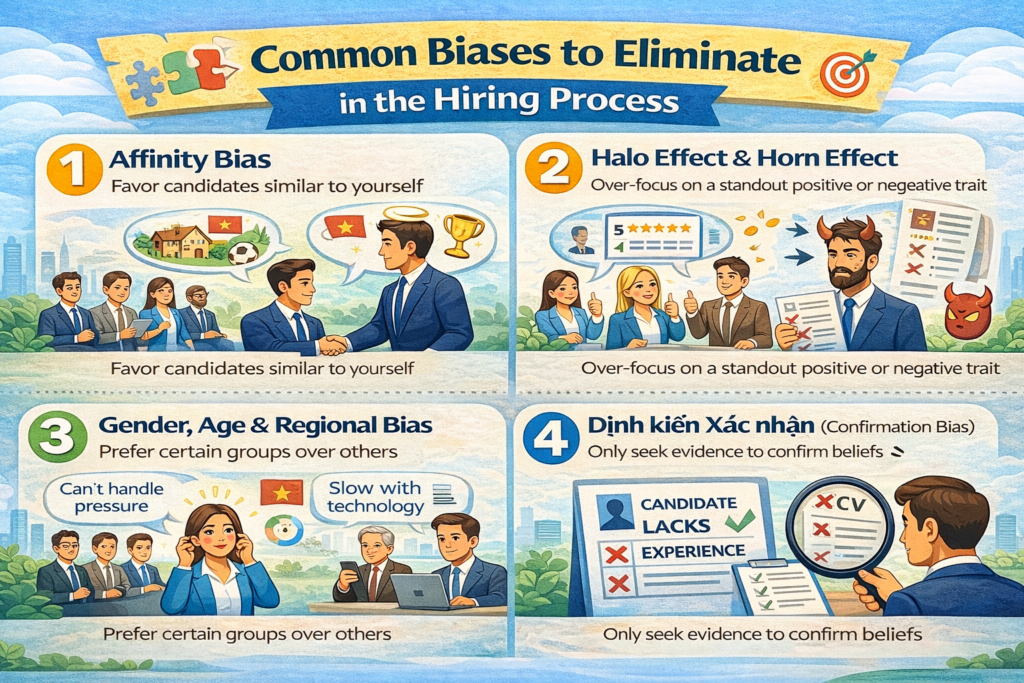
1. Affinity Bias
This is the most common bias in interviews within Vietnam. Recruiters tend to favor candidates who share something in common with them, such as hometown, a passion for football, or graduating from the same university. This psychology creates a false sense of security but leads to a “homogeneous” team. When everyone in a group thinks alike, the business lacks the necessary healthy friction to identify risks or new market opportunities.
2. Halo Effect and Horn Effect
The Halo Effect occurs when a recruiter is so impressed by one positive trait (such as attractive appearance or fluent communication) that they overlook serious professional deficiencies. Conversely, the Horn Effect causes a recruiter to undervalue a candidate’s entire capability based on one minor weakness (such as a scar or an unfavored dressing style). Both effects distort reality, leading companies to hire people who “talk the talk but don’t walk the walk” or miss out on quiet but genuine experts.
3. Gender, Age, and Regional Biases in Vietnam
While laws and corporate cultures are advancing, biases regarding gender (e.g., assuming women cannot handle high pressure) or age (e.g., assuming older people are slow to learn technology) still linger. Additionally, regional bias remains an invisible barrier causing division and inequity. These prejudices not only damage individual careers but also significantly narrow the supply of quality human resources for the business. Removing these barriers is a prerequisite for building a civilized and sustainable workplace.
4. Confirmation Bias
Confirmation bias happens when a recruiter forms an opinion about a candidate immediately after reading their CV and then asks questions solely to confirm that opinion during the interview. For instance, if they perceive a candidate as “inexperienced,” they will focus on mistakes rather than exploring successful projects. This destroys the objectivity of the dialogue. To overcome this, a structured interview framework is required, where every question aims to discover potential rather than seeking evidence for personal judgment.
Effective Steps to Build an Unbiased Recruitment Process
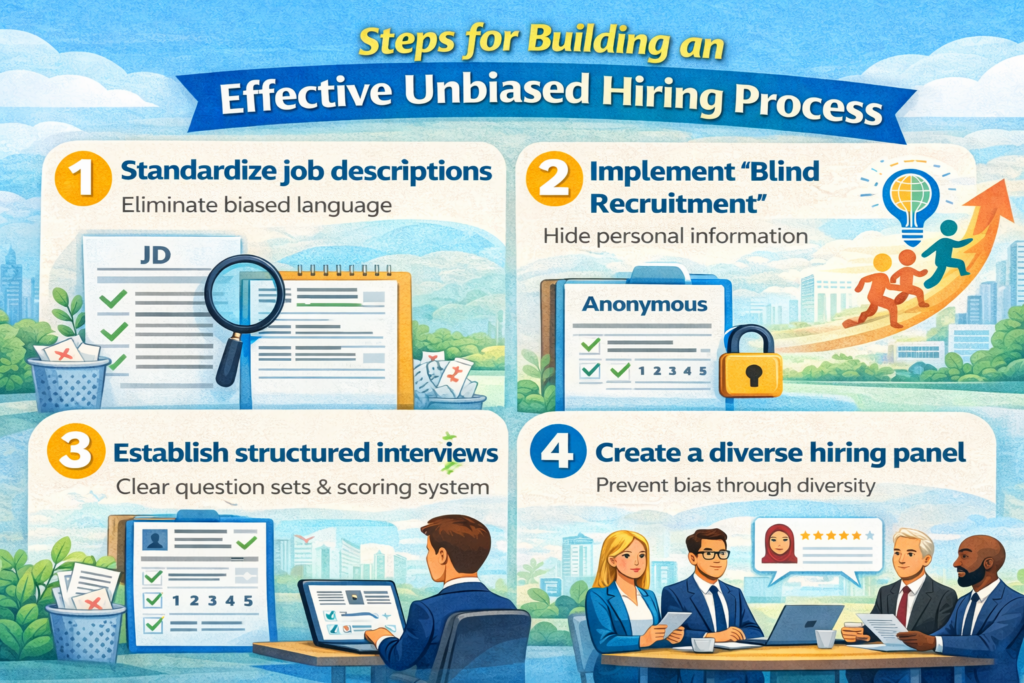
1. Standardizing Job Descriptions (JD) to Eliminate Biased Language
The first step is reviewing JDs. Many businesses inadvertently use gender-coded language or age barriers. Instead of phrases like “Male preferred,” “Attractive appearance,” or “Under 30 years old,” recruiters should focus on core skills and expected outcomes. Using gender-neutral language and emphasizing an inclusive environment encourages diverse groups of potential candidates to apply.
2. Implementing “Blind Recruitment” Methods
Blind recruitment is a powerful technique for removing bias during the screening stage. In this method, personal information—such as name, age, photos, gender, address, and even university names—is redacted before the CV reaches the evaluators. The recruiter sees only work experience, technical skills, and completed projects. This forces the evaluator to focus entirely on actual merit, ensuring that those who reach the interview stage are the most qualified professionals.
3. Establishing Structured Interview Systems
Instead of impromptu interviewing, businesses should develop a standardized set of questions applied to all candidates for the same position. Each question should be linked to a specific evaluation criterion with a clear scoring rubric. This minimizes the interference of personal emotions. When all candidates are asked the same questions and graded on the same standards, the comparison becomes transparent and persuasive.
4. Forming Diverse Hiring Panels
Do not let the hiring decision rest with a single individual. Form an interview panel comprising members with differences in gender, age, rank, and expertise. Diversity within the hiring team itself helps check each other’s individual biases. A biased opinion is easily detected and corrected by other members. Multi-dimensional discussion following each interview provides the most holistic, objective, and fair view of the candidate.
Technology and Data in Mitigating HR Bias
1. Utilizing AI and Applicant Tracking Systems (ATS) for Objective Screening
Artificial Intelligence (AI), when programmed correctly, can be the most honest “filter.” Modern ATS systems can automatically scan keywords and skills across thousands of resumes without being influenced by emotional factors. AI can help identify potential candidates overlooked due to human bias. However, businesses must monitor these algorithms to ensure the input data itself does not contain historical biases.
2. Assessing Candidates via Work Sample Tests
Instead of purely trusting what a candidate says, let them demonstrate it through action. Work Sample Tests or Case Studies are the best ways to measure professional skills. A candidate might not have a degree from a prestigious school but could possess exceptional coding skills or a talent for resolving customer complaints. By focusing on the test output, recruiters have concrete evidence to make decisions rather than relying on vague feelings about “cultural fit.”
3. Monitoring and Analyzing Diversity Metrics
To know if an unbiased process is effective, businesses must rely on numbers. Tracking the ratio of candidates from different groups through each recruitment round helps identify “bottlenecks” where bias might still exist. For example, if the pass rate for female candidates drops significantly at the face-to-face interview stage despite high technical scores, the business needs to re-evaluate the attitude or questioning style of the interview panel. Data is the most honest mirror of fairness within the HR machinery.
Conclusion
Building an unbiased recruitment process is not a destination but a journey of continuous improvement. For businesses in Vietnam, this is a strategic move to survive and thrive in a volatile world. By removing the invisible barriers of prejudice, companies not only welcome exceptional talent but also build a work culture based on respect and equity. Diversification is not just a slogan; it is the internal strength that propels a business onto the international stage and affirms a sustainable position in the market. Start changing the smallest details in your recruitment process today to reap great rewards in the future.
To empower your business in overcoming HR management challenges and staying fully committed to your strategic goals, we provide specialized solutions:
- [RPO Services]: A comprehensive recruitment process outsourcing solution.
- [BPO Services]: Strategic outsourcing to streamline business processes and optimize operational costs.
For any inquiries, contact Wacontre Accounting Services via Hotline: (028) 3820 1213 or email [email protected] for prompt assistance. With a team of experienced professionals, Wacontre is committed to providing dedicated and efficient service. (For Japanese clients, please contact Hotline: (050) 5534 5505).