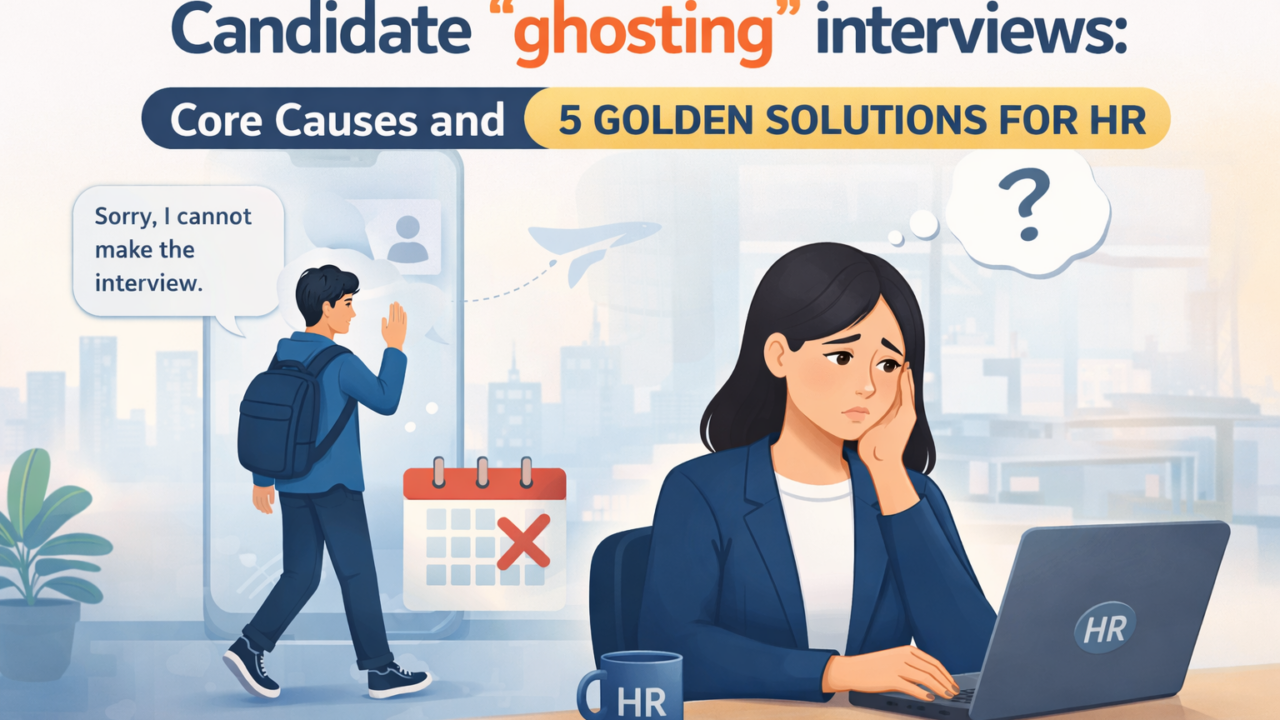
Candidates abruptly “disappearing” right before the scheduled interview time, otherwise known as “ghosting” in recruitment, has become a vexing issue for the HR community in Vietnam. This not only wastes resources but also disrupts management plans at all levels. To tackle this thoroughly, we need to examine the underlying shift in workforce mindset and business operational processes. A careful analysis will provide HR with a more multidimensional perspective.
What is a Candidate Who No-Shows at an Interview?
A candidate who no-shows at an interview is a job seeker who has confirmed participation in a scheduled interview but then fails to appear without providing cancellation notice or explanation. This behavior often includes severing all subsequent contact, with the candidate not answering phone calls, emails, or messages from HR, even long after the appointment time has passed. In the context of the labor market shifting toward an “applicant-led” trend, this phenomenon is occurring with increasing frequency across all ranks, from entry-level positions to senior management. In reality, this reflects a breakdown in communication and insufficient connection between the business and the candidate. When trust and commitment are not yet established, the candidate is ready to abandon the opportunity without feeling responsibility to provide notice.
Top Reasons Candidates Decide to No-Show at the Last Minute
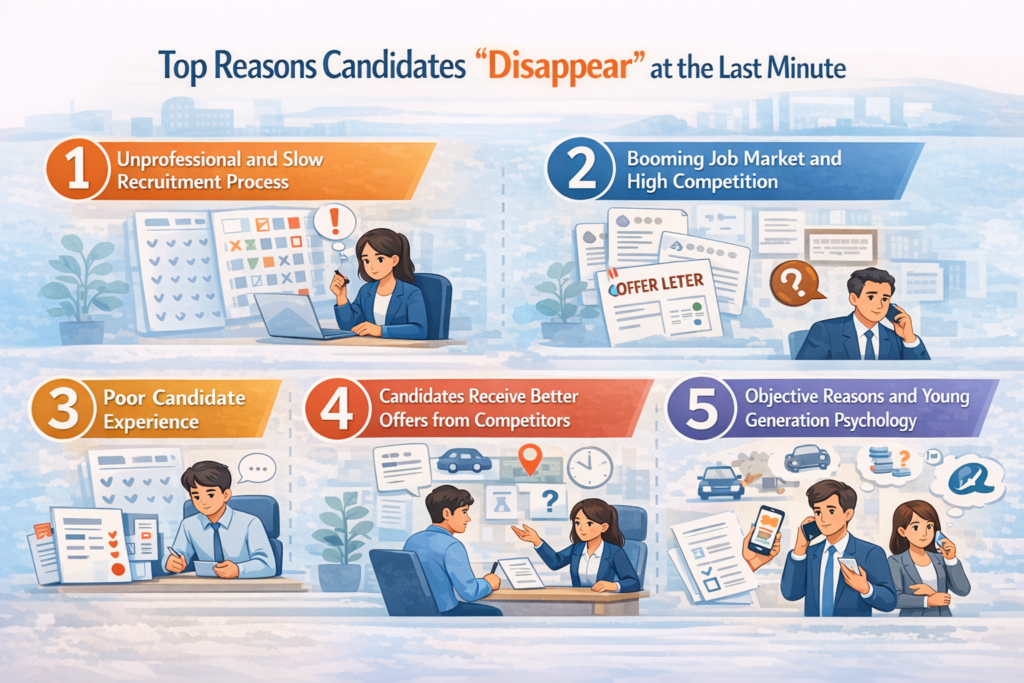
1. Unprofessional and Delayed Recruitment Process
One of the primary causes making candidates lose their initial enthusiasm is a cumbersome workflow. When a candidate submits their CV, they expect a prompt and professional response from the company. If the business takes too long to screen candidates or leaves them waiting for weeks just to schedule an appointment, they will develop discouragement. This delay inadvertently creates space for candidates to reconsider the company’s values and working culture. Interview invitation emails with typos or missing basic information, HR staff calling with an indifferent or condescending attitude, and requiring too many complex tests in the first round all create “minus points.” These make candidates believe the future working environment will be similarly sluggish and unprofessional, leading them to withdraw at the last minute.
2. A Booming Job Market and High Competition
Currently, with technology-driven recruitment platforms, a good candidate can receive dozens of interview invitations in just one week. When there are many choices, candidates perform rigorous comparisons based on salary, benefits, geographic location, and brand reputation. If your business has no truly outstanding points in the first phone call, you will easily be removed from their priority list. Fierce competition demands that HR change its mindset: we are not just “selecting” a candidate, but both sides are evaluating each other. If you don’t know how to “sell” the career opportunity effectively, your business will always be the backup option.
3. Poor Candidate Experience
Candidate experience begins from the moment they view the job description (JD) until they leave the office after the interview. A poorly written JD or requirements that are too high compared to the offered salary create the first hurdle. HR’s mechanical approach, focusing only on information gathering instead of listening to candidate aspirations, makes candidates feel disrespected. They feel like just a number in HR’s recruitment quota. Lack of tact in interactions causes candidates to lose emotional connection with the business. When there is no empathy, they will not hesitate to abandon the interview without notice, as they see no reason to respect a place that does not respect them.
4. Candidate Receives a More Attractive Offer from a Competitor
In an era of transparent information, businesses frequently recruit quality personnel from the same talent pool. It is completely possible for a candidate to receive a better offer just before your interview day. Sometimes a competitor has a faster, smoother process, closing the deal immediately, leaving the candidate no need to continue seeking. Candidates often have the mindset of “I’ll only notify if something changes,” but many choose to remain silent for convenience. If HR does not maintain a tight, connective relationship or fails to understand the candidate’s situation (such as being in final rounds with another company), the business will very easily find itself abandoned without prior notice.
5. Objective Reasons and Avoidance Psychology in Younger Generations
The young workforce today, especially Generation Z, tends to prioritize personal comfort and sometimes hesitates to face awkward situations. Calling to apologize or writing a refusal email creates psychological pressure. Rather than explaining why they cannot attend, they choose complete silence as the quickest escape route. Beyond this psychological factor, objective reasons also occur frequently: unexpected personal mishaps like vehicle breakdowns or traffic delays, uncompleted handover work at their current job, or feeling unwell with interview anxiety. However, instead of making efforts to reschedule, a lack of professional communication skills leads them to choose the “disappearance” option to avoid any potential trouble.
Negative Impacts of Interview No-Shows on Your Business
1. Waste of Time and Human Resource Operational Costs
Every scheduled interview consumes significant business resources. Recruitment specialists must spend hours seeking, screening profiles, and contacting candidates to schedule appointments. These efforts are accompanied by costs for meeting room preparation, document printing, and personnel coordination. When a candidate does not appear, this entire chain of activities becomes meaningless, wasting recruitment budget. The opportunity cost is particularly high: HR has passed over other potential candidates to prioritize the person who no-showed. This increases the Cost per Hire metric and reduces overall recruitment efficiency.
2. Negatively Affecting Interviewer and Direct Manager Morale
Not only HR but also Direct Managers (Hiring Managers) are directly affected. They are busy professionals who must rearrange their workload to dedicate time to candidate assessment. Waiting in an empty meeting room creates frustration and annoyance. Prolonged continuation of this situation will damage internal relationships between the recruitment department and other departments. Direct Managers can lose faith in HR’s screening capability and ability to “retain” candidates, potentially becoming stricter or lacking enthusiasm in future interviews.
3. Disrupting Business Growth Plans
Recruitment is the key link ensuring resources for business projects. Constant candidate no-shows leave positions unfilled promptly, causing personnel shortages that pressure existing staff to bear extra workload. Labor productivity drops, and progress in delivering products and services to customers is seriously affected. For businesses in rapid expansion phases, every no-show is a barrier to growth. The business can lose competitive advantage simply from lacking sufficient people to run machinery or projects.
5 Golden Solutions to Reduce Candidate No-Shows
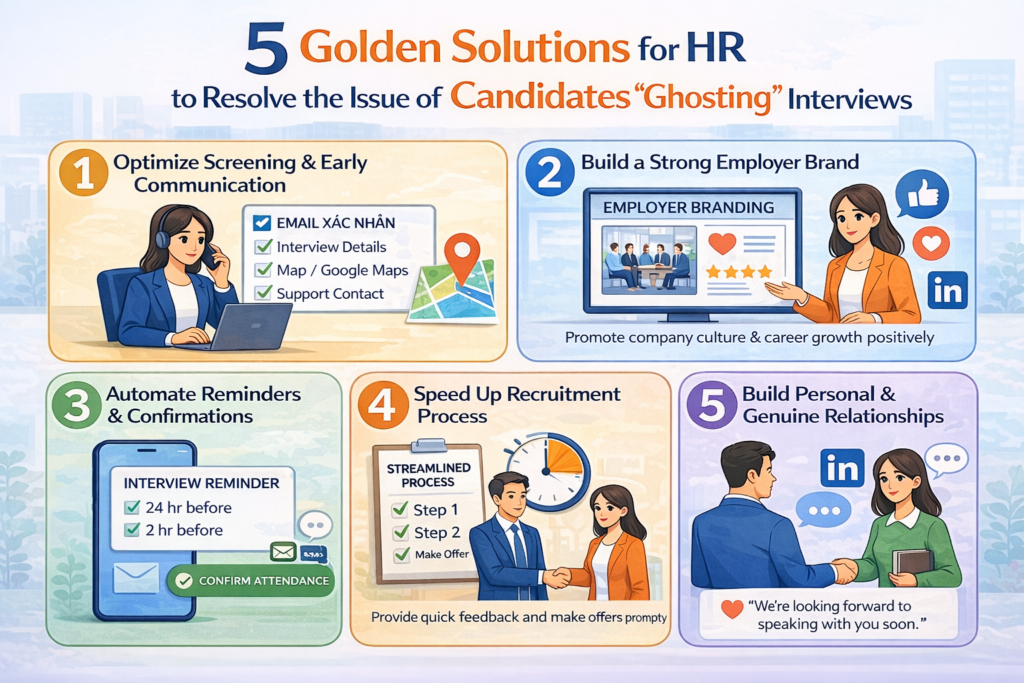
1. Optimize the Screening and Communication Process from the Start
The first solution is to enhance the quality of the initial screening call. Instead of just announcing the time, HR should spend 5-10 minutes engaging in deeper conversation about the candidate’s expectations. Creating a two-way dialogue helps candidates feel valued and more connected with the company. Ensure a confirmation email is sent immediately after the call with detailed information including: a map or Google Maps link, information about the interviewer and discussion content, and a hotline phone number for candidates to contact should they encounter any mishaps on the way.
2. Build Strong Employer Branding
Candidates often research the company carefully on social media before deciding to attend an interview. A business with positive media imagery creates strong appeal. HR should coordinate with the Marketing department to build authentic content about office culture and advancement opportunities. When candidates desire to work at your company, they will rarely no-show. Strong recruitment branding demonstrates the business’s values and creates pride for candidates even at the interview stage, elevating their sense of responsibility.
3. Use Technology for Automated Reminders and Confirmation
Sometimes candidates no-show simply because they are busy and forget the schedule. Using recruitment management software (ATS) to send automated SMS or email reminders is essential. Send reminders 24 hours before and 2 hours before the appointment. Include a simple button so candidates can quickly respond with their status: confirm attendance, request rescheduling due to unexpected reasons, or decline the interview.
4. Shorten Recruitment Time to Close Candidates Quickly
In the race for talent, speed is decisive. Businesses should streamline unnecessary interview steps. If possible, combine multiple interview rounds into the same morning or afternoon. Responding quickly with interview results also helps maintain candidate excitement. Do not make candidates wait more than 3 working days for results, as this is when competitors can “steal” your candidate. Recruitment speed demonstrates business decisiveness and respect for candidates’ time. A smooth process noticeably increases the rate of candidates attending interviews.
5. Create Personal Connection and Sincerity in Interactions
Transform the recruitment process from “mechanical” to “human.” Recruitment specialists should build personal relationships with candidates by interacting professionally on LinkedIn. When personal connection exists, candidates will feel uncomfortable no-showing without notice. Sharing honestly about challenges and opportunities at the company builds firm trust. A warm message such as “We are very much looking forward to discussing your experience tomorrow” creates intangible commitment and encourages candidates to appear on time.
Corporate Culture’s Role in Retaining Candidates from the Interview Stage
1. Transparency Regarding Salary and Benefits
Vague information about compensation is a major reason candidates decide to withdraw before entering the interview room. In modern recruitment, publishing salary ranges is a huge positive. If it cannot be made public, HR should discuss the budget frankly right from the profile screening round. When candidates clearly understand their deserved benefits, they will have high motivation to attend. Transparency from the start demonstrates honest corporate culture that respects people and attracts the most talented and responsible candidates.
2. Treating Candidates Like True Customers
The “Candidate as Customer” mindset should permeate the HR team. Every candidate, whether they pass or not, is a potential brand ambassador. The way you welcome them, offer refreshments, and the interviewer’s listening attitude all score points in candidates’ eyes. If the business treats candidates with dedication, the no-show rate naturally decreases. Even when candidates cannot attend and proactively notify you, HR should respond with empathy. This kindness creates positive word-of-mouth, helping the business attract more quality candidates in the future.
Conclusion
Candidate no-shows are not just a challenge but also a mirror reflecting flaws in the recruitment process. Instead of only blaming worker attitudes, HR specialists need to change their mindset and optimize processes. By deeply analyzing why candidates no-show and implementing synchronized solutions, the business will build a firm position. Successful recruitment begins from creating trust and respect within candidates from the first touch.
To empower your business in overcoming HR management challenges and staying fully committed to your strategic goals, we provide specialized solutions:
- [RPO Services]: A comprehensive recruitment process outsourcing solution.
- [BPO Services]: Strategic outsourcing to streamline business processes and optimize operational costs.
For any inquiries, contact Wacontre Accounting Services via Hotline: (028) 3820 1213 or email [email protected] for prompt assistance. With a team of experienced professionals, Wacontre is committed to providing dedicated and efficient service. (For Japanese clients, please contact Hotline: (050) 5534 5505).