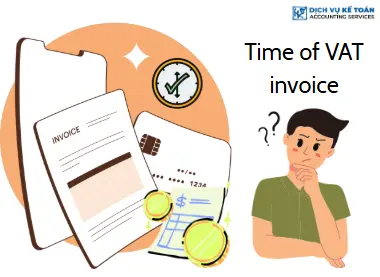
Understand the correct timing for issuing VAT invoices in Vietnam to stay compliant with tax regulations and avoid legal risks. Issuing VAT invoices at the right time is essential for businesses to remain compliant with the rules on value-added tax invoices and to prevent unnecessary violations.
What is the timing for issuing VAT invoices?
The timing for issuing a VAT invoice is the exact point at which a business must generate an invoice for each sale of goods or provision of services. Determining this timing accurately not only ensures compliance with tax regulations but also helps businesses avoid administrative penalties for invoice-related violations.
Under Vietnam’s Law on Tax Administration and current guiding documents, the timing of invoice issuance depends on the nature of each transaction and the payment method used. A clear understanding of these rules enables businesses to operate transparently, lawfully, and efficiently.
Key Considerations When Issuing VAT Invoices
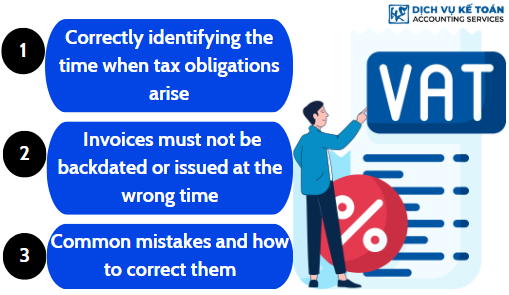
1. Correctly identify when the tax obligation arises
Misidentifying the point at which a tax obligation arises can lead to non-compliant invoices, resulting in tax arrears or penalties. Businesses must stay informed and clearly understand the rules that apply to each type of transaction.
2. Invoices must not be backdated or issued at the wrong time
Issuing invoices earlier or later than required by law can result in administrative fines or even be treated as tax fraud. The person responsible for invoicing must follow clearly defined procedures to ensure accuracy.
3. Common mistakes and how to correct them
Frequent errors include incorrect product names, wrong units of measurement, inaccurate tax identification numbers, missing signatures, and incorrect tax rates. Regular staff training and the use of professional invoice management software can significantly reduce these mistakes.
Responsibilities and Penalties for Incorrect Invoice Timing
1. Common administrative penalties
Depending on the nature and severity of the violation, businesses may face fines ranging from VND 2 million to VND 20 million, with higher penalties for repeat offenses. Fines increase further if the violation causes damage to other parties or the state budget.
2. Tax arrears and legal consequences
Tax arrears arise when the tax authorities determine that invoices were not issued in line with regulations, resulting in underpaid tax. In addition to paying the outstanding tax, businesses may face fines and late-payment interest. In serious cases, the matter may be referred to investigative authorities.
Mastering the rules on VAT invoice timing and the key considerations involved helps businesses comply with the law and strengthen their professional reputation. Staying up to date with new regulations, training staff, and adopting systems that ensure transparent processes allow businesses to mitigate risks and achieve sustainable growth.
For any inquiries, please contact Wacontre Accounting Services via Hotline (028) 3820 1213 or email [email protected] for prompt assistance. Our experienced team is committed to providing dedicated and efficient service. (For Japanese clients, please contact Hotline (050) 5534 5505.)